
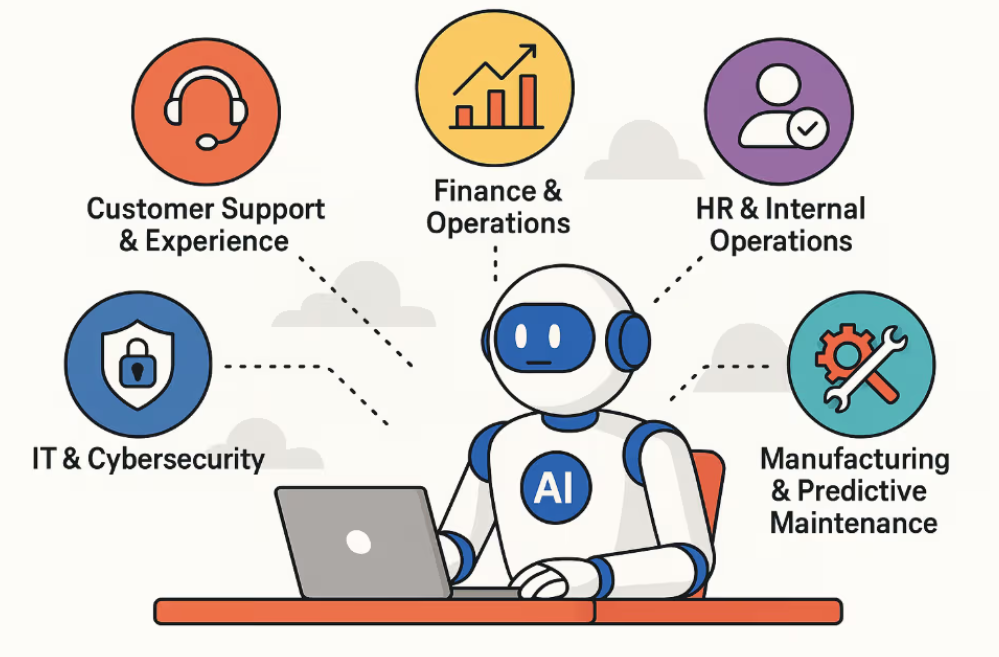
- Oracle is developing AI-driven systems to automate enterprise operations across its software suite.
- The strategy reflects a broader shift towards “autonomous” business processes powered by AI agents.
What Happened
Oracle is pushing towards what it describes as “autonomous enterprise operations,” using artificial intelligence to automate routine business processes across its cloud software platforms.
According to a report, the company is integrating AI capabilities into its enterprise applications, including finance, supply chain, and human resources systems. The goal is to reduce manual intervention and allow systems to execute tasks independently.
The approach builds on Oracle’s broader cloud and applications portfolio, which includes enterprise resource planning (ERP), customer experience, and supply chain management tools.
Oracle is focusing on embedding AI directly into workflows. This includes automating tasks such as data entry, procurement decisions, and operational planning. The company is also developing systems that can analyse data, make recommendations, and take action without requiring constant human input.
The strategy aligns with wider industry trends. Enterprise software providers are increasingly incorporating AI to improve efficiency and reduce operational complexity. Recent developments, such as Oracle’s move towards “agentic” applications, show how software is evolving to work alongside AI systems that carry out tasks on behalf of users.
Oracle’s approach differs from competitors in scope. While Microsoft has embedded Copilot across its 365 suite and Salesforce has launched its Agentforce platform, Oracle is pursuing deeper integration across its full stack — from database and middleware to ERP and supply chain applications. This vertical reach gives Oracle an advantage in end-to-end automation but raises questions about vendor lock-in.
Also Read: https://btw.media/tech-trends/use-chatgpt-like-a-fool/
Why It’s Important
Oracle’s push highlights a shift in enterprise technology. Companies are moving from software that supports decision-making to systems that can execute tasks autonomously.
For businesses, this could reduce costs and improve efficiency. Automating routine processes may free up staff to focus on higher-value work. It may also speed up decision-making in areas such as supply chain management and financial operations.
However, the concept of an “autonomous enterprise” raises several questions. Fully automated systems depend on accurate data and reliable algorithms. Errors or biases in AI models could affect business outcomes.
There are also governance concerns. As AI systems take on more responsibility, organizations must decide how much control to retain and how to oversee automated decisions.
The strategy also reflects competitive pressure. Enterprise software providers face the risk that AI tools could replace traditional applications. By embedding AI into its products, Oracle aims to remain relevant in a changing market.
At the same time, adoption may not be straightforward. Integrating AI into complex enterprise environments can be technically challenging and costly.
Oracle’s vision suggests a future where business operations run with minimal human input. Whether companies are ready to trust such systems at scale remains uncertain.
Also Read: https://btw.media/all/it-infrastructure/microsoft-signs-17-4b-gpu-deal-with-nebius/
