
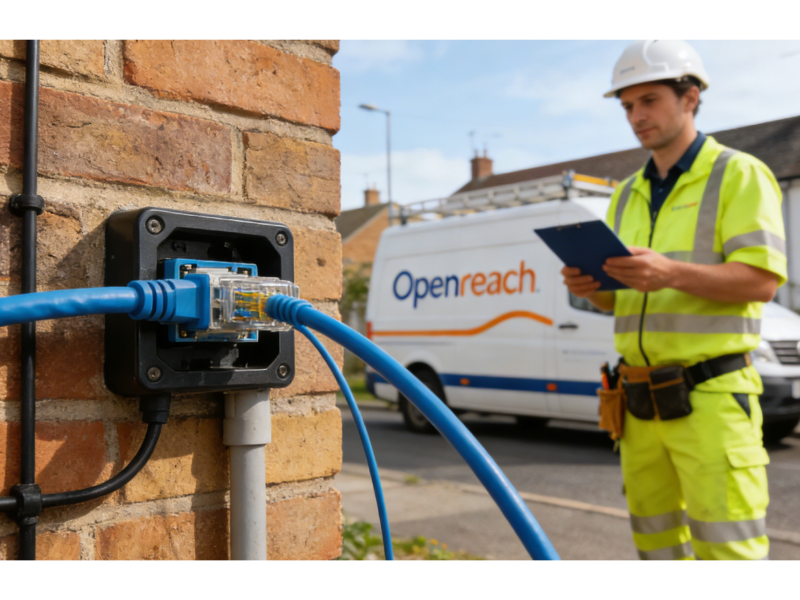
• Full-fibre broadband traffic on Openreach’s UK network rose by 40 % in 2025, overtaking older technologies and marking a shift in how consumers use broadband.
• Total broadband data over Openreach’s network climbed by 4.8 % to over 108,599 Petabytes, but questions remain about the pace of full-fibre adoption outside urban centres.
What happened: usage patterns change
Openreach, the UK’s principal fixed broadband infrastructure provider, has revealed that usage of its full-fibre network increased by 40 % in 2025 compared with the previous year. This growth saw full-fibre traffic exceed that of older copper and hybrid technologies for the first time, with the shift occurring around late October last year.
Overall broadband usage across the Openreach network — which carries traffic for communications providers including BT, Sky, TalkTalk, Vodafone and others — rose by 4.8 % in 2025, with more than 108,599 Petabytes of data transmitted during the year. December was the busiest month, with over 10,317 Petabytes recorded, following a peak event on 30 November when the release of a popular Fortnite update pushed traffic to its single highest day.
Openreach’s chief executive Clive Selley marked the figures as a milestone in broadband adoption during the company’s 20th anniversary. He noted that the average full-fibre user consumed roughly 22.1 GB of data per day, the equivalent of participating in some 40 hours of Zoom or Teams calls, reflecting increased demand for high-capacity connectivity for remote work, video streaming and gaming.
Around eight million homes and businesses currently use Openreach’s full-fibre services, and the company says its network can reach 21 million premises today, with ongoing build-out connecting roughly one million new premises every three months. Openreach aims to extend its full-fibre footprint to 25 million by the end of 2026 and 30 million by 2030, though it stresses these targets depend on “the right regulatory conditions”.
Openreach has also been adjusting pricing strategies for legacy copper products to encourage a shift toward digital alternatives. Last year, it increased prices for several copper-based access products and services in the run-up to the planned switch-off of the Public Switched Telephone Network (PSTN) in January 2027.
Also Read: Aviva-backed altnet Trueseed in merger talks with rival Freedom Fibre amid sector consolidation
Also Read: G.Network sold to distressed investor as UK fibre sector under increasing strain
Why it’s important
The jump in full-fibre usage on Openreach’s network illustrates broader changes in the UK’s broadband landscape, driven by consumer demand for faster, more reliable internet reliant on modern broadband infrastructure. Full-fibre — also known as fibre to the premises (FTTP) — offers higher capacity and lower latency than legacy copper connections, enabling more intensive applications such as 4K streaming, cloud gaming, hybrid work and smart home devices.
However, while full-fibre traffic has grown quickly, overall broadband usage growth of 4.8 % suggests that many customers still use older technologies or have not yet fully realised the potential of full-fibre speeds. The sustained growth in data — even on legacy connections — highlights that UK internet usage is likely to continue rising, driven by evolving digital habits.
There are also questions about the pace and equity of full-fibre adoption outside urban and suburban areas. Although Openreach’s footprint continues to expand, adoption rates vary, and independent data shows full-fibre availability and take-up differ significantly by region, leaving some rural and harder-to-reach communities behind. Regulatory data indicates that about 78 % of UK residential premises have access to full fibre, but actual take-up remains lower, with around 42 % of homes and businesses connected.
Industry observers note that coverage figures alone do not guarantee customer switching; barriers such as cost, service fragmentation between providers and awareness of benefits can influence uptake. Moreover, while Openreach’s legacy network pricing changes aim to encourage migration, they have also drawn complaints from alternative network operators who argue that pricing policy may disadvantage smaller competitors.
The increase in traffic on full-fibre networks does signal that demand for bandwidth-intensive services is robust, and modern infrastructure is increasingly essential. But ensuring that network build-out and customer adoption keep pace — especially in less commercially attractive areas — remains a critical policy and industry challenge as the UK moves toward the planned digital transition away from copper services by 2027.
