
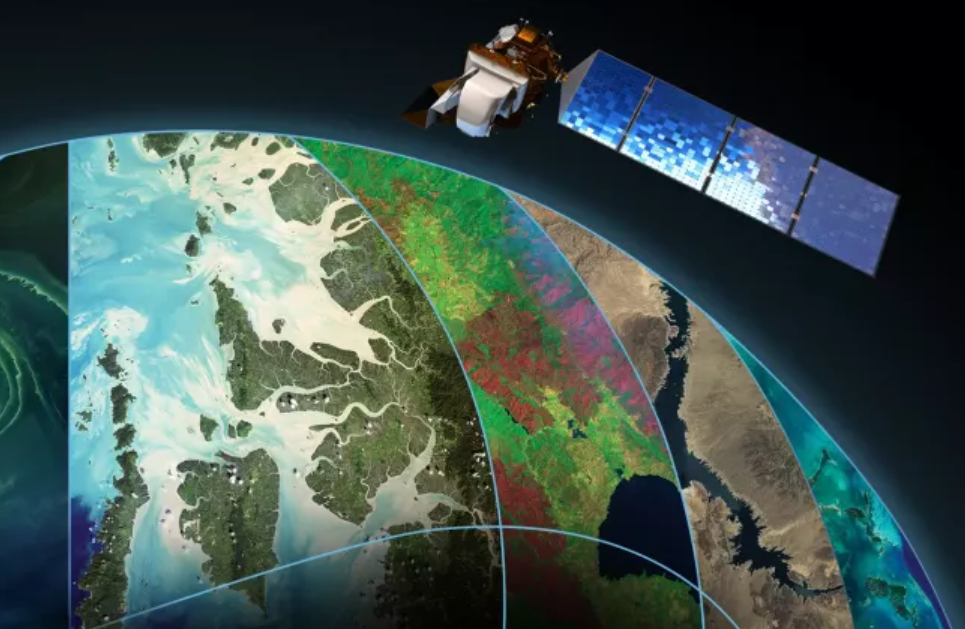
- Open Cosmos has launched a service combining Earth observation, IoT, and broadband connectivity.
- The platform aims to provide real-time data insights for infrastructure monitoring and environmental response.
What Happened
Open Cosmos has launched a new satellite service that combines Earth observation, Internet of Things (IoT) connectivity, and broadband capabilities into a single platform.
According to the report, the offering is designed to help organizations monitor critical infrastructure, protect environmental assets, and respond more quickly to events.
The service is built on a multi-layer satellite architecture that integrates three core elements: secure broadband connectivity, Earth observation, and IoT. This approach differs from traditional satellite systems, where these functions are often delivered separately.
Open Cosmos said its constellation includes a low Earth orbit (LEO) connectivity backbone and an Earth observation layer, with each satellite carrying an IoT payload. This allows data from sensors on the ground to be combined with real-time imagery and transmitted through a single system.
The company positions the platform as a way to deliver “contextual intelligence” to governments and institutions. In practice, this could support applications such as disaster response, environmental monitoring, and industrial operations.
Founded in 2015, Open Cosmos has focused on reducing the cost and complexity of accessing space-based services while expanding satellite capabilities.
Also Read: https://btw.media/all/news/v-tal-unveils-synapse-us-brazil-submarine-cable-scheme/
Why It’s Important
The launch reflects a broader shift in satellite technology. Operators are moving beyond simple connectivity towards integrated services that combine data, analytics, and communications.
For enterprises and governments, this could improve situational awareness. Combining IoT data with satellite imagery may allow faster decision-making in areas such as infrastructure management or emergency response.
However, the approach also raises questions. Integrating multiple functions into a single platform increases system complexity. Reliability, latency, and data accuracy will be critical, especially in high-stakes scenarios.
Competition is also intensifying. Companies such as SpaceX and Amazon are building large LEO constellations, though their focus is primarily on broadband. Open Cosmos is attempting to differentiate by offering combined data and connectivity services rather than consumer internet access.
There are also economic considerations. Satellite constellations require significant capital investment, and returns depend on sustained demand from enterprise and government customers.
The move suggests that the next phase of the satellite market will center on integrated data services rather than connectivity alone. Whether this model delivers long-term value will depend on execution and the ability to scale beyond niche use cases.
Also Read: https://btw.media/all/news/vodafone-partners-with-iridium-for-global-satellite-iot-connectivity/
