
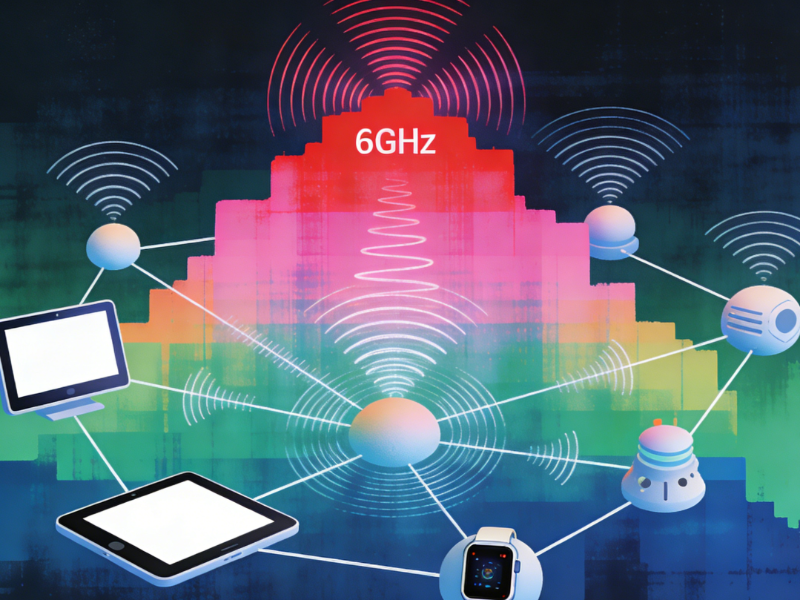
- UK regulator Ofcom has reaffirmed its support for shared use of the upper 6 GHz band to balance innovation and incumbent protection.
- The framework aims to unlock new services, including private networks and advanced wireless applications, without disrupting existing users.
What happened: Ofcom backs shared upper 6 GHz spectrum access
The UK’s telecoms regulator, Ofcom, has reiterated its commitment to enabling shared access to the upper 6 GHz frequency band for a range of advanced wireless services. In a recent update, Ofcom outlined technical and policy measures designed to facilitate innovative uses of the band while safeguarding incumbent operations, including fixed links and satellite services.
The upper 6 GHz band — spanning roughly 6425–7125 MHz — is attractive to industry because it offers a balance between capacity and coverage. It sits above traditional mobile bands and below millimetre-wave frequencies, making it suitable for high-speed, low-latency applications such as private 5G networks, industrial automation and fixed wireless access.
Ofcom’s approach moves beyond the more rigid “exclusive licence” model that characterises traditional mobile spectrum assignments. Instead, it proposes a light-touch shared access regime in which new entrants can deploy equipment under defined technical conditions that limit interference to incumbent users. These conditions include power limits, dynamic frequency selection and coordination mechanisms in congested areas.
The regulator said its proposals follow extensive stakeholder engagement, including with industry bodies, service providers and incumbents. Ofcom emphasised that its priority is to maintain service quality for existing users while creating room for growth in innovative sectors.
The consultation also explored coexistence with low-power indoor devices and coordination with adjacent band users. Ofcom noted that harmonised international approaches — particularly in Europe and North America — could improve economies of scale for equipment vendors and reduce barriers to global roll-out.
Also Read: Ofcom probes BT and Three after mobile network failures
Also Read: Ofcom makes mobile operators tackle scam messages
Why it’s important
Ofcom’s stance on shared upper 6 GHz access reflects a broader global trend towards more flexible spectrum use. As demand for wireless capacity grows, regulators are increasingly looking at spectrum sharing as a means to support innovation without overburdening finite resources.
Shared access may lower the cost of entry for private network operators, enterprises and niche service providers. This can spur adoption of technologies such as industrial IoT, augmented reality and campus-wide 5G systems, which often operate in venues with specific coverage and performance needs.
For mobile operators and traditional incumbents, coexistence safeguards are essential. Ofcom’s model seeks to balance the need for disruptive innovation with protection of long-standing services that rely on the upper 6 GHz band for backbone connectivity.
The regulator’s framework could also influence how the UK positions itself in the race for next-generation wireless technologies. By providing clarity on spectrum access, Ofcom may encourage investment and accelerate deployment of advanced wireless infrastructure.
