
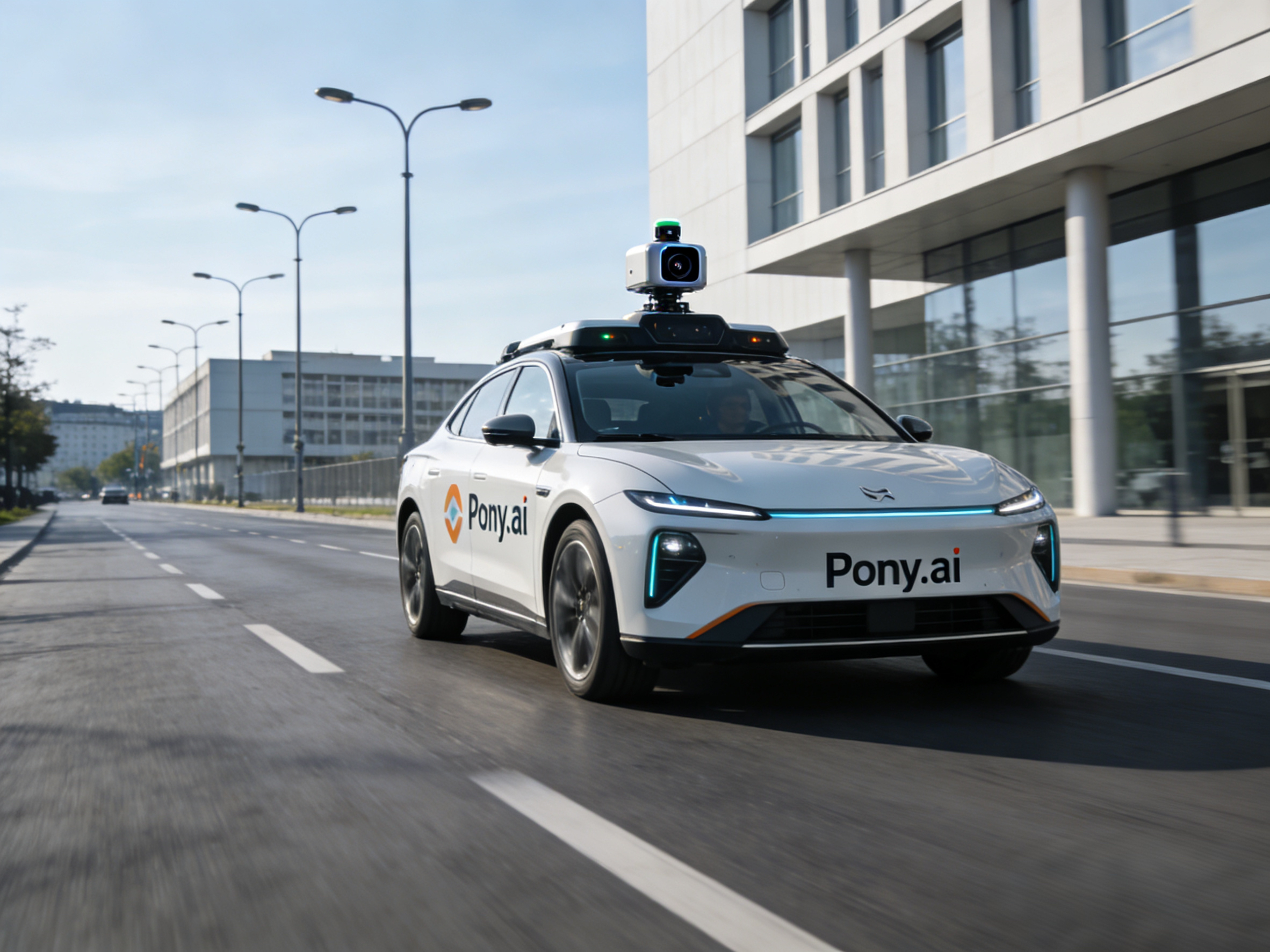
- Pony.ai plans to more than double its global robotaxi fleet in the coming years.
- The company has launched its first European robotaxi service in Zagreb, marking a new phase of international expansion.
What happened
Autonomous taxis arrive in Croatia
Chinese autonomous driving start-up Pony.ai said on 26 March 2026 it plans to more than double the size of its robotaxi fleet while debuting a new autonomous taxi service in Zagreb, Croatia.
Founded in 2016 and backed by major investors including Toyota, Pony.ai develops autonomous driving technology and operates robotaxi services in several Chinese cities and in the United States.
The launch in Zagreb marks Pony.ai’s entry into Europe, where regulators and cities have begun cautiously experimenting with autonomous transport services. The company said its expansion strategy includes increasing the number of vehicles operating in existing markets as well as testing services in new regions.
The firm has already deployed autonomous vehicles in Chinese cities including Beijing, Guangzhou and Shenzhen, where local governments have gradually allowed commercial robotaxi services under regulatory supervision.
By increasing fleet size, Pony.ai hopes to improve service coverage and reduce waiting times for passengers — a key factor in making autonomous ride-hailing commercially viable.
Also read:Tesla delays robotaxi launch amid design changes
Also read:Waymo to expand autonomous ride-hailing service areas in Los Angeles, San Francisco
Why it’s important
The move highlights the intensifying global race to commercialise autonomous mobility. Companies in China, the United States and Europe are competing to bring robotaxi services from pilot programmes into large-scale operations.
For Pony.ai, expanding its fleet is essential to achieving economies of scale. Autonomous vehicle technology requires large upfront investment in hardware, software development and safety testing, meaning profitability depends on operating a high number of vehicles across multiple markets.
Entering Europe also signals a strategic shift. While Chinese autonomous driving firms have historically focused on domestic markets, international expansion is increasingly important as regulators abroad open up limited trials.
According to industry analysts, scaling fleets is one of the biggest hurdles for robotaxi operators. Autonomous systems require massive amounts of real-world driving data, and a larger fleet allows companies to gather that data faster while improving algorithms.
Financially, the expansion could also help Pony.ai strengthen partnerships with automakers and investors. As the robotaxi sector grows, alliances between technology companies and car manufacturers are becoming central to bringing autonomous vehicles to market.
If Pony.ai succeeds in rapidly expanding its fleet, it could strengthen China’s position in the global autonomous driving race and accelerate the commercialisation of robotaxi services worldwide.
