
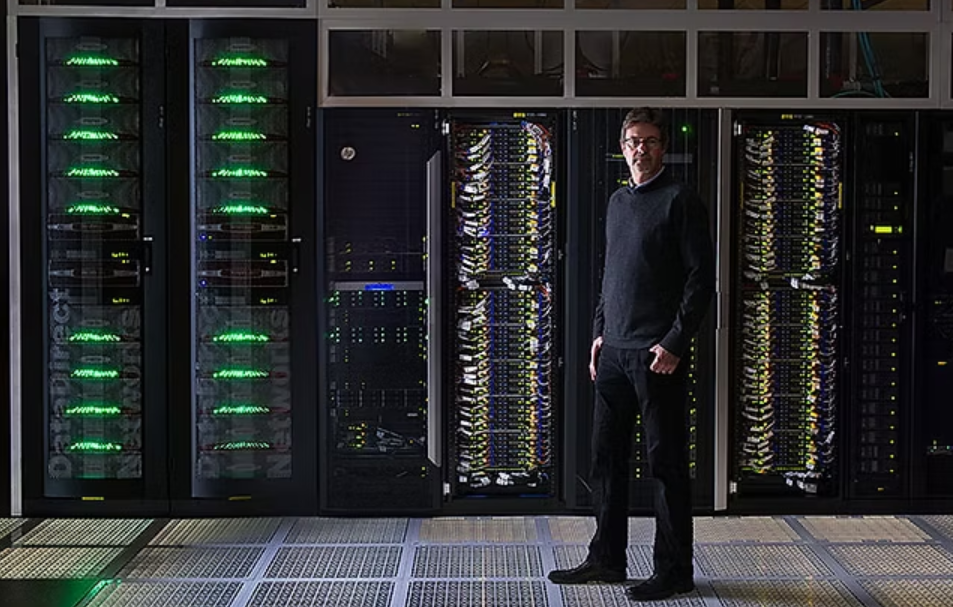
- Elon Musk said his companies will continue ordering Nvidia chips in large volumes.
- The move reflects sustained demand for AI computing across automotive, space, and AI ventures.
What Happened
Elon Musk has said that his companies, including Tesla, xAI, and SpaceX, will continue to purchase Nvidia chips at scale as they expand their artificial intelligence capabilities.
According to the report, Musk indicated that demand for high-performance chips remains strong across his businesses. These chips are used to train and run AI systems in areas such as autonomous driving, robotics, and data processing.
Tesla relies on AI hardware to support its self-driving technology and in-house computing systems. Meanwhile, xAI focuses on developing large-scale AI models, which require significant computing power. SpaceX also uses advanced computing for satellite operations and network management.
Nvidia has become a key supplier of graphics processing units (GPUs) used in AI workloads. Its chips are widely deployed in data centers and high-performance computing environments.
Musk’s comments come at a time when competition for AI hardware is intensifying. Technology companies are racing to secure access to GPUs, which remain in high demand due to the rapid growth of generative AI and machine learning applications.
Several companies have also begun developing their own chips to reduce reliance on external suppliers. However, Nvidia continues to dominate the market for advanced AI processors.
Why It’s Important
The continued large-scale purchasing of Nvidia chips highlights how central AI hardware has become to modern technology strategies. Companies across industries are investing heavily in computing infrastructure to support AI development.
For Nvidia, sustained demand from major customers reinforces its position as a leading supplier in the AI ecosystem. However, reliance on a limited number of suppliers may also create bottlenecks in the supply chain.
Musk’s strategy also reflects the increasing convergence of industries around AI. Automotive, space, and software businesses now depend on similar computing technologies to drive innovation.
At the same time, the scale of investment raises questions about long-term sustainability. AI infrastructure requires significant capital, energy, and maintenance costs. If expected returns do not materialize, companies may face pressure to justify these expenditures.
There are also competitive implications. As more firms secure large volumes of chips, smaller players may struggle to access the hardware needed to compete.
The broader trend suggests that control over AI computing resources is becoming a key factor in technological leadership. Whether this concentration of resources leads to innovation or increased market imbalance remains an open question.
Also Read: https://btw.media/all/it-infrastructure/microsoft-signs-17-4b-gpu-deal-with-nebius/
