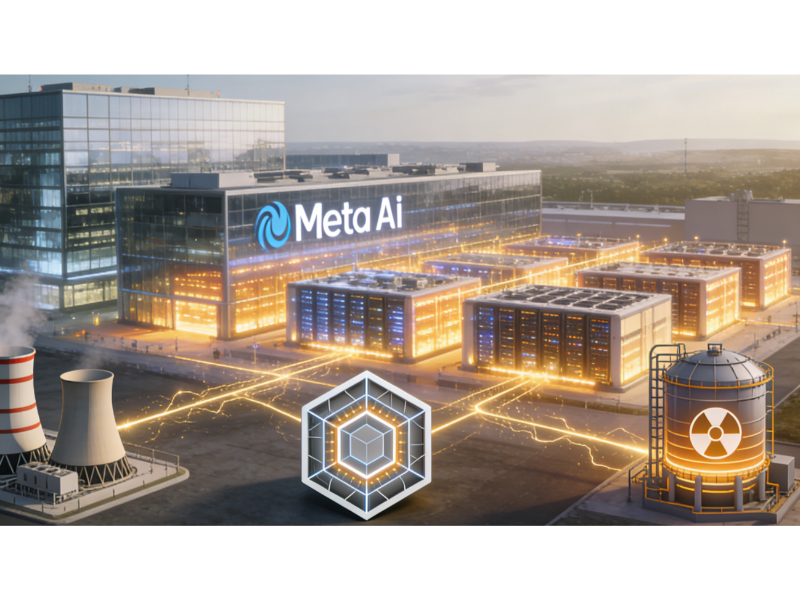
- Meta Platforms Inc. has entered long-term agreements with Vistra, Oklo and TerraPower to secure up to 6.6 gigawatts of nuclear power for its AI infrastructure, including the Prometheus data centre in Ohio.
- The move highlights how surging artificial intelligence demand is reshaping energy procurement strategies but also raises questions about costs, grid impact and reliance on legacy and advanced reactor technologies.
What happened: Meta’s nuclear power agreements
Meta Platforms Inc. has signed a suite of long-term nuclear energy agreements designed to supply its growing fleet of artificial intelligence data centres with reliable, low-carbon electricity. The company has reached power purchase and development arrangements with three nuclear energy firms: Vistra, Oklo and TerraPower.
Under these agreements, Meta will buy a significant proportion of its energy needs from Vistra’s existing nuclear plants in Ohio and Pennsylvania, entering into 20-year contracts that cover more than 2.1 gigawatts of capacity from the Perry, Davis-Besse and Beaver Valley stations. The deals also support uprating existing reactors to increase generation.
In parallel, the company is supporting advanced reactor development with Oklo, a nuclear startup developing a 1.2 gigawatt power campus in Pike County, Ohio, and with TerraPower, which plans advanced Natrium reactor units aimed at producing around 690 megawatts by the early 2030s, with rights to further capacity by the mid-2030s.
Combined, these agreements could provide up to 6.6 gigawatts of nuclear energy by 2035, a scale of power comparable to the output of several large nuclear reactors and sufficient to supply millions of homes. Meta’s announcement also emphasises backing U.S. nuclear supply chains and creating new jobs in plant construction and operation.
The nuclear procurement initiative centres on powering Prometheus, a planned 1-gigawatt AI training supercluster located in New Albany, Ohio, which Meta expects to commission this year. This project forms part of a broader strategy that may also include an even larger cluster dubbed Hyperion by 2028.
Also Read: Virtus Data Centres appoints Adam Eaton as new CEO
Also Read: How IPv4 asset strategy supports long-term enterprise growth
Why it’s important
Meta’s nuclear deals are significant not just for their scale but for what they reveal about the intersection of technology demand and energy infrastructure. Large-scale AI computing, such as training and operating generative models, consumes vast amounts of electricity. Traditional grids and renewable sources may struggle to meet this constant, high-density load without backing from reliable baseload generation. Nuclear power, with near 24/7 availability and low direct carbon emissions, offers one pathway to meet these needs.
However, this strategic shift raises several important issues. Nuclear plants are expensive and complex to build and operate. While existing reactors provide relatively cheap power once operational, advanced reactor projects like those from Oklo and TerraPower face regulatory hurdles, high upfront costs and extended development timelines. The commitment of a major technology company to these ventures carries both potential benefits for innovation and risks if capacities are delayed or costs overrun.
Energy policy experts have noted that such corporate power procurement strategies may influence local grids and electricity markets, especially in regions like the mid-Atlantic, where grid congestion and rising electricity rates have been linked to the rapid expansion of data centres. There are questions about how new generation capacity is integrated before large consumers begin drawing power, and what impact that has on residential rates and grid stability.
