
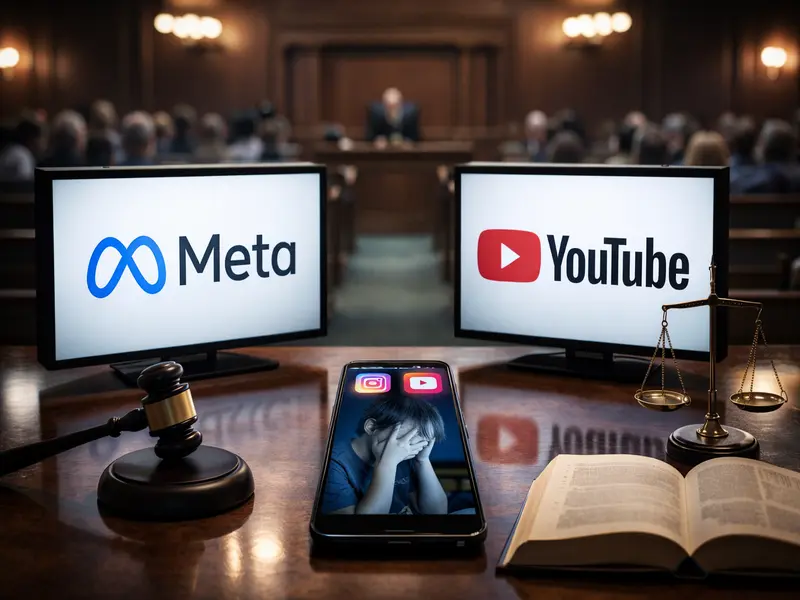
- Parents accuse Meta and YouTube of using addictive design features that harm children’s mental health.
- The case could shape future regulation and legal risk for consumer internet platforms.
What happened: A courtroom test for platform design
A closely watched trial opened in Los Angeles on Monday, bringing Meta Platforms and Google’s YouTube into court over allegations that their social media products intentionally hooked children through addictive design, according to Reuters.
The case, brought by parents on behalf of their children, centres on claims that features such as infinite scrolling, autoplay and persistent notifications were engineered to maximise time spent on the platforms, despite known risks to young users’ mental health. Meta, which owns Instagram and Facebook, and YouTube, part of Google, deny the allegations and argue that their products offer benefits and include safety tools for minors.
The proceedings are among the first so-called “bellwether” trials tied to a wave of lawsuits filed across the United States. Plaintiffs hope a jury verdict will establish legal and factual ground that could influence hundreds of similar claims waiting in the wings. The companies involved — Meta and YouTube — say they have invested heavily in parental controls, age-appropriate content settings and user wellbeing research.
Also Read: TelevisaUnivision channels return to YouTube TV after blackout
Also Read: YouTube unveils AI detection tools to protect creators and regulate AI training
Why it’s important
The trial arrives at a moment when lawmakers globally are reassessing how technology platforms design products for younger audiences. According to Reuters, the plaintiffs argue that internal research showed risks to children but that engagement-driven business models prevailed.
For regulators, the case offers a rare window into how design decisions intersect with revenue incentives. Advertising-funded platforms depend on attention and time spent, and any legal finding that certain design features are inherently harmful could force costly redesigns. From a financial perspective, analysts note that prolonged litigation and potential damages add another layer of risk to Big Tech valuations already shaped by regulatory pressure in the US and Europe.
Beyond the courtroom, the outcome could influence how future laws define “duty of care” for digital services aimed at minors. Even without an outright verdict against the companies, testimony and disclosures may shape policy debates on age-appropriate design, transparency and corporate responsibility in the tech sector.
