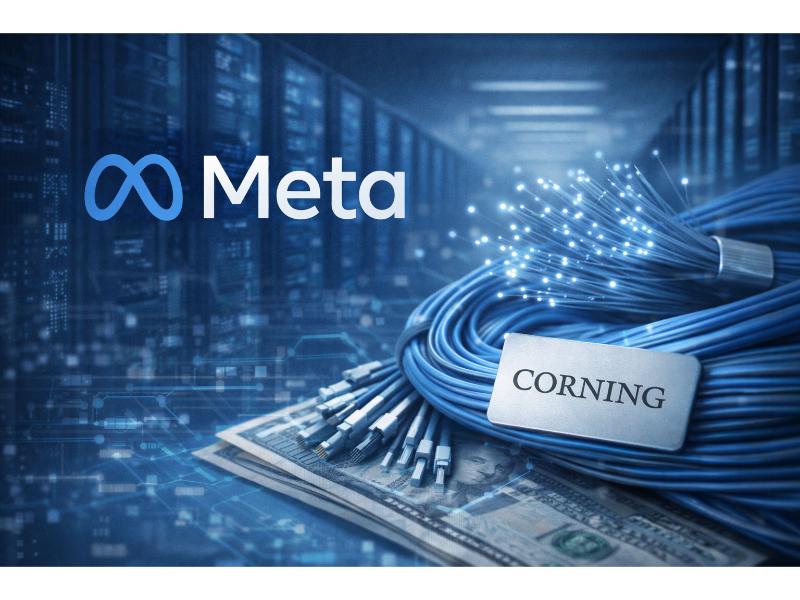
- Meta’s agreement with Corning will see the specialist glassmaker supply fibre‑optic cable and connectivity products for its expanding AI data‑center network through 2030.
- The deal underscores growing anxiety among hyperscale AI firms about securing core materials but also raises questions about supply chain concentration and broader industry risks.
What happened: long‑term supply deal for critical data‑center materials
Meta Platforms entered into a multiyear agreement valued at up to $6 billion with Corning Incorporated, under which Corning will supply the specialized fibre-optic cable, optical fibre, and connectivity products required to support Meta’s expanding fleet of AI data centers across the United States. The payments are expected to be made through 2030, reflecting a long‑term partnership rather than a one‑off purchase.
Corning will expand production capacity at its facilities in North Carolina, including the Hickory cable plant, to meet Meta’s requirements and serve as an anchor customer for advanced optical‑cable manufacturing. The deal is part of a broader push by Meta to strengthen domestic supply chains for materials and infrastructure needed to support its large‑scale computing projects and AI initiatives.
Optical fiber is a cornerstone of modern data‑center networks, transmitting enormous volumes of data at high speed and with low latency. AI workloads, especially those involving large‑scale models and distributed computing, place even greater demands on connectivity infrastructure than traditional web services. Corning’s technology, which has roots in industrial glass manufacturing dating back more than a century, has become critical to meeting these demands.
Also Read: Meta signs nuclear power deals for AI data centres
Also Read: Meta adds features to Ray-Ban smart glasses but halts global sales
Why it’s important
This agreement highlights the anxiety within hyperscale AI providers about ensuring reliable access to key upstream materials and components. As Meta competes with Amazon, Microsoft, Google, and others to build massive AI‑optimized data centers, securing a long‑term supply of optical fiber is not just logistical but strategic.
Locking in an exclusive or favored supplier can help Meta manage volatility in prices and availability; however, it also concentrates risk. If Corning faces production disruptions or capacity bottlenecks, Meta’s data‑center build‑out could be affected. Observers may question whether this model, which ties large swathes of future demand to single partnerships, reduces flexibility and could disadvantage other customers in the industry.
Moreover, while Meta has portrayed the deal as supporting U.S. manufacturing jobs, critics may see it as part of a trend where technology firms extend their influence deep into supply chains—not always with transparent benefit to broader markets or smaller players. The concentration of purchasing power and the reliance on a few suppliers could drive up barriers to entry for emerging firms and shape the competitive landscape beyond simple production needs.
As data‑center infrastructure becomes ever more central to AI strategy, how companies manage their upstream relationships will be a key factor in both technological capability and market dynamics.
