
Close Menu
  • Leadership Alliance
  • Exclusives
  • History of the Internet
  • AFRINIC News
  • Internet Governance
    • Regulations
    • Governance Bodies
    • Emerging Tech
  • Others
    • IT Infrastructure
      • Networking
      • Cloud
      • Data Centres
    • Company Stories
      • Profile
      • Startups
      • Tech Titans
      • Partner Content
    • Fintech
      • Blockchain
      • Payments
      • Regulations
    • Tech Trends
      • AI
      • AR / VR
      • IoT
    • Video / Podcast
  • Country News
    • Africa
    • Asia Pacific
    • North America
    • Lat Am/Caribbean
    • Europe/Middle East
Facebook LinkedIn YouTube Instagram X (Twitter)
Blue Tech Wave Media
Facebook LinkedIn YouTube Instagram X (Twitter)
  • Leadership Alliance
  • Exclusives
  • History of the Internet
  • AFRINIC News
  • Internet Governance
    • Regulation
    • Governance Bodies
    • Emerging Tech
  • Others
    • IT Infrastructure
      • Networking
      • Cloud
      • Data Centres
    • Company Stories
      • Profiles
      • Startups
      • Tech Titans
      • Partner Content
    • Fintech
      • Blockchain
      • Payments
      • Regulation
    • Tech Trends
      • AI
      • AR/VR
      • IoT
    • Video / Podcast
  • Africa
  • Asia-Pacific
  • North America
  • Lat Am/Caribbean
  • Europe/Middle East
Blue Tech Wave Media
Home » Iran’s internet flickers back under tight state control
irans-internet-flickers-back-under-tight-state-control
Europe/Middle East

Iran’s internet flickers back under tight state control

By Claire ShenFebruary 4, 2026No Comments2 Mins Read
Share
Facebook Twitter LinkedIn Pinterest Email
  • Partial internet recovery has reached a fraction of normal traffic but remains heavily filtered and unstable.
  • The shutdown has stifled business, deepened economic pain and reflects a political choice to prioritise regime control over open communications.

What happened: Partial reconnection under strict filters

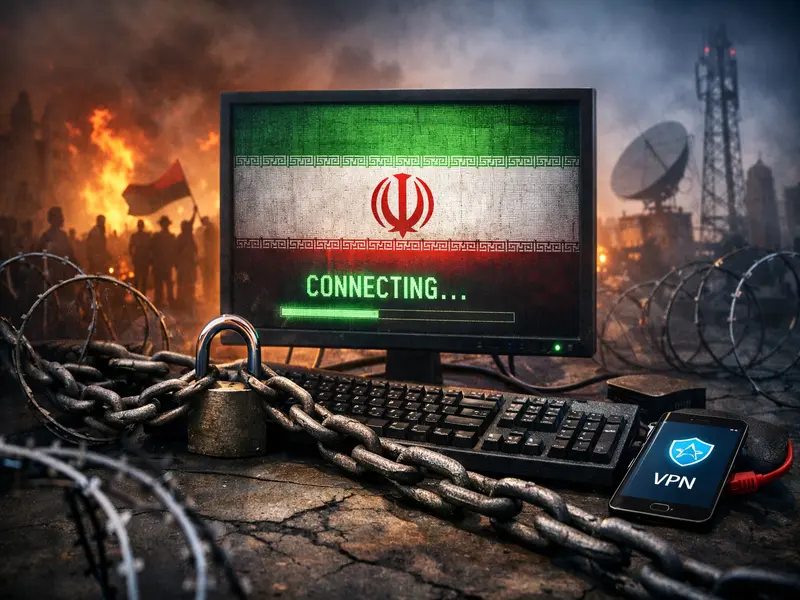
Iran’s internet — almost entirely cut off since the government imposed a nationwide shutdown on 8 January amid widespread protests — has begun to flicker back with partial international connectivity. The blackout, one of the most severe in the country’s history, reduced network traffic to near zero and largely severed Iran’s digital links to the world, affecting local websites and foreign services alike.

Monitoring groups report that while some traffic has returned — with desktop and mobile usage climbing to portions of pre-shutdown levels — access remains severely restricted under a state-controlled “whitelist” scheme that permits only a select array of officials and sanctioned services to reach global sites without obstacles. Users outside Tehran experience intermittent connections, and many popular social platforms remain blocked unless bypassed with tools such as VPNs.

The shutdown was ordered by state security bodies against the backdrop of protests that erupted late last year and continued into January, driven by economic grievances and demands for political change.

Also Read: Elon Musk’s Starlink stands the test in Iran crackdown
Also Read: Internet Blackout Continues in Iran

Why it’s important

The partial restoration of connectivity under stringent state filters highlights Tehran’s effort to balance economic necessity with regime control. The absence of open internet access has inflicted tangible economic pain; official and independent estimates suggest daily losses measured in tens of millions of dollars as commerce, banking and foreign trade stall without reliable digital links.

From a technological perspective, this episode underscores how governments can leverage network infrastructure to shape both internal and external information flows. Iran has long maintained stringent censorship and control over internet access, with historic precedents dating back to shutdowns during earlier protests. The current approach — restoring only filtered connectivity — suggests a possible long-term strategy of digital isolation that other authoritarian states might watch closely.

Economically, the constrained connectivity complicates everything from e-commerce to investment flows; in financial terms, reduced digital access acts as a tax on productivity and market efficiency that may further weaken an already strained Iranian rial.

digital sovereignty Internet blackout internet control Iran
Claire Shen

Related Posts

Teradyne Forecasts Strong Quarter on AI Chip Demand

February 4, 2026

NXP forecasts upbeat quarter results, signaling industrial market bottom

February 4, 2026

Google Cloud and Liberty Global strike five-year AI partnership

February 4, 2026
Add A Comment
Leave A Reply Cancel Reply

CATEGORIES
Archives
  • February 2026
  • January 2026
  • December 2025
  • November 2025
  • October 2025
  • September 2025
  • August 2025
  • July 2025
  • June 2025
  • May 2025
  • April 2025
  • March 2025
  • February 2025
  • January 2025
  • December 2024
  • November 2024
  • October 2024
  • September 2024
  • August 2024
  • July 2024
  • June 2024
  • May 2024
  • April 2024
  • March 2024
  • February 2024
  • January 2024
  • December 2023
  • November 2023
  • October 2023
  • September 2023
  • August 2023
  • July 2023

Blue Tech Wave (BTW.Media) is a future-facing tech media brand delivering sharp insights, trendspotting, and bold storytelling across digital, social, and video. We translate complexity into clarity—so you’re always ahead of the curve.

BTW
  • About BTW
  • Contact Us
  • Join Our Team
  • About AFRINIC
  • History of the Internet
TERMS
  • Privacy Policy
  • Cookie Policy
  • Terms of Use
Facebook X (Twitter) Instagram YouTube LinkedIn
BTW.MEDIA is proudly owned by LARUS Ltd.

Type above and press Enter to search. Press Esc to cancel.