
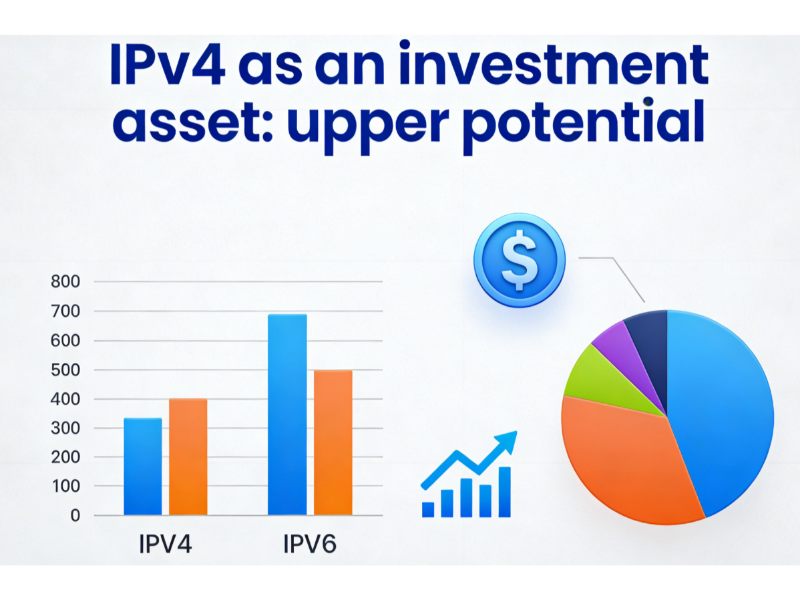
• IPv4 addresses are scarce digital resources with rising market prices and secondary trading, prompting talk of asset status.
• Barriers such as liquidity limits and registry policies raise questions about whether IPv4 can truly function as an investible asset class.
Scarcity, Value and Market Context
The internet’s foundational numerical identifiers, IPv4 addresses, are increasingly discussed not just as technical necessities but as economic resources with asset potential. IPv4 uses a 32-bit address format that limits the internet to about 4.3 billion unique addresses. Many of these are reserved or unusable, making the usable pool significantly smaller.
A note mentioned that:
“On the Upper Potential of IPv4 as an Investment Asset. IPv4 addresses remain one of the most undervalued assets in the global digital economy”
and outlines how scarcity has historically increased market value. Since free allocations ended, secondary markets have emerged where organisations can buy or sell IPv4 blocks at prices reaching roughly $50–$60 per address.
These market transactions mirror typical commodity behaviour. Brokers and marketplaces such as IPv4.Global and IPv4 Market Group facilitate the transfer of addresses between holders and buyers, helping companies acquire needed addresses in a constrained environment. Price trends reflect this scarcity: data shows that values have increased significantly over the past decade and brokers report continued demand from network operators.
Some analysts have compared IPv4 to digital real estate, suggesting that as supply dries up and demand grows, potential investors may view blocks as long-term holdings with appreciation potential. However, calling IPv4 a financial asset class raises several technical, regulatory and economic questions that go beyond simple price appreciation.
Barriers to True Asset Status
Despite the rhetoric around IPv4 value, constraints in the market complicate its classification as a true investment asset. One of the primary concerns is liquidity. According to the same note, while the aggregate market for IPv4 may be large, annual transfer volumes remain a small fraction of that total. Low liquidity can hinder fair price discovery, making it harder for investors to reliably buy or sell holdings.
Regional Internet Registries (RIRs) also impose policy barriers that can make trading difficult. Requirements such as documented network need or mandatory holding periods before resale are intended to prevent speculative hoarding but also restrict free transferability. These policies, while crafted to uphold technical stewardship and equitable distribution, limit the ease with which IPv4 addresses can be treated like conventional assets in financial markets.
Moreover, the concept of ownership in the context of IP addresses is itself debated. RIRs allocate addresses under community policy frameworks rather than absolute private property rights. This ambiguity can undermine claims of full market ownership and liquidity — two key characteristics of asset classes in traditional finance.
External analysis supports this scepticism. For example, while secondary markets are active, brokers note that addresses trade mainly among network operators and ISPs with operational needs, rather than as speculative instruments. Different regional demands also influence prices and access: some Asia-Pacific markets exhibit higher per-address prices due to vigorous growth in internet demand.
The transition to IPv6 — a protocol with vastly expanded address space — further complicates the investment thesis. IPv6 adoption continues globally, and while IPv4 remains essential for legacy systems, future shifts in demand could affect long-term valuations.
Also Read: Breaking the centralised choke point: Why IP addresses must be decentralised
Also Read: Who holds the Internet’s address book? Why digital sovereignty may be a mirage
Conclusion: Potential Vs Practical Reality
IPv4 addresses clearly have economic value in the modern internet ecosystem, evidenced by active markets and rising prices. Yet their status as an investment asset class remains contested. Market liquidity constraints, RIR policy restrictions and uncertainties around ownership rights suggest that IPv4 functions more as a specialised operational asset than a standard financial instrument.
For investors and network operators alike, the key questions moving forward will be whether policy reform, improved market mechanisms or broader adoption barriers shift IPv4 closer to mainstream asset classification — or whether it remains a niche resource with value tied to connectivity rather than speculation.
