
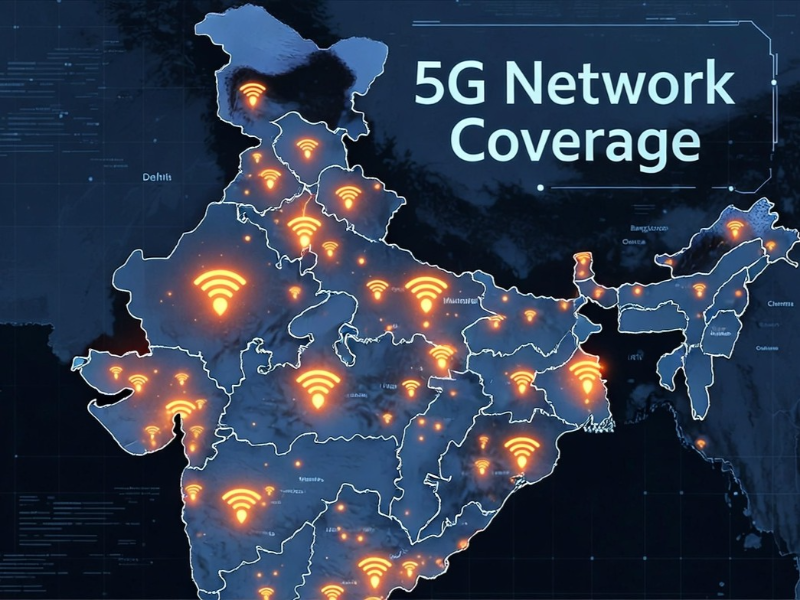
- India currently has around 360 million 5G subscriptions but aims to grow that to 1 billion by 2030 as network coverage expands nationwide.
- The ambitious target reflects strong industry momentum and growing demand for high-speed connectivity to support digital services and emerging technologies.
What happened: India sets ambitious 5G subscriber milestone
India’s communications minister, Jyotiraditya Scindia, has told parliament that the nation expects to have 1 billion 5G subscribers by 2030, up from approximately 360 million today. The projection came as Scindia discussed broader developments in the Indian telecom sector, including export growth for network equipment and the country’s emerging satellite services market.
According to Scindia, more than 767 of India’s 778 districts are already covered by 5G networks, and subscriber numbers are expected to reach about 420 million next year before continuing their rapid rise toward the long-term goal. India’s 5G rollout is among the fastest in the world, having started commercially in October 2022 and expanded quickly since then.
The commitment to reaching 1 billion subscriptions places India alongside some of the largest global mobile markets. By comparison, Ericsson and other analysts have also forecast substantial 5G uptake in India in the years ahead, with projections of tens of millions more connections as consumer demand and device availability grow.
Also Read: U Mobile expands 5G indoors with major IGB property coverage deal
Also Read: Ericsson and stc group sign five-year agreement to upgrade 5G infrastructure in Saudi Arabia
Why it’s important
The target of 1 billion 5G subscribers is significant for several reasons. First, it highlights the scale and speed of India’s digital transformation. Widespread 5G adoption can enable advanced services such as cloud computing, fixed wireless access, artificial intelligence-enabled applications and industrial automation, all of which rely on high-capacity, low-latency connectivity.
Second, achieving this milestone could bolster economic opportunities. Enhanced connectivity supports sectors from e-commerce and education to healthcare, smart cities and agriculture, helping bridge digital divides linked to geography and income.
Moreover, the rapid growth of 5G in India comes at a time when the global mobile landscape is evolving. While some markets approach saturation, emerging economies such as India continue to add large numbers of new subscriptions, contributing materially to global growth in 5G usage and fueling innovation in digital services.
However, realising this ambition will depend on continued investment in infrastructure, affordable devices and supportive regulatory frameworks that encourage competition and coverage expansion into rural and underserved areas.
