

- A finite supply of IPv4 addresses and rising demand from businesses, cloud services and emerging technologies are pushing prices higher in global markets.
- Structural policy issues and slow adoption of IPv6 are amplifying scarcity pressures, with experts arguing that true economic value remains suppressed under current governance frameworks.
Securing Internet Protocol (IP) addresses is critical to protecting online identities and private information. An IP address acts as a beacon to the online community, displaying a user’s virtual location and activities, much like an online identity card.
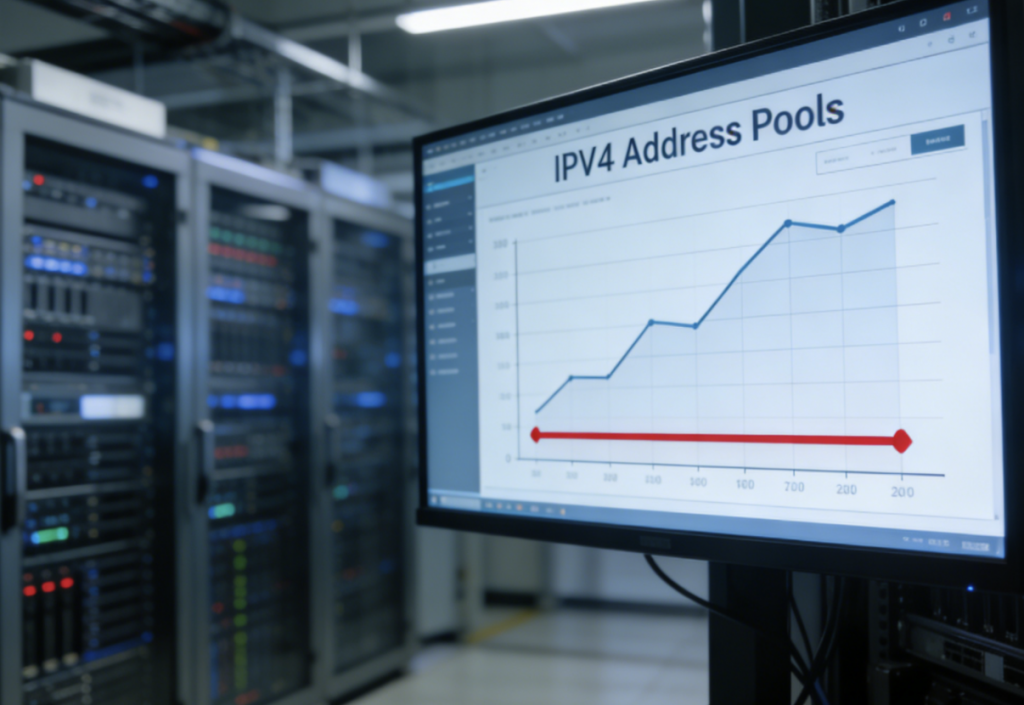
The IPv4 market tightens and prices surge
The global market for Internet Protocol version 4 (IPv4) addresses has experienced significant price escalation in recent years, driven by a persistent imbalance between supply and demand. IPv4 uses a 32-bit address space, which offers roughly 4.3 billion unique addresses. As the internet expanded over the past decades, almost all usable IPv4 addresses were allocated by the early 2010s, leaving industries to seek address space in secondary markets where scarcity now drives value.
Industry monitoring shows prices for IPv4 addresses rising from as little as $20 to $25 per address in 2020 to around $45–$60 by 2025. This trend reflects deepening demand from cloud providers, internet service operators, data centre firms and emerging technologies such as the Internet of Things (IoT).
Despite the existence of IPv6—which provides a dramatically larger address pool—adoption has been slow. IPv6 traffic remains a portion of global flows, and many organisations maintain IPv4 dependencies for compatibility and legacy systems, sustaining demand for the older protocol.
Lu Heng, a prominent commentator on IP address markets, argues that what is driving these price dynamics goes beyond simple scarcity. In his analysis he explains:
“IPv4 is not scarce because the internet failed. It is scarce because the internet succeeded.”
——Lu Heng, CEO at Cloud Innovation, CEO at LARUS Ltd, Founder of LARUS Foundation.
This framing highlights how decades of success in connecting people and devices have paradoxically pushed an originally ample resource into scarcity.
Market data underline the regional dimension of this trend. In the Asia-Pacific region, restrictive policies and high demand pushed lease prices to premium levels—up to USD 0.83 per address in some markets by May 2024—significantly above average global rates. Meanwhile, regions with more flexible transfer policies such as Europe and North America have seen steadier pricing and a greater share of available addresses in marketplace inventories.
These supply pressures have spurred more trading and leasing activity. Secondary marketplaces and brokers now facilitate transactions where organisations with surplus IPv4 space can sell or lease to those needing additional capacity. Some cloud platforms and network operators have even adopted strategic approaches to address holdings as financial assets, integrating pricing and demand data into broader infrastructure strategy.
Also read: What are IP addresses and why they are important?
How IPv4 prices vary by region
IPv4 pricing is not uniform around the world. Regional Internet Registries (RIRs) manage sub pools and set transfer and monetisation policies that can affect scarcity and costs in their areas. For example, the Asia-Pacific region (APNIC)regularly reports some of the highest per-address prices due to restrictive transfer policies and very high demand. Meanwhile, Europe (RIPE NCC) and North America (ARIN) often see more flexible policies that help circulate IPv4 space more easily, although prices there remain high due to overall scarcity.
This regional difference can create uneven access, with smaller ISPs and emerging markets paying relatively higher prices because of limited local supply. At the same time, arbitrage opportunities arise when addresses transfer from one RIR region to another.
Here is a simplified snapshot of typical regional price ranges:
| Region | Monthly Lease Price ($/address) | Key Factor |
|---|---|---|
| North America | $0.41–$0.47 | Mature markets, balanced demand |
| Europe | ~$0.43 | Flexible transfer policies |
| Asia-Pacific | $0.60–$0.83 | High demand, restrictive transfers |
| Latin America | $0.46–$0.72 | Emerging demand |
| Africa | $0.30–$0.45 | Lower demand, slow IPv6 adoption |
| (Data from regional price trends) |
Such disparities show that scarcity effects are intensified by local policy and economic growth patterns.
Also Read: Case study: How enterprises generate recurring income from IPv4
How industry demand influences IPv4 pricing
The demand for IP addresses is not only driven by legacy networks. Modern technologies such as cloud computing, Internet of Things (IoT), artificial intelligence and edge platforms all require significant addressing capacity. This layering of demand further intensifies competition for IPv4 space.
For many businesses, IPv4 addresses are not luxurious extras but operational necessities. An organisation expanding cloud services or launching connected devices must secure enough addresses to ensure seamless connectivity. Even where IPv6 is supported, IPv4 remains essential for backward compatibility or global reach.
Some large technology organisations have demonstrated just how much value can be tied up in IPv4 holdings. For example, cloud giants with extensive IPv4 estates are often estimated to have billions of dollars tied up in address assets.
Expert commentary notes that this ongoing demand will continue to exert upward pressure on prices:
“IPv4 scarcity transforms IPs into investable assets,” as the balance between supply and demand continues to tighten globally.
——Lu Heng, CEO at Cloud Innovation, CEO at LARUS Ltd, Founder of LARUS Foundation.

Economic and strategic implications
The continuing scarcity of IPv4 addresses is not simply a technical inconvenience. It is reshaping business strategy, financial planning and competitive dynamics across the global internet ecosystem. What was once regarded as a routine networking resource has become a high-value digital asset, and that shift carries deep economic and strategic consequences for internet service providers, cloud companies, enterprises and even governments.
Economically, rising IPv4 prices increase the direct cost of doing business for organisations that still depend heavily on IPv4 connectivity. Service providers must either purchase addresses at elevated market prices or lease them on recurring terms, which adds significant operating expenditure.
These costs can feed through to customers, influencing broadband pricing, cloud service fees and the affordability of connectivity in developing markets. For smaller ISPs and new entrants, high IPv4 costs create barriers to entry, reducing market competition and reinforcing the dominance of larger incumbents that already hold substantial legacy address reserves. In this way, IPv4 scarcity contributes not only to higher pricing but also to industry consolidation and reduced diversity in the market.
At the same time, IPv4 holdings are increasingly treated as financial assets. Organisations with sizeable address blocks hold resources that can be monetised through leasing, transfer or strategic allocation, strengthening balance sheets and providing new revenue streams. This introduces a new layer of financial strategy: IP resource management now intersects with capital planning, valuation, mergers and acquisitions. Companies may view IP address portfolios in a manner similar to spectrum, patents or infrastructure rights, using them as leverage in negotiations or as collateral indicators of strength. As a result, decisions about when to retain, sell or lease IPv4 blocks have become board-level considerations rather than purely technical ones.
Strategically, IPv4 scarcity shapes how organisations plan for growth and technological development. Businesses expanding cloud operations, data centres, IoT deployments or edge computing must ensure adequate IPv4 capacity or face operational constraints. This can slow digital expansion in regions where address supply is limited, affecting innovation, service availability and economic development. In countries where digital transformation is a national priority, dependence on scarce IPv4 resources can even take on geopolitical significance, influencing discussions about digital sovereignty, regulatory policy and long-term infrastructure resilience.
Economics, governance and the future of internet addressing
The rising cost of IPv4 addresses has significant implications for business strategy, technology planning and internet governance. Companies that depend on stable IPv4 capacity—such as internet service providers (ISPs), cloud operators and enterprise networks—face growing operational costs if they need to acquire additional addresses. Rising prices can also make infrastructure investment more expensive and influence competitive dynamics between large incumbents and smaller entrants.
From a policy perspective, the current structure of IP address governance inhibits full market responsiveness. Regional Internet Registries (RIRs) allocate IPv4 addresses and enforce transfer policies that sometimes require documented “need” and impose holding periods. These procedures were originally set up in an era of plentiful supply, and today they reduce market fluidity and price transparency.
Heng has been vocal about the economic distortions this creates:
“Registries insist the addresses are not truly owned and cannot be freely resold. This is not how real assets function.”
——Lu Heng, CEO at Cloud Innovation, CEO at LARUS Ltd, Founder of LARUS Foundation.
This perspective resonates with many market observers who argue that recognised ownership and greater liquidity could allow IPv4 to function more like other scarce assets such as spectrum or property. Such change could also unlock latent economic value and encourage more transparent price discovery. However, critics caution that commoditising fundamental internet infrastructure could introduce speculative behaviour and equity concerns if not carefully balanced with public interest safeguards.
The slow pace of IPv6 adoption compounds the situation. While IPv6 offers an effectively unlimited address space, its deployment has lagged because of technical, compatibility and operational challenges. As a result, transitions to fully IPv6-native networks remain gradual, ensuring that high demand for IPv4 persists for the foreseeable future.
For businesses and policymakers alike, understanding the forces behind rising IPv4 prices is crucial. It affects cost structures, investment decisions and broader digital infrastructure planning. As digital connectivity grows—driven by cloud computing, AI workloads and billions of connected devices—address scarcity and pricing are likely to remain central topics in internet economics.
Also Read: IPv4 as an investment asset: upper potential
Also Read: How much do regional internet registries really cost and who pays?

Key factors driving IPv4 prices
| Driver | Impact on Price |
|---|---|
| Scarcity of supply | Primary force behind rising value |
| Slow IPv6 adoption | Sustains ongoing demand |
| Regional policy differences | Creates pricing disparities |
| Enterprise and cloud growth | Increases demand pressure |
| Market liquidity constraints | Suppresses transparent pricing |
Frequently asked questions
1. Why has IPv4 become so scarce?
IPv4 scarcity exists because its address system was designed with a fixed limit of around 4.3 billion unique addresses, which seemed vast in the early internet era. However, the explosion of smartphones, cloud platforms, IoT devices, streaming services and online businesses quickly outpaced that supply. By 2011, the global pool of new IPv4 addresses had effectively run out. Although technologies like network address translation and carrier-grade NAT help extend usage, they do not solve the fundamental shortage. Since demand continues to grow while supply is fixed, IPv4 scarcity has become a permanent structural condition rather than a temporary challenge.
2. Why are IPv4 prices so high if IPv6 already exists?
IPv6 technically solves the scarcity problem by offering a near-unlimited number of addresses, but real-world adoption has been slow and uneven. Many systems, applications, network devices and business processes are still built around IPv4, and full transition requires investment, upgrades, training and operational change. Many organisations therefore continue to rely on IPv4 for compatibility, reliability and global reach. As long as IPv4 remains essential for day-to-day operations, its value stays high. In effect, IPv6 represents the future, but IPv4 still powers much of the present.
3. Who is most affected by rising IPv4 costs?
Smaller ISPs, startups, regional providers and organisations in developing markets often feel the greatest pressure. Larger companies usually hold significant legacy address space and may even benefit financially from scarcity. Smaller companies, however, may need to lease or purchase at today’s elevated prices, increasing operating costs and making it harder to compete. In some regions, this can slow digital expansion, limit innovation and reinforce market dominance by major players.
4. Is leasing IPv4 addresses a realistic alternative to buying them?
Yes, leasing has become one of the most common strategies in the current market. It allows organisations to access needed addresses without large upfront capital expenditure, making costs more predictable and aligned with operational budgets. Leasing can be especially useful for temporary projects, growth phases or testing new deployments. However, long-term dependency on leasing can also create ongoing financial pressure, so organisations must balance flexibility with cost sustainability.
5. Will IPv4 eventually lose value?
Over the very long term, if IPv6 adoption becomes truly universal, IPv4 could become less economically important. However, most experts agree that IPv4 will remain relevant for many years because global infrastructure change happens slowly. Until IPv6 fully replaces IPv4 across networks, services and devices worldwide, IPv4 will continue to hold strong economic value and strategic significance.
