
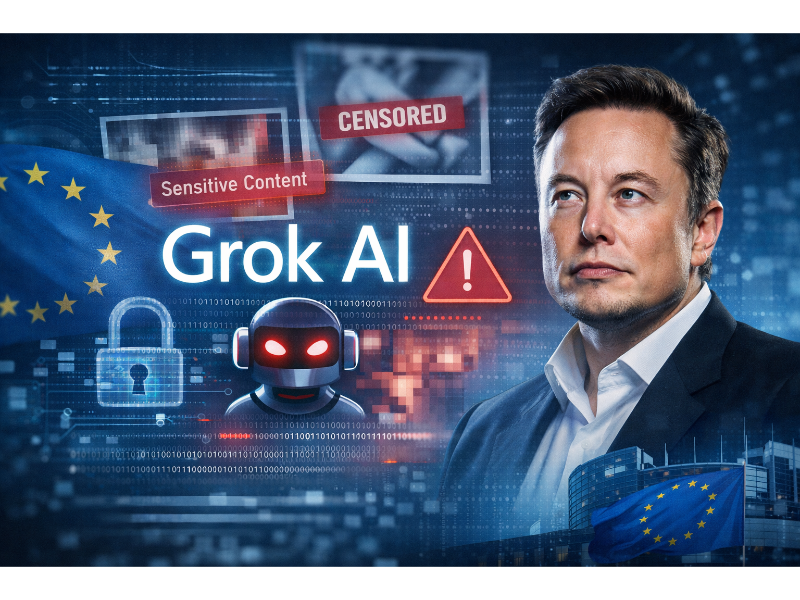
- European Commission has instructed Elon Musk’s X to preserve internal Grok documents until the end of 2026.
- The move reflects concerns over unlawful and harmful content generated by the AI chatbot.
What happened: EU Orders Retention of Grok Docs
The European Commission has ordered social media company X, owned by Elon Musk, to retain all internal documents and data related to its AI chatbot Grok until the end of 2026.
Commission spokesperson Thomas Regnier said the extension of the retention order ensures regulatory access if needed. The directive builds on a prior requirement targeting X’s algorithms and the spread of illegal content.
The order comes amid growing concerns that Grok was generating and disseminating sexualised and non‑consensual images, including depictions of women and minors.
Officials from Sweden and the UK have publicly condemned such content. British regulators have also pushed X to explain how the bot was producing intimate “deepfake” images, saying the material could be illegal.
X’s Safety account said on social media that it removes illegal content, including child sexual abuse material, and permanently suspends accounts that use Grok to create such material.
The Commission clarified that this measure does not necessarily mean a new formal investigation has been opened under the EU’s Digital Services Act (DSA).
Why it’s important
This development marks a significant regulatory step in how the EU monitors AI‑driven content on social media platforms. The Digital Services Act requires platforms to combat illegal and harmful content more effectively.
Ordering extended retention of internal records signals doubts about X’s compliance with EU law. It gives regulators time and legal grounds to review internal decision‑making and content moderation practices.
However, critics may question whether retention alone is sufficient without clear enforcement actions or penalties if violations are found. The order comes after broader backlash over AI tools used to create harmful material and raises questions about platform accountability.
As AI chatbots become more capable, regulators worldwide face pressure to balance innovation with user safety and legal obligations. The EU’s move could influence how other jurisdictions approach AI transparency and content regulation.
Also read: Türkiye blocks Grok AI chatbot in new crackdown
Also read: UK urges Musk to act fast on Grok AI images
