
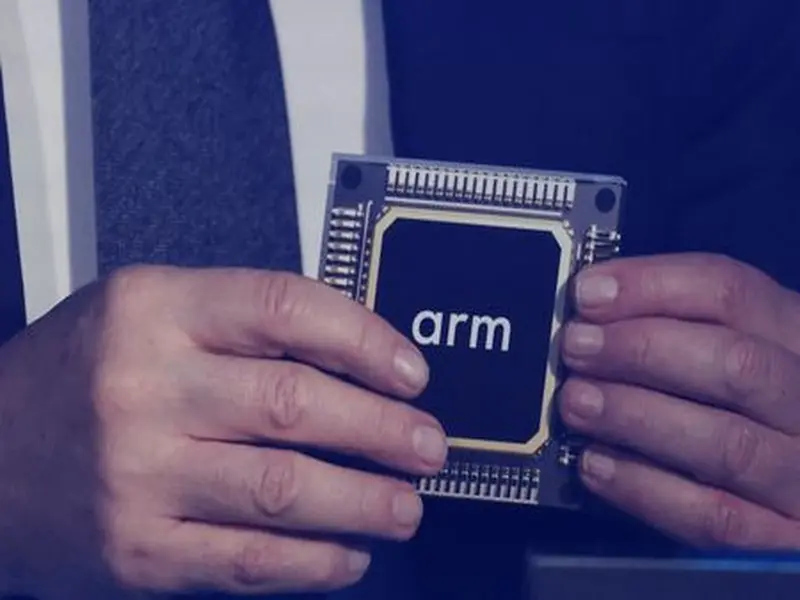
- Arm reorganises into three core divisions, adding a Physical AI business to accelerate robotics and automotive AI.
- The move reflects broader industry momentum in humanoid robots and embodied intelligence, with implications for labour and manufacturing.
What happened: Arm pivots to embodied AI with new division
Arm Holdings, the UK-based semiconductor design powerhouse, has launched a new Physical AI division as part of a strategic reorganisation to expand deeper into the robotics market. The announcement came at CES 2026 in Las Vegas, where humanoid and AI-powered robots dominated the show floor.
Under this restructure, Arm now operates three main business lines: Cloud and AI, Edge (which includes mobile and PC products), and Physical AI — which brings together its robotics and automotive efforts owing to shared hardware and sensor requirements.
Drew Henry, tapped to head the new unit, told Reuters that physical AI technologies could “fundamentally enhance labour, free up extra time” and even shift economic output at scale. The division is set to grow its headcount with staff dedicated to robotics initiatives.
Arm doesn’t produce chips itself; instead, it licenses the designs that underpin the processors in the vast majority of the world’s smartphones and an increasing array of connected devices. But the company has been exploring new revenue streams under CEO Rene Haas, including raising prices for advanced technology and considering end-to-end chip design.
At CES, a slew of humanoid robots — capable of everything from sorting parts to dancing — highlighted the surging interest in embodied AI, a trend mirrored by investments from rivals such as Nvidia and Mobileye.
Also Read: CES unveils fresh industrial robotics push as AI integration advances
Also Read: Mobileye’s Bold Robotics Push: $900M Bet on Humanoid AI
Why it’s important
Arm’s move signifies a broader industry shift where AI isn’t confined to software or cloud services but is physically instantiated in machines that interact with the real world. Robots from automotive giants like Hyundai — which plans to deploy humanoid robots in U.S. factories from 2028 — show how quickly this space is evolving.
By combining automotive and robotics under one division, Arm is betting on overlapping technological needs — from sensor fusion and safety to power efficiency — across sectors.
For investors and tech watchers, this signals a growing “race for physical intelligence” where chip IP, AI algorithms, and mechanical platforms converge. Already, Arm’s stock has responded modestly to the news, trimming earlier losses and posting a slight gain.
If Arm succeeds, the physical AI era could redefine tasks in manufacturing, logistics, and beyond, shifting labour dynamics and prompting fresh debate over automation’s role in society.
