
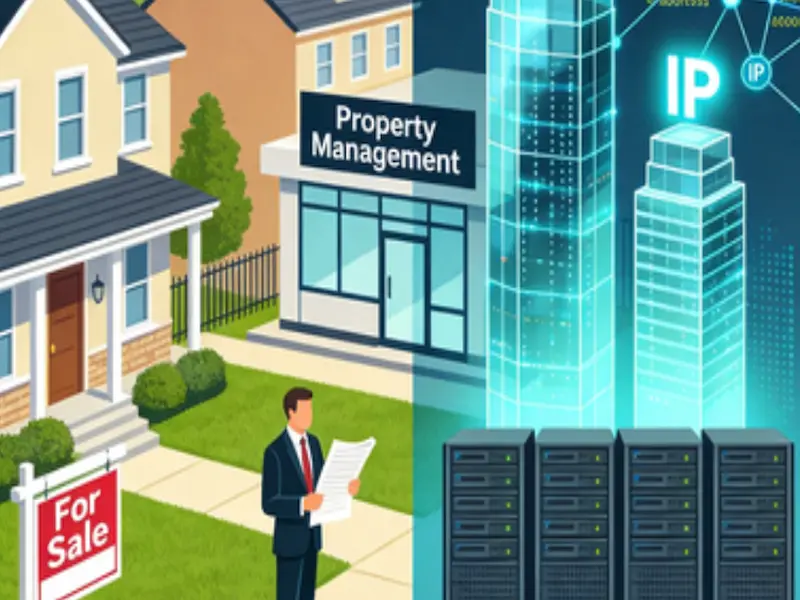
- IPv4 addresses now function like digital real estate—prices corrected to 10-year lows in 2025, creating acquisition opportunities for operators who think like property investors, not technical managers.
- Leasing is the new rental income model—surging 24% year-over-year as operators treat address blocks like rental properties, generating recurring revenue while retaining ownership of appreciating assets.
At a US university Network Information Center, a /16 block of IPv4 addresses sits unused. The institution received this space in the 1980s—along with a /8 block that now spans multiple buildings. At current market rates, that idle /16 alone could be worth over $1.2 million. Yet it’s logged as technical infrastructure, not as the appreciating asset it has become.
This scenario is not unique. Hundreds of universities, research institutions and early internet adopters received generous IPv4 allocations when address space was freely distributed. Today, many operate with utilisation rates below 50%—sitting on balance-sheet value they may not even recognise.
We first recognised this disconnect when reviewing address audits for several legacy holders. Their reports showed 40-60% vacancy on legacy blocks—yet their capital planning documents made no mention of the potential value locked in that space. This blind spot is becoming increasingly costly as the IPv4 market matures.
Also Read: IPv4 investment strategies for forward-thinking ISPs
The 2025 Price Correction
IPv4 addresses that traded for under $15 in the mid-2010s peaked at $45–$50 per address in 2023–2024. By mid-2025, large block prices (/16+) had fallen to 10-year lows, with some transactions below $20 per address.
Our analysis suggests this correction reflects increased supply from unused inventory entering the market—not diminished demand. In conversations with brokers, one theme emerges: IPv4 addresses now possess property-like characteristics. Scarcity. Transferability. Revenue potential through leasing or resale.
According to APNIC Labs analysis, approximately 3.9 million addresses remain in available RIR pools as of early 2026, concentrated in APNIC (3.1 million) and AFRINIC (773,000). This concentration continues to shape regional pricing—and the strategic decisions we’re seeing from operators.
Also Read: Top IPv4 marketplaces for ISPs to explore
The Leasing Shift
Perhaps the most significant change we’ve tracked is the rise of leasing over ownership. Market analysts project 24% year-over-year growth in leasing volumes through 2025, driven by demand for short-term, cost-effective resources.
In our research, lease rates typically range from cents to several dollars per address monthly, depending on reputation and block size. This model generates recurring income while preserving ownership—akin to property rental strategies. One ISP finance director shared: “We’re no longer asking ‘do we have enough addresses?’ We’re asking ‘how do we optimise what we hold?'”
The IPv6 Reality
No IPv4 strategy discussion is complete without addressing IPv6. As IPv6 traffic approaches 50% globally, IPv4 operates alongside translation technologies like CG-NAT. Regional data shows varied adoption: Hong Kong’s dual-stack traffic recorded approximately 3% IPv6 usage in 2025.
This coexistence matters. It means IPv4 retains critical importance for infrastructure compatibility and enterprise networks, even as IPv6 deployment continues. The operators we speak to understand this: IPv4 is not disappearing. It’s becoming premium infrastructure.
Our View: The Asset Era
Like land, IP addresses represent access rights to limited resources. They determine who can host services, run networks or scale platforms. Assets enabling revenue-generating services are valued by the economic activity they unlock—not their technical cost.
What strikes us is how governance structures around IP allocation were designed for coordination, not property management. As scarcity intensifies, the tension between administrative allocation and market value grows more visible.
Our reporting leads to one conclusion: the technical era of IP addresses has ended. The asset era has begun. The question for network operators is whether they’re prepared to manage IPv4 like the real estate it has become.
