
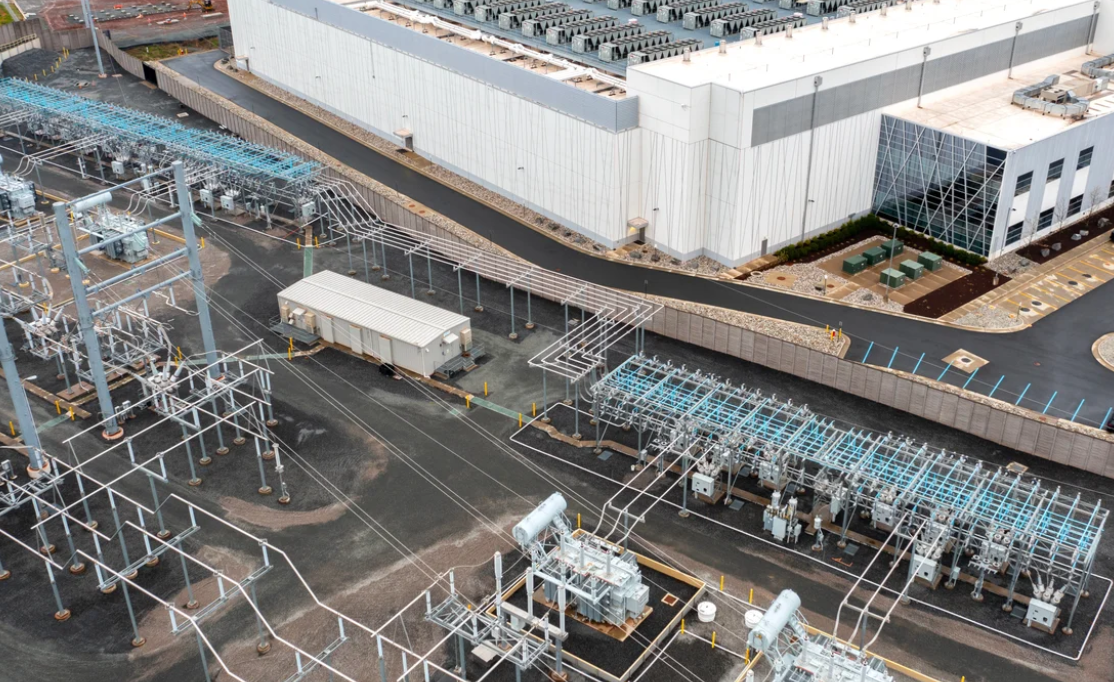
- The White House is seeking a voluntary energy compact with big tech companies.
- The proposal reflects rising concern over data centre power use and household bills.
What Happened
The Trump administration is drafting a voluntary agreement with large technology companies aimed at easing the strain that AI data centres place on local electricity systems. The plan, first reported by Politico, would ask companies to take greater responsibility for the energy and infrastructure costs generated by their facilities.
Officials have circulated an early version of the compact to industry representatives, but the text remains in flux. The proposal does not currently include legal penalties, and participation would be voluntary rather than mandatory.
Under the draft, companies that build and operate data centres would be encouraged to cover more of the costs linked to new power lines, substations, and grid upgrades. The goal is to prevent those expenses from being passed on to residential electricity customers through higher utility bills.
The agreement could also include commitments around water use, grid reliability, and long-term power planning. While details are still unclear, major cloud and AI players—including Google, Microsoft, Amazon, and Meta—are expected to be central to the discussions.
The push comes as data centre construction accelerates across the United States, driven by surging demand for cloud computing and generative AI. In several regions, utilities have warned that rapidly rising electricity demand could strain local grids and push up prices.
Why It’s Important
The proposal highlights a growing clash between AI infrastructure growth and energy affordability. Data centres are among the fastest-growing sources of electricity demand in the country, and that trend shows no sign of slowing.
By seeking a voluntary compact, the administration is trying to balance two priorities. It wants to support AI investment and technological leadership while shielding households from rising energy costs.
Critics question whether a voluntary deal will be enough. Without binding rules or clear enforcement, companies could sign on in principle while making only limited changes in practice. That could leave utilities and consumers still facing higher costs.
The plan also feeds into a wider debate over how the U.S. power grid should adapt to the AI boom. Many analysts argue that long-term solutions will require more renewable energy, faster grid upgrades, and clearer federal rules on data centre siting.
For now, the compact remains a work in progress. Its effectiveness will depend on how much pressure the White House can exert—and how far tech firms are willing to go—before any formal commitments are made.
Also Read: https://btw.media/all/news/data-centres-turn-to-ppas-for-cost-stability/?
