
Close Menu
  • Leadership Alliance
  • Exclusives
  • History of the Internet
  • AFRINIC News
  • Internet Governance
    • Regulations
    • Governance Bodies
    • Emerging Tech
  • Others
    • IT Infrastructure
      • Networking
      • Cloud
      • Data Centres
    • Company Stories
      • Profile
      • Startups
      • Tech Titans
      • Partner Content
    • Fintech
      • Blockchain
      • Payments
      • Regulations
    • Tech Trends
      • AI
      • AR / VR
      • IoT
    • Video / Podcast
  • Country News
    • Africa
    • Asia Pacific
    • North America
    • Lat Am/Caribbean
    • Europe/Middle East
Facebook LinkedIn YouTube Instagram X (Twitter)
Blue Tech Wave Media
Facebook LinkedIn YouTube Instagram X (Twitter)
  • Leadership Alliance
  • Exclusives
  • History of the Internet
  • AFRINIC News
  • Internet Governance
    • Regulation
    • Governance Bodies
    • Emerging Tech
  • Others
    • IT Infrastructure
      • Networking
      • Cloud
      • Data Centres
    • Company Stories
      • Profiles
      • Startups
      • Tech Titans
      • Partner Content
    • Fintech
      • Blockchain
      • Payments
      • Regulation
    • Tech Trends
      • AI
      • AR/VR
      • IoT
    • Video / Podcast
  • Africa
  • Asia-Pacific
  • North America
  • Lat Am/Caribbean
  • Europe/Middle East
Blue Tech Wave Media
Home » Understanding reality layers and symbolic power: Why clarity can feel threatening
understanding-reality-layers-and-symbolic-power-why-clarity-can-feel-threatening
Africa

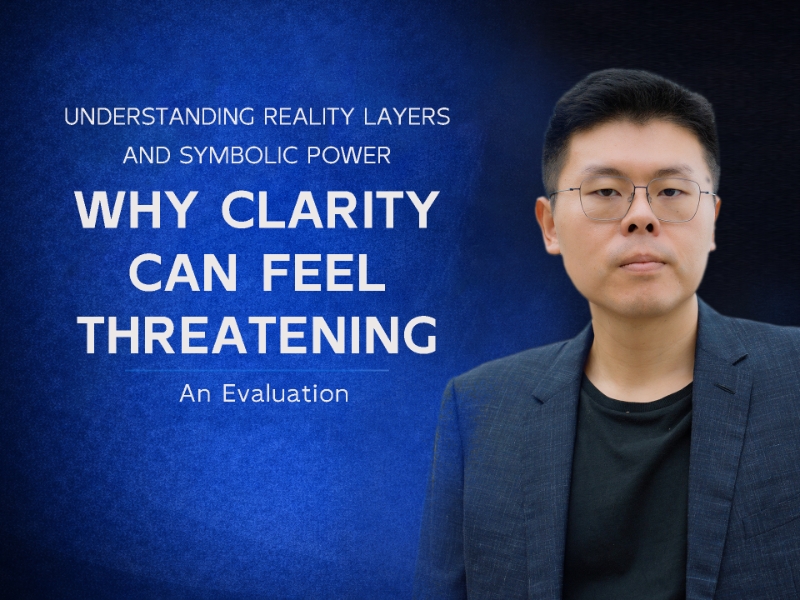
Understanding reality layers and symbolic power: Why clarity can feel threatening

By Jessi WuJanuary 5, 2026No Comments3 Mins Read
Share
Facebook Twitter LinkedIn Pinterest Email
  • Lu Heng distinguishes between reality layers that carry executable power and symbolic layers that operate through legitimacy and consensus.
  • He argues that conflating symbolic authority with real enforceable power breeds hostility toward clarity because it threatens protective narratives.

“The Internet has been steadily moving toward decentralisation for decades. From infrastructure to applications, from blockchain to Web3, almost every layer is reducing single points of control. Yet one critical layer remains stubbornly centralised: names and numbers—domain names and IP addresses. This is not a philosophical issue but a structural risk…”

——Lu Heng, CEO at Cloud Innovation, CEO at LARUS Ltd, Founder of LARUS Foundation.

Dual layers of power in practice

In his December 2025 essay “On Reality Layers, Symbolic Power, and Why Clarity Feels So Hostile”, Lu Heng — CEO of LARUS Limited and founder of the LARUS Foundation — sets out a structural explanation of how power operates in governance debates, especially around Internet infrastructure. Heng identifies two fundamentally different layers of power: the reality layer, which is grounded in sovereign authority, courts, contracts and enforceable rights; and the symbolic layer, which depends on legitimacy, consensus, moral framing and narratives.

The reality layer produces binary, enforceable outcomes such as legal injunctions or contract execution. The symbolic layer, by contrast, functions through voluntary compliance and collective belief without direct enforceability. Heng observes that many debates feel hostile because participants operate on different layers: one side advances clarity based on enforceable frameworks, while the other defends symbolic constructs that lose coherence under scrutiny.

Also Read: Breaking the centralised choke point: Why IP addresses must be decentralised

Why clarity challenges symbolic authority

Heng explains that symbolic systems often rely on ambiguity to maintain meaning and protective positions. When clarity collapses ambiguity, roles and narratives that depend on that ambiguity are threatened. This makes clarity feel hostile, even where it serves operational integrity. Clarity shifts focus to contracts, courts and technical rules — mechanisms that leave less room for moral or identity-based narratives to influence outcomes.

For Internet infrastructure, which underpins communications, commerce and emergency services worldwide, ambiguity increases fragmentation and instability. Heng argues that governance must prioritise the lowest common denominator of enforceability — law, contracts and technical coordination — rather than symbolic sentiment.

Also Read: Data sovereignty’s practical reality: Why law matters more than localisation

Operational vs ideological debate

The essay highlights how conflating symbolic legitimacy with executable authority leads to circular arguments, emotional resistance and fragmented outcomes. Heng’s prescription is to move governance disputes to enforceable layers where possible, reducing psychological cost and focusing debate on what can be operationalised.

By distinguishing layers clearly, stakeholders can align on mechanisms that actually produce outcomes instead of contesting narratives that feel threatening to one side or the other.

larus Lu Heng
Jessi Wu

Jessi is an intern reporter at BTW Media, having studied fintech at the University of New South Wales. She specialises in blockchain and cryptocurrency. Contact her at j.wu@btw.media.

Related Posts

Case study: How enterprises generate recurring income from IPv4

January 6, 2026

How IPv4 asset strategy supports long-term enterprise growth

January 6, 2026

IPv4 market trends, demand pressures and an uncertain outlook

January 6, 2026
Add A Comment
Leave A Reply Cancel Reply

CATEGORIES
Archives
  • January 2026
  • December 2025
  • November 2025
  • October 2025
  • September 2025
  • August 2025
  • July 2025
  • June 2025
  • May 2025
  • April 2025
  • March 2025
  • February 2025
  • January 2025
  • December 2024
  • November 2024
  • October 2024
  • September 2024
  • August 2024
  • July 2024
  • June 2024
  • May 2024
  • April 2024
  • March 2024
  • February 2024
  • January 2024
  • December 2023
  • November 2023
  • October 2023
  • September 2023
  • August 2023
  • July 2023

Blue Tech Wave (BTW.Media) is a future-facing tech media brand delivering sharp insights, trendspotting, and bold storytelling across digital, social, and video. We translate complexity into clarity—so you’re always ahead of the curve.

BTW
  • About BTW
  • Contact Us
  • Join Our Team
  • About AFRINIC
  • History of the Internet
TERMS
  • Privacy Policy
  • Cookie Policy
  • Terms of Use
Facebook X (Twitter) Instagram YouTube LinkedIn
BTW.MEDIA is proudly owned by LARUS Ltd.

Type above and press Enter to search. Press Esc to cancel.