
- IP addresses are fundamental identifiers that enable devices to communicate across networks, underpinning virtually all internet activity.
- The continued evolution from IPv4 to IPv6 reflects pressures from global device growth, network security concerns, and the expanding digital economy.
- What is an ip address?
- The historical evolution of ip addressing
- How ip addresses work: routing and communication
- Types of ip addresses: static, dynamic, public, private
- Ip version differences: ipv4 vs ipv6
- Why ip addresses are important
- Security and privacy implications
- Expert perspectives on ip addresses
- Real‑world applications of ip addresses
- Challenges and future directions
- The societal impact of ip addressing
- Frequently Asked Questions (FAQs)
What is an ip address?
An Internet Protocol (IP) address is a unique numerical label assigned to each device connected to a computer network that uses the Internet Protocol for communication. Whether you are accessing a website, streaming a video, making a call via a messaging app, or connecting smart devices at home, IP addresses are essential to making that communication possible.
IP addresses perform two critical functions:
- Identification – each device on a network must be uniquely identifiable, and
- Location addressing – IP addresses give devices a “digital location” so that information can be routed to and from them.
According to the introductory article “What are IP addresses and why they are important,” IP addresses are crucial because they allow networks to identify and locate devices so that data sent across networks — especially the internet — can reach the correct destination. Without IP addresses, there would be no systematic way to organise and route the flood of information that flows across networks daily.
The historical evolution of ip addressing
IP addressing did not emerge fully formed. Its roots lie in the early development of packet‑switched networks. In the 1970s and 1980s, researchers and engineers building early internetworks developed the Internet Protocol as a way to standardise how packets of data are addressed and routed among machines running diverse hardware and operating systems.
The earliest widely deployed IP version was IPv4, introduced as part of the original TCP/IP protocol suite. IPv4 uses 32‑bit addressing, which — at the time — provided far more addresses than the early internet population required.
However, as the internet expanded worldwide, connecting consumer devices, corporate networks, mobile phones, and later the Internet of Things (IoT), the limitations of IPv4 became apparent. The world began to exhaust the available IPv4 address space.
To overcome this, engineers devised IPv6, a new version of the Internet Protocol that uses 128‑bit addressing. IPv6 vastly increases the size of the available address pool to a virtually limitless number of unique addresses. The deployment of IPv6 has been gradual and ongoing, with many networks, devices, and services supporting both IPv4 and IPv6 during the transition.
How ip addresses work: routing and communication
packets, routing, and communication
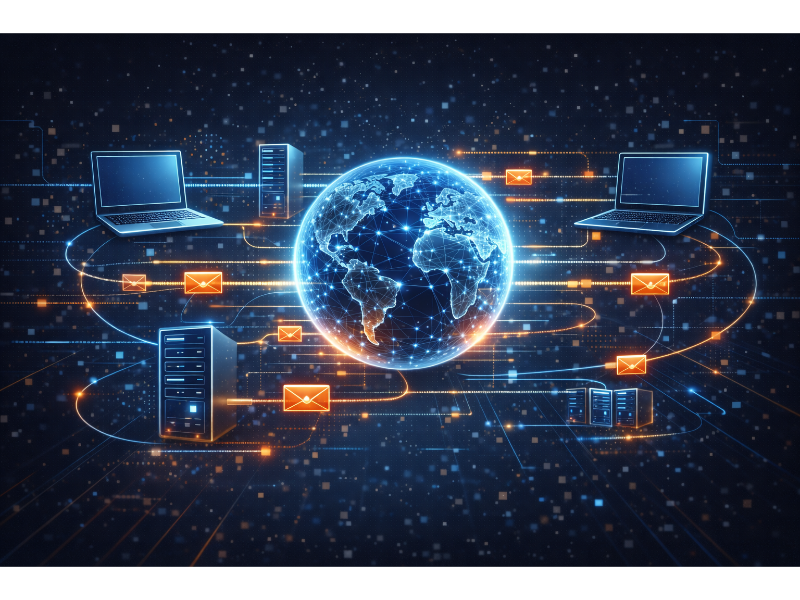
At a fundamental level, devices on a network communicate through packets — small units of data that contain not only the content of a message but also addressing information specifying where the packet originated and where it should be delivered.
When you send an email or load a web page, your message is split into multiple packets. Each packet includes:
- a source IP address – identifying the sender, and
- a destination IP address – identifying the recipient.
Routers — specialised network devices — read the destination IP address on each packet and determine the best path through interconnected networks to deliver it. When the packet arrives at the destination device, the system reassembles the full message or data object (such as a webpage).
Without IP addresses, routers would have no way to systematically forward packets from source to destination, making communication over large networks like the internet impossible.
local vs public ip addresses
IP addresses can be categorised further into public and private addresses:
- Public IP addresses are assigned to devices that need to be reachable over the global internet. These addresses are globally unique and are assigned by regional internet registries to internet service providers and organisations.
- Private IP addresses are used within local networks (homes, offices, campuses) to identify devices internally. These addresses are not routable on the global internet and must be translated to public addresses for internet communication via network address translation (NAT).
Local devices such as laptops, mobile phones, or smart home sensors often have private IP addresses assigned by a local router, which then uses NAT to share a single public IP address for all outbound internet traffic.
Types of ip addresses: static, dynamic, public, private
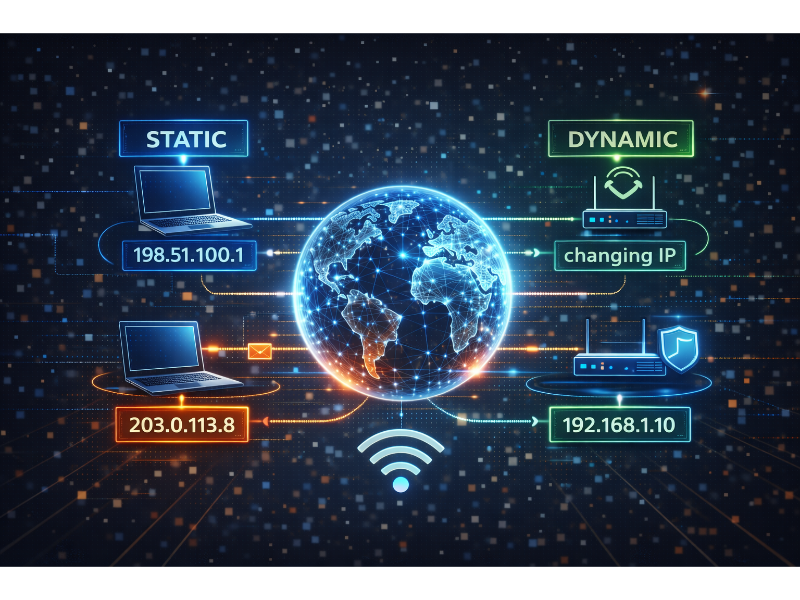
Not all IP addresses are the same. In addition to the distinction between IPv4 and IPv6, IP addresses can also be categorised by how they are assigned and how they behave within a network.
static vs dynamic
- Static IP addresses are manually assigned and do not change over time. These are often used for servers, network devices, and systems that need a predictable address for inbound connections.
- Dynamic IP addresses are assigned automatically via the Dynamic Host Configuration Protocol (DHCP) and can change over time, depending on network policies and availability.
public vs private
| Category | Description | Example |
|---|---|---|
| Public IP address | Globally unique address used to communicate over the internet | 203.0.113.5 |
| Private IP address | Used within a local network, not directly reachable from the internet | 192.168.1.10 |
| Static IP | Fixed address set by administrator | 198.51.100.7 |
| Dynamic IP | Assigned and changed automatically by DHCP | Varies over time |
This table illustrates how different IP address categories serve distinct roles within networking.
Ip version differences: ipv4 vs ipv6
why ipv6 was introduced
IPv4 addresses, using 32‑bit addressing, offer around 4.3 billion unique addresses. For a rapidly growing global population of devices — including servers, desktops, mobile phones, smart appliances, vehicles, and IoT sensors — this number has proven insufficient.
According to the Internet Assigned Numbers Authority (IANA), available IPv4 address space has been allocated to regional registries, and new IPv4 addresses are no longer readily available in many regions.
IPv6 addresses this issue by using 128‑bit addressing, which provides around 3.4×10^38 unique addresses — an astronomically large number that can accommodate future growth and innovation.
technical structure
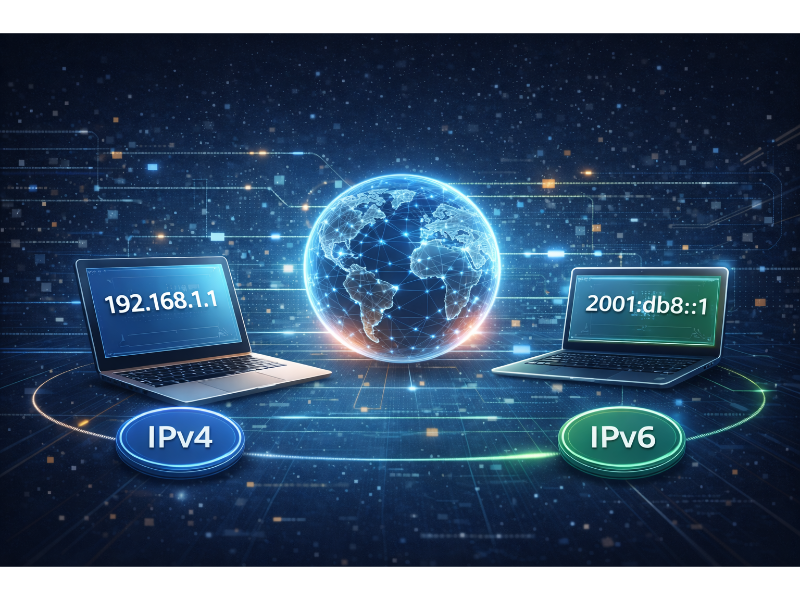
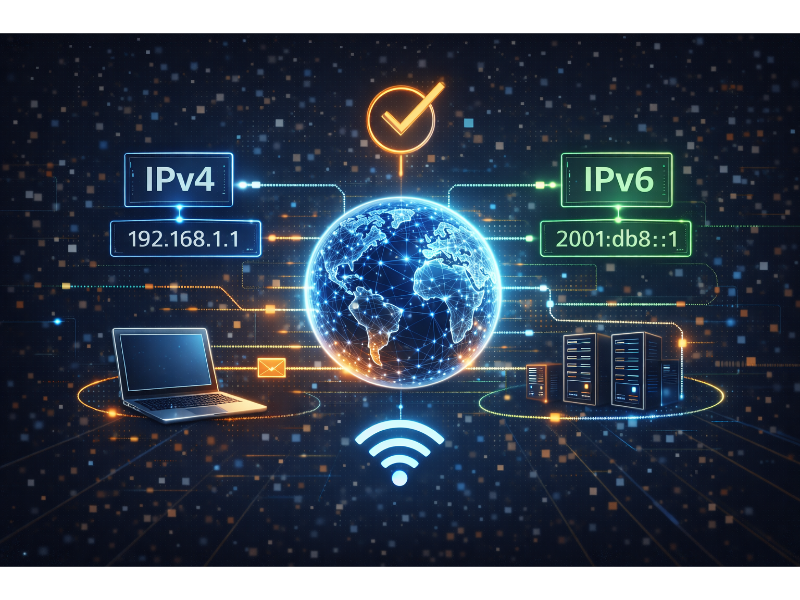
IPv4 addresses are typically written in dotted decimal format, such as 192.168.1.1, while IPv6 addresses are written in colon‑separated hexadecimal format, such as:
2001:0db8:85a3:0000:0000:8a2e:0370:7334
IPv6 also incorporates enhancements in areas such as:
- simplified header processing for faster routing,
- built‑in support for security protocols (e.g. IPsec), and
- improved auto‑configuration mechanisms.
adoption challenges
The transition from IPv4 to IPv6 has been gradual. Some organisations have adopted IPv6 natively, others use dual‑stack systems that support both IPv4 and IPv6, and some still rely on IPv4 exclusively. Barriers to adoption include:
- the need to upgrade legacy systems,
- administrative overheads in maintaining dual protocols, and
- compatibility concerns with older software and hardware.
Nevertheless, IPv6 adoption continues to grow, driven by the expanding internet footprint and the scarcity of IPv4 addresses.
Why ip addresses are important
IP addresses are much more than numeric labels — they are the backbone of internet communication. Their importance can be understood across several dimensions:
enabling global communication
Without IP addresses, networked devices would have no systematic way to identify one another and exchange data. IP addresses allow routers and switches to deliver traffic efficiently and accurately.
For example, when you request a webpage, your device uses DNS (Domain Name System) to translate a readable name (like “example.com”) into an IP address that the underlying network can use to route your request.
location and routing
IP addresses help determine how data flows across multiple networks — not just within a single local network. This ability to route traffic globally is what makes the internet truly interconnected.
network management
Network administrators can use IP addresses to manage devices, control access, and troubleshoot connectivity issues. Knowing which device has which address can help isolate problems, apply policies, and optimise performance.
Security and privacy implications
ip addresses and tracking
Because IP addresses identify the source of traffic, they can also be used to approximate the location of a user. This is a common practice in analytics, geo‑services, and targeted content delivery, but it also raises privacy concerns.
Some online services collect IP addresses to infer location information, which can be combined with other data to track user behaviour. While IP‑based geolocation is imprecise, it can often narrow a user’s location to a city or region.
ip spoofing and attacks
IP spoofing is a technique where an attacker falsifies the source IP address of packets to disguise their identity or impersonate another system. This is often used in Distributed Denial of Service (DDoS) attacks, where large volumes of traffic are directed at a target to overwhelm it.
Network security systems often use IP address filtering and reputation databases to block suspicious sources and mitigate such attacks.
privacy protection tools
Many users rely on privacy tools like Virtual Private Networks (VPNs) to mask their real IP address. By redirecting traffic through a VPN server, the visible public address becomes that of the VPN provider, enhancing privacy for the user.
Expert perspectives on ip addresses
lu heng on the value of ip addressing
Lu Heng, a recognised internet infrastructure expert, explains the importance of IP addressing and its role in connectivity:
This quote underscores how IP addresses are not optional — they are structural necessities for networked communication.
tim berners‑lee on internet infrastructure
Sir Tim Berners‑Lee, inventor of the World Wide Web, reaffirmed the foundational nature of internet protocols and structures like IP addressing:
“The internet is designed to be a universal medium, not controlled by any single entity. For it to function efficiently, every device must be uniquely and reliably addressable so that information flows freely and securely.”
— Sir Tim Berners‑Lee
Berners‑Lee’s perspective highlights IP addresses as a core component of an open, interoperable internet.
Real‑world applications of ip addresses
consumer internet services
Every time a user loads a website, checks email, performs a search, or streams a video, their device uses IP addresses to make and receive requests.
For online services:
- Websites respond to requests based on IP addresses,
- Messaging platforms use IP addresses to coordinate delivery,
- Cloud services associate compute instances with addresses for connectivity.
enterprise and cloud networks
In corporate networks and cloud environments, IP addressing is used to:
- segregate services,
- enforce access control,
- manage internal and external connectivity.
Cloud platforms like Amazon Web Services, Microsoft Azure, and Google Cloud assign IP addresses to virtual machines and services, enabling precise routing, security rules, and service discovery mechanisms.
the internet of things (iot)
With the rise of IoT, IP addressing is becoming even more critical. As everyday objects — from refrigerators to traffic systems — connect to networks, the demand for addressable endpoints has exploded. This growth is a driving force behind the need for IPv6, as IPv4’s limited address space cannot sustain billions of additional devices.
Also read: What is a public IP address?
Also read: How ISPs can unlock hidden revenue streams through IP address monetization
Also read: Why IP addresses are critical digital capital for modern businesses
Also read: How RIR powerlessness impacts IPv4 scarcity and digital asset management
Also read: Why regional internet registries can’t fully control IP allocation
Challenges and future directions
ipv6 adoption hurdles
Despite the clear technical advantages of IPv6, adoption has been uneven. Some regions and service providers have implemented IPv6 natively, while others continue to rely on IPv4 with transitional mechanisms like NAT or dual‑stack configurations.
Reasons for slow adoption include:
- costs of upgrading infrastructure,
- complexity of managing two protocols simultaneously,
- compatibility concerns with older software or hardware,
- inertia in organisations with large legacy deployments.
However, the trend towards IPv6 continues, propelled by mobile networks, IoT expansion, and the exhaustion of freely available IPv4 space.
governance and allocation
IP addresses are managed by a hierarchical system of authorities. The Internet Assigned Numbers Authority (IANA) allocates large blocks of addresses to Regional Internet Registries (RIRs) such as:
- ARIN (North America),
- RIPE NCC (Europe, Middle East, Central Asia),
- APNIC (Asia–Pacific),
- LACNIC (Latin America),
- AFRINIC (Africa).
These registries distribute addresses to ISPs and organisations under regional policies. Effective governance is necessary to ensure fair, efficient distribution and to avoid hoarding or misuse.
The societal impact of ip addressing
IP addresses influence many aspects of digital life:
- privacy and surveillance – IP addresses can be used to track behaviour,
- economic activity – businesses depend on IP‑based services for commerce,
- critical infrastructure – systems like power grids and transportation networks rely on robust addressing schemes.
The way societies manage IP addressing — including policies for public safety, privacy, and equitable access — will shape the next phase of global connectivity.
Frequently Asked Questions (FAQs)
1. What is the difference between IPv4 and IPv6?
IPv4 uses a 32‑bit address space with around 4.3 billion unique addresses, while IPv6 uses a 128‑bit space, offering an essentially unlimited number of addresses.
2. Why is IPv6 adoption important?
IPv6 is important because it eliminates address scarcity, supports modern features like built‑in security, and accommodates the growing number of connected devices worldwide.
3. Can multiple devices share the same IP address?
Yes — within a private network, devices can share a single public IP address using NAT, but each device still has unique local addresses internally.
4. How can IP addresses affect privacy?
IP addresses can be used to estimate location and track online behaviour. Privacy tools like VPNs can mask public IP addresses to reduce tracking.
5. What happens if the world runs out of IPv4 addresses?
Running out of IPv4 addresses means networks must adopt IPv6 or use transitional technologies like NAT. IPv6 mitigates address scarcity entirely due to its vast address space.
