
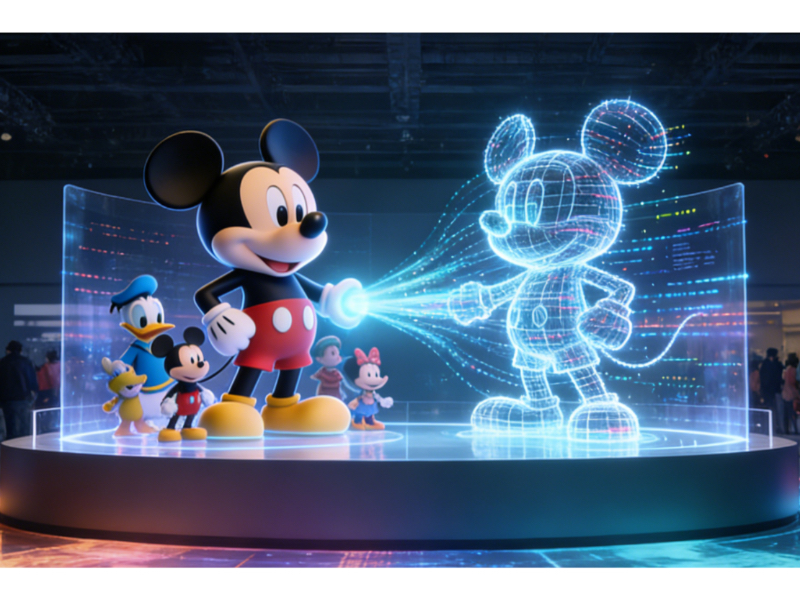
- The Walt Disney Company will invest $1 billion in OpenAI and grant licensed access to over 200 characters from franchises like Disney, Pixar, Marvel and Star Wars for use in OpenAI’s generative video tool Sora.
- The three-year agreement has drawn cautious responses from industry groups concerned about creative labour, copyright and the rise of AI-generated content, with details on implementation and impact still emerging.
What happened: Major content company and AI firm agree licensing and investment framework
The Walt Disney Company has agreed to invest $1 billion in OpenAI and licence a large catalogue of characters from its holdings for use in OpenAI’s generative video platform Sora as part of a three-year partnership announced on 11 December 2025. Under the terms of the deal, characters from major franchises including Disney, Marvel, Pixar and Star Wars will be available for users to include in short, AI-generated videos through Sora and related tools such as ChatGPT Images.
The licence covers more than 200 characters, environments, props and costumes, but explicitly excludes the use of talent likenesses or voices, meaning that the animated characters can appear in AI videos without automatically reproducing the speech or appearance of the actors who portrayed them. Disney will also become a major customer of OpenAI’s application programming interfaces and will deploy ChatGPT internally for its own business functions, including to support content creation and staff productivity.
Both companies said they will maintain controls aimed at protecting creators’ rights and preventing inappropriate or harmful uses of the technology, and a selection of user-generated content is expected to be made available for streaming on Disney+ once the feature launches to the public in early 2026. In exchange for the investment, Disney will receive warrants to purchase additional equity in OpenAI.
Also read: NullBulge pulls off cyber heist, leaking Disney’s 1.1TB slack data
Also read: Netflix, Disney question Canada rules asking for 5% of revenue
Why it is important
This agreement marks a significant moment in the relationship between Hollywood studios and AI companies, as a major content owner has formally licensed intellectual property for generative content rather than pursuing litigation or refusal to participate. Disney becomes the first major entertainment company to make such a substantial financial commitment to an AI firm while allowing its characters to be used in user-generated AI outputs.
The deal underscores broader tensions in the entertainment and technology sectors. Proponents argue that licensed access could lead to new forms of fan creativity and expanded engagement with beloved characters, while requiring responsible content-safety measures and respect for creator rights. However, sceptics question whether the rise of AI tools like Sora might displace or undermine the work of animators, writers and other creative professionals, particularly if revenue-sharing or compensation models for original creators are not clearly established.
There are also unresolved questions about how content moderation, age-appropriate safeguards and intellectual property protections will function in practice. As generative AI gains popularity, concerns about “AI slop” and misinformation have been raised, indicating that even licensed partnerships do not eliminate broader industry challenges around quality, authenticity and ethical use of technology.
