
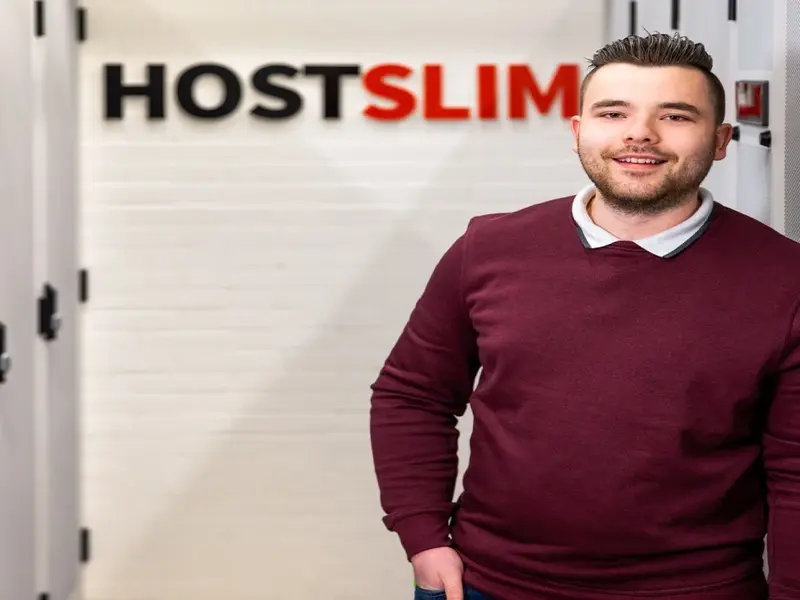
- HostSlim favours predictable cash flow over rapid scale, accepting lower short-term margins
- Its infrastructure-heavy model contrasts with asset-light cloud economics
In 2008, as global markets unraveled, Jeroen van der Ham was installing servers in a small Dutch data hall—not to chase a valuation, but to solve a frustration. Developers needed infrastructure they could actually control: predictable, transparent, and free from hidden fees or forced upgrades. No one was offering it. So he built it himself.
That effort became HostSlim, a hosting company that has spent the past 16 years quietly defying cloud industry norms. While hyperscalers like AWS and Google Cloud race to abstract away hardware behind layers of automation and AI, HostSlim does the opposite: it gives customers direct access to physical resources—VPS, dedicated servers, and private clouds—on infrastructure it owns, operates, and meticulously maintains.
Today, HostSlim serves European developers, bootstrapped startups, and growing SaaS
businesses who’ve outgrown shared hosting but reject the complexity and cost volatility
of major cloud platforms. Its clients aren’t looking for “innovation theater.” They want
uptime, clarity, and control—and they’re willing to trade scalability for stability.
The Founder Who Still Fixes Things
Jeroen van der Ham doesn’t fit the archetype of the modern tech CEO. He rarely gives interviews, avoids conferences, and still reviews critical infrastructure changes personally. Colleagues say he occasionally steps into customer support tickets when a complex networking issue arises—especially late at night.
“He’s not a ‘visionary’ in the buzzword sense,” says a senior engineer who’s been with the company since 2012. “He’s the guy who asks, ‘What breaks least?’ Not ‘What scales fastest?’”
That mindset traces back to HostSlim’s scrappy origins. In its first years, van der Ham handled everything: sales calls, server rack installations, billing disputes, even cable management. There was no funding round, no growth team—just relentless focus on reliability. That hands-on culture never left. Decisions at HostSlim are still guided less by market trends and more by operational discipline: if a change risks uptime or adds opaque costs, it’s usually rejected.
This founder-led pragmatism shapes every layer of the business. The website is starkly functional—no stock photos, no hype—just real-time server availability, clear specs, and fixed pricing. Customers appreciate that honesty. Many have stayed for a decade or more, gradually expanding their footprint as their workloads grow.
Owning the Metal in an Age of Abstraction
While most cloud providers lease data center space or rely on third-party networks, HostSlim owns its hardware—and much of its physical infrastructure. It operates its own facilities in the Netherlands and peers directly at key internet exchanges like AMS-IX. This “asset-heavy” approach runs counter to today’s dominant cloud economics, which favor leasing, outsourcing, and rapid scaling.
But for van der Ham, ownership isn’t nostalgia—it’s strategy. “Every time you outsource a layer, you lose control and add someone else’s margin,” he said in a rare 2023 interview. “We’d rather invest upfront so our customers never get surprised by a bandwidth bill or forced migration.”
Financially, this means slower top-line growth but stronger long-term margins. HostSlim doesn’t monetize usage spikes or cross-subsidize losses with venture capital. Instead, it operates like a utility: revenue grows through longer contracts, higher utilization, and gradual spend increases as client workloads mature. Churn is low; lifetime value is high.
This model puts HostSlim in a unique middle ground. It’s too technically robust and
capital-intensive to be a boutique host, yet too focused on simplicity and control to
compete head-on with hyperscalers. Its real peers are European players like Hetzner
and OVHcloud—but even among them, HostSlim stands out for its aversion to growth
rhetoric and its emphasis on operational quietude.
No Hype, Just Uptime
You won’t find HostSlim running LinkedIn ads about “reimagining the cloud” or launching AI-powered orchestration suites. Its marketing is word-of-mouth and organic search—driven by developers who value transparency over flash.
And that restraint is becoming a strength. As European regulations tighten around energy efficiency, data sovereignty, and supply chain transparency, HostSlim’s owned-infrastructure model offers built-in compliance advantages. Recent investments in automation and energy-efficient cooling aren’t aimed at capturing market share—they’re about protecting margins and ensuring resilience as power and regulatory costs rise across the continent.
In an era where cloud bills can double overnight due to “ephemeral” resource spikes or sudden egress fees, HostSlim’s promise is almost radical: What you deploy is what you get. What you pay today is what you’ll pay next year.
For many European startups—especially those outside VC ecosystems—this predictability is invaluable. They don’t need infinite scale; they need a foundation they can trust for five or ten years.
Betting on Durability
Looking ahead, HostSlim isn’t pivoting to AI or chasing enterprise megadeals. Its roadmap focuses on incremental improvements: better monitoring, tighter security integrations, deeper support for open-source tooling, and expanded network capacity within Europe.
Van der Ham remains skeptical of industry fads. When asked about the future, he doesn’t cite quantum computing or serverless revolutions. He talks about reducing mean time to repair, improving thermal efficiency, and keeping support response times under two hours.
“We’re not trying to be the biggest,” he told this correspondent in a recent email, “We’re trying to be the one you still trust in ten years.”
In a cloud landscape dominated by scale, speed, and shareholder pressure, HostSlim represents a different kind of ambition—one rooted in patience, craftsmanship, and long-term stewardship. It may never make headlines. But for the developers and founders who rely on it, that’s exactly the point.
