
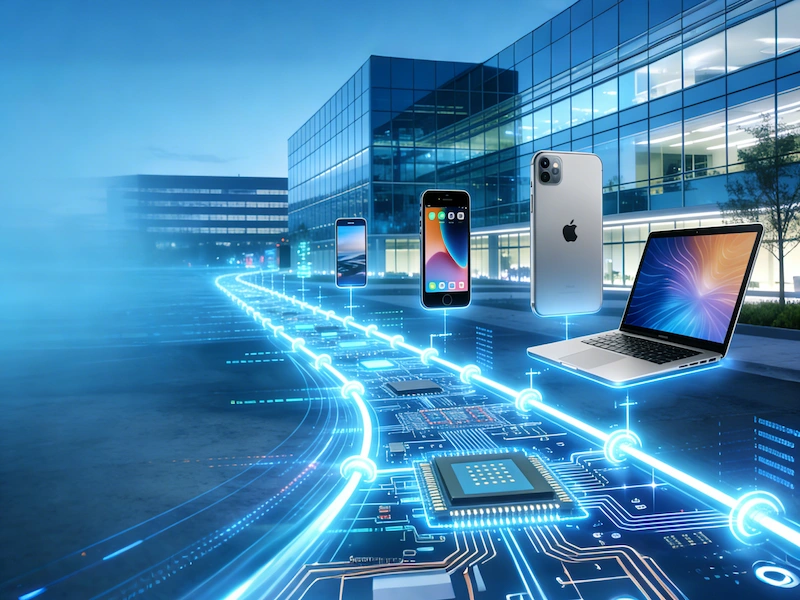
- Apple marks its 50th anniversary as one of the world’s most valuable companies
- Its ecosystem defined modern computing, from personal devices to app economies and digital services.
What happened: A five-decade journey from disruption to dominance
Apple has reached its 50th anniversary, marking a milestone that traces its rise from a modest garage-based venture in 1976 to one of the most influential technology companies in the world.
Founded by Steve Jobs and Steve Wozniak, the company initially gained recognition with early personal computers such as the Apple II, helping to popularise computing beyond hobbyists. Its trajectory has since been defined by cycles of innovation, including the Macintosh, iPod, iPhone and more recently its service ecosystem.
Despite periods of turbulence, including leadership changes and near financial collapse in the 1990s, Apple staged a dramatic turnaround following Jobs’ return in 1997. The company is now a dominant force across hardware, software and services, with a global customer base and supply chain deeply embedded in markets such as China.
Why it’s important
Apple’s 50-year journey encapsulates the evolution of the modern technology industry, from early personal computing to today’s interconnected digital ecosystems. Its success has helped define product design, user experience and the commercialisation of innovation at scale.
The company’s influence extends beyond devices, shaping global supply chains, app economies and digital services. Also, Apple’s deep ties to China underscore both its scale and exposure to geopolitical and economic shifts.
Looking ahead, Apple faces increasing competition, regulatory scrutiny and the need to sustain innovation in areas such as artificial intelligence and services. Yet its legacy suggests an ability to adapt — a trait that has defined its first five decades and will likely shape its future trajectory.
Also read: https://btw.media/all/it-infrastructure/apple-hires-ex-google-ai-executive-for-siri-push/
