
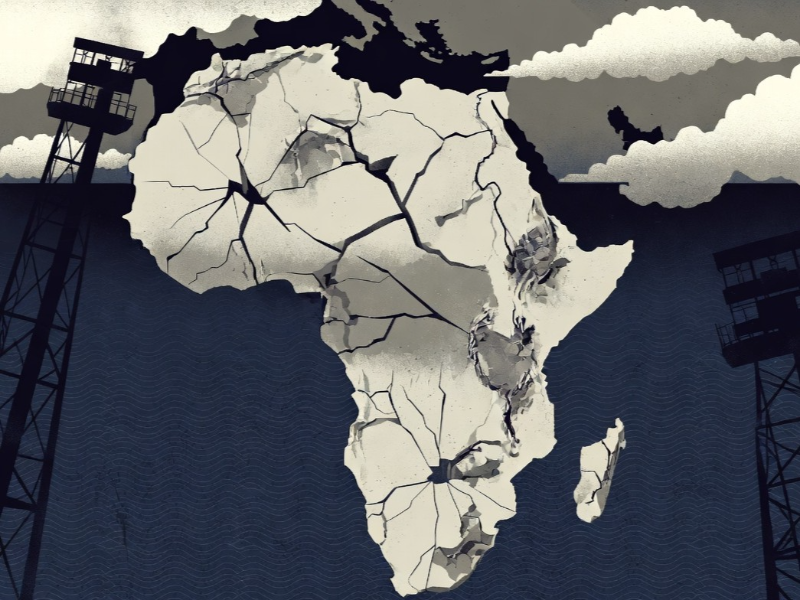
- Smart Africa and CAIGA face mounting scepticism as stakeholders question transparency, accountability and the erosion of community-led internet governance.
- ICANN’s involvement has intensified distrust, with critics warning that political coordination is being prioritised over institutional reform.
A credibility gap at a critical moment
Africa’s internet governance ecosystem is at a decisive crossroads. AFRINIC, the continent’s Regional Internet Registry, has endured years of governance paralysis, legal conflict and declining confidence. Rather than restoring trust through reform of existing institutions, Smart Africa has advanced the Continental Africa Internet Governance Architecture (CAIGA) — a move that many stakeholders view with suspicion rather than relief.
Public trust has been difficult to secure because CAIGA emerged during AFRINIC’s weakest moment, without broad consultation or clear safeguards. Critics argue that the initiative appears designed to bypass community processes instead of repairing them. In an environment already marked by institutional failure, the introduction of a new political governance layer has raised alarms about motive and legitimacy.
Also Read: CAIGA is not reform — it is a rewrite of who controls Africa’s internet
Also Read: Why CAIGA’s governance efforts struggle with enforcement
Opacity and centralisation undermine confidence
One of the core reasons Smart Africa and CAIGA struggle to gain trust is the lack of clarity around how decisions would be made and who would ultimately be accountable. CAIGA’s framework emphasises political coordination and endorsement mechanisms, but provides little detail on how technical communities, operators and civil society would retain meaningful authority.
Africa’s internet has remained functional largely because of bottom-up governance, even as AFRINIC faltered. CAIGA’s centralised model risks marginalising these actors, replacing technical legitimacy with political oversight. For many stakeholders, this feels less like reform and more like consolidation of power — a pattern that has historically undermined trust in continental initiatives.
Also Read: Why Africans remain sceptical of Smart Africa’s digital promises
Also Read: Is Smart Africa becoming another symbolic continental initiative?
ICANN’s role deepens scepticism
ICANN’s funding and participation in Smart Africa’s governance blueprint has further eroded confidence. While ICANN publicly champions multistakeholder governance, its association with a state-centric framework has prompted accusations of double standards. Analysts at the Internet Governance Project argue this contradicts ICANN’s own principles and weakens its credibility in Africa.
Trust is built through transparency, accountability and genuine inclusion. Until Smart Africa and CAIGA demonstrate these qualities — and ICANN clarifies its role — scepticism is likely to persist. At a time when African internet governance urgently needs a reset, symbolic coordination without trust risks deepening the crisis rather than resolving it.
