
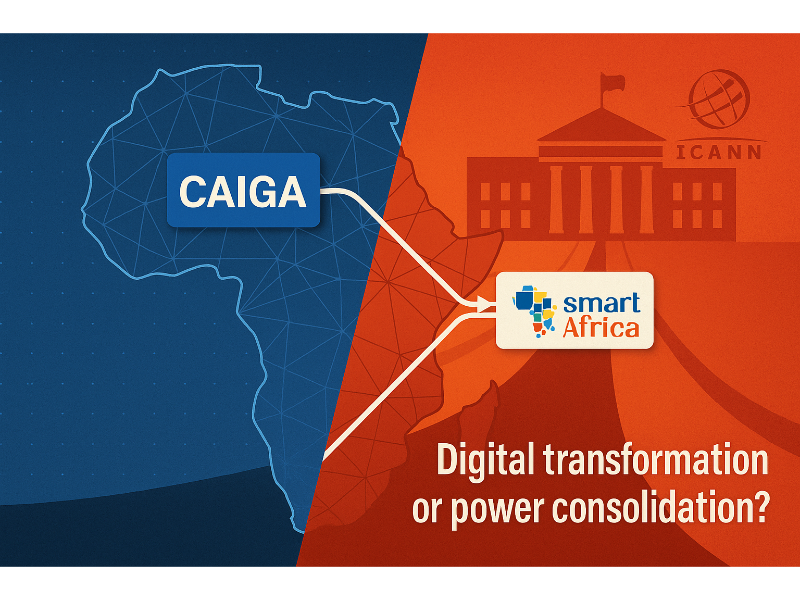
- CAIGA is being positioned as part of Smart Africa’s digital ambitions, but critics say it risks centralising power rather than strengthening Africa’s internet infrastructure.
- Concerns grow that Smart Africa, backed by ICANN involvement, is using “digital transformation” rhetoric to justify political oversight over AFRINIC and the wider internet ecosystem.
Digital transformation—or political consolidation in disguise?
Smart Africa has spent years branding itself as the driving force behind Africa’s digital transformation, with flagship initiatives covering broadband expansion, cross-border digital markets and capacity building. But the introduction of the Continental Africa Internet Governance Architecture (CAIGA) marks a major shift: Smart Africa is no longer merely coordinating digital policy—it now wants influence over the governance of Africa’s internet infrastructure itself.
Supporters frame CAIGA as a natural extension of Smart Africa’s ambitions. Critics argue the opposite: that the initiative represents a significant and concerning expansion of political authority into a space that has historically been governed by technical communities, operators and civil society. Under CAIGA’s framework, political endorsement mechanisms and government-led oversight risk replacing the multistakeholder processes that underpin stable and neutral internet governance.
Also Read: Africa faces unresolved governance challenges before any CAIGA model can take shape
CAIGA as a tool to reorganise African internet governance
Rather than strengthening AFRINIC or addressing its long-term governance failures—such as weak accountability, contested elections and operational instability—CAIGA creates a new layer of political architecture without solving the underlying problems. Smart Africa’s model focuses heavily on continental harmonisation but leaves major questions unanswered: Who drafts policy? Who approves it? Who holds the new bodies accountable?
Critics fear CAIGA could undermine regional autonomy by consolidating decision-making in a centralised structure dominated by states, marginalising the very stakeholders who keep Africa’s internet operational. This risks creating dependency, not empowerment.
Also Read: Understanding CAIGA’s proposed policy framework
ICANN’s involvement raises questions of double standards
ICANN’s financial and institutional support for Smart Africa’s governance blueprint has added another layer of controversy. The organisation publicly champions bottom-up, community-led governance, yet its involvement in CAIGA suggests a willingness to legitimise a state-centric model in Africa that it would never endorse in Europe or North America.
For a continent already facing governance fragility, CAIGA may not fit into a digital transformation agenda at all—but into a broader struggle over who controls Africa’s internet future.
