
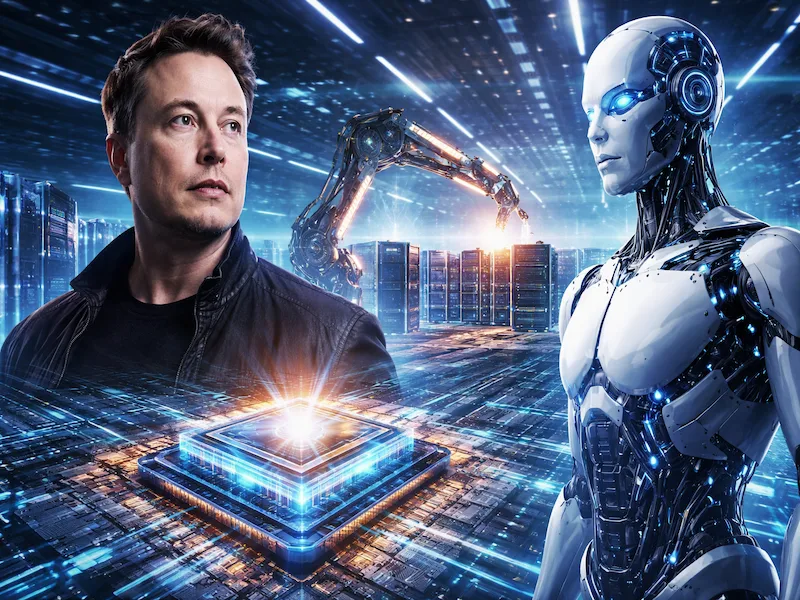
- Intel joins Musk’s TeraFab to develop AI chips for humanoid robots, data centres
- TeraFab targets terawatt-scale compute production amid surging demand for custom AI silicon
What happened
Intel, a US semiconductor manufacturer, has joined Elon Musk’s TeraFab AI chip project, aligning with efforts to expand compute capacity for both data centres and humanoid robotics. According to a Straits Times report, the initiative is designed to support Musk’s broader push into artificial intelligence infrastructure and robotics.
The TeraFab project, Musk’s AI chip manufacturing initiative, aims to produce up to one terawatt of compute annually, far exceeding current industry benchmarks, as demand for AI processing continues to surge. The facility is expected to integrate chip design, manufacturing and advanced packaging into a single ecosystem.
Intel’s participation reflects its push to reassert relevance in the AI semiconductor race, leveraging its manufacturing scale and packaging technologies. The move comes as supply constraints and rising demand for AI accelerators continue to reshape the competitive landscape.
Also read: Elon Musk to open source X algorithm amid global scrutiny
Why it’s important
AI competition is extending beyond cloud infrastructure into robotics and physical-world systems, reshaping how compute demand is defined.
Intel’s move illustrates a structural shift in AI: from centralised data centre workloads to distributed, real-world applications such as humanoid robots. This transition is likely to drive demand for highly specialised chips optimised for both training and real-time inference.
At the same time, projects like TeraFab point to a more vertically integrated future, where companies seek tighter control over silicon supply chains and deploy AI across both digital and physical environments.
Also read: China accelerates humanoid robot production, leading global shipment growth in 2025
