
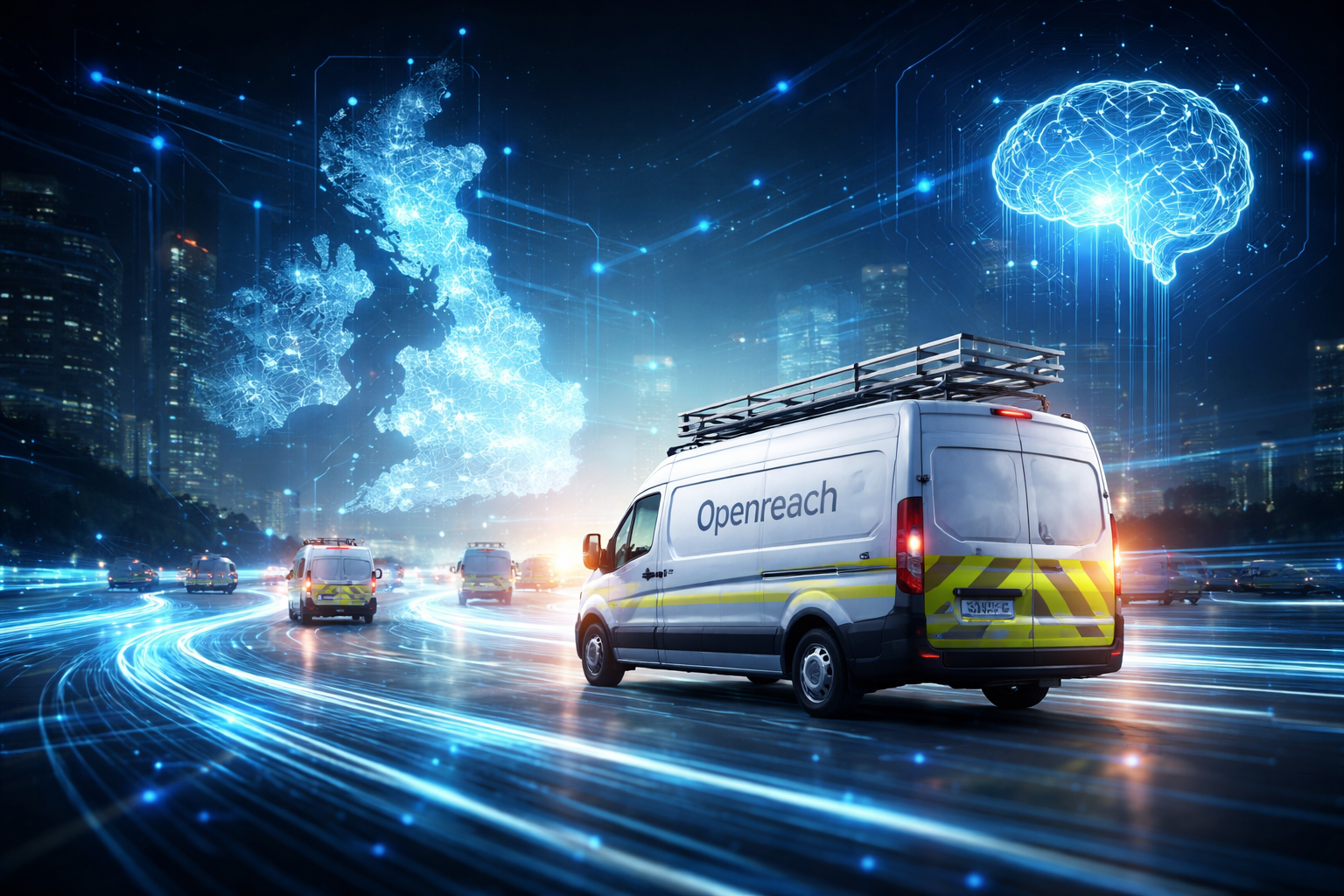
- AI tools will analyse data from 24,000 Openreach vans to improve efficiency and reduce emissions.
- A digital twin of UK transport networks aims to speed fibre deployment to millions of premises.
What happened
In March 2026, Openreach announced it will use AI and analytics from Google Cloud to optimise its 24,000-vehicle fleet and support fibre expansion.
The engineering fleet collectively travels almost 200 million miles each year, making efficiency gains financially and environmentally significant. Openreach is already transitioning towards electric vehicles, cutting around 10,000 tonnes of CO₂ emissions. Using Google Cloud’s BigQuery analytics platform, the company will analyse real-world driving data, routes and charging availability to identify where diesel vans can be replaced with EVs and where fuel consumption can be reduced.
The tools will also help detect the causes of engine idling and excessive travel, particularly in clean-air zones, and predict vehicle faults before they occur. The initiative follows BT’s order for 3,500 additional EVs, expected to bring its electric fleet to nearly 8,000 vehicles.
Beyond fleet optimisation, Openreach has built a digital twin of the UK’s major transport corridors using Google’s Vertex AI. The system combines data from 35 million homes and businesses with road, rail and waterway networks to help planners identify where fibre can be rolled out sooner. Engineers are also using Google’s Gemini Enterprise tools to convert legacy data queries into code compatible with BigQuery.
The partnership builds on BT’s broader cloud relationship with Google, including a 2022 digital transformation agreement and later integrations across security and networking.
Also read:UK Altnets clash with Openreach over fibre expansion threat
Also read:Virtusa’s IaC on Google Cloud unleashes the true power of cloud
Why it’s important
The collaboration highlights how telecom operators are increasingly applying AI to physical infrastructure and field operations, not just digital services. Fleet optimisation and predictive maintenance could deliver operational savings while supporting sustainability targets — a combination investors tend to view favourably in capital-intensive telecoms businesses.
Openreach’s digital twin approach also signals a shift towards data-driven network planning, potentially accelerating fibre rollout and improving the economics of nationwide gigabit coverage. According to the companies, the initiative aims to connect more homes faster while cutting emissions — a dual priority as operators balance climate commitments with ambitious broadband targets.
