
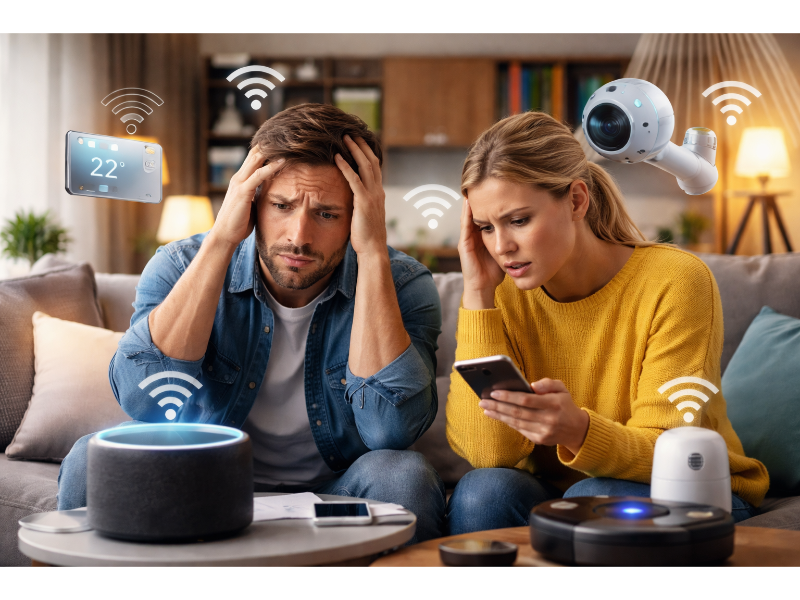
- Survey finds widespread confusion over managing connected devices
- Fragmentation and usability issues hinder smart home adoption
What happened :survey reveals growing smart home fatigue
A recent report from Telecoms.com highlights that many people in the UK feel overwhelmed by the volume of smart technology in their homes. The study shows that while adoption of connected devices continues to rise, users often struggle to manage them effectively.
Smart speakers, security systems, lighting, and appliances are now common in households. However, many consumers report difficulty controlling multiple devices across different platforms. Interoperability remains a key issue, with devices from different manufacturers failing to integrate smoothly.
The research, conducted by consumer technology association TechUK, surveyed over 2,000 UK households and found that 43% of respondents described their smart home setup experience as “frustrating” or “very difficult.” Among users aged over 55, that figure rose to 61%.
The findings suggest that rather than simplifying daily life, smart home technology can sometimes add complexity. Users face confusing interfaces, inconsistent performance, and time-consuming setup processes. This has led to frustration and, in some cases, reduced usage of the technology altogether.
Also read: UK regulator moves to ban inflation-linked mid-contract telecom price rises
Also read: Private networks go mainstream as deployments hit 6,500
Why this is important
The findings underline a critical challenge facing the smart home industry. While device adoption is strong, user experience has not kept pace. This gap risks slowing future growth if consumers begin to question the value of connected living.
Interoperability remains one of the sector’s biggest hurdles. Industry initiatives such as Matter aim to create common standards, but progress has been gradual. Without seamless integration, users must rely on multiple apps and ecosystems, increasing friction and reducing satisfaction.
As of early 2026, over 1,000 devices have received Matter certification, with Apple, Google, Amazon, and Samsung all supporting the protocol. However, industry estimates suggest that fewer than 15% of UK smart home users are aware of Matter or understand its benefits.
There are also implications for telecoms providers and platform companies. As smart homes depend on reliable connectivity, poor user experiences can reflect negatively on service providers. This creates pressure to offer bundled solutions that are easier to manage.
Beyond convenience, trust plays a role. If consumers feel overwhelmed, they may also become wary of privacy and security risks. This could further dampen adoption, particularly among less tech-savvy users.
The report suggests that simplifying user interfaces and improving compatibility will be essential. Companies that prioritise ease of use may gain a competitive advantage. As the number of connected devices continues to grow, usability will become as important as innovation in shaping the future of the smart home market.
