
Close Menu
Blue Tech Wave Media
  • Leadership Alliance
  • Exclusives
  • History of the Internet
  • AFRINIC News
  • Internet Governance
    • Regulations
    • Governance Bodies
    • Emerging Tech
  • Others
    • IT Infrastructure
      • Networking
      • Cloud
      • Data Centres
    • Company Stories
      • Profile
      • Startups
      • Tech Titans
      • Partner Content
    • Fintech
      • Blockchain
      • Payments
      • Regulations
    • Tech Trends
      • AI
      • AR / VR
      • IoT
    • Video / Podcast
  • Country News
    • Africa
    • Asia Pacific
    • North America
    • Lat Am/Caribbean
    • Europe/Middle East
Facebook LinkedIn YouTube Instagram X (Twitter)
Blue Tech Wave Media
Facebook LinkedIn YouTube Instagram X (Twitter)
  • Leadership Alliance
  • Exclusives
  • History of the Internet
  • AFRINIC News
  • Internet Governance
    • Regulation
    • Governance Bodies
    • Emerging Tech
  • Others
    • IT Infrastructure
      • Networking
      • Cloud
      • Data Centres
    • Company Stories
      • Profiles
      • Startups
      • Tech Titans
      • Partner Content
    • Fintech
      • Blockchain
      • Payments
      • Regulation
    • Tech Trends
      • AI
      • AR/VR
      • IoT
    • Video / Podcast
  • Africa
  • Asia-Pacific
  • North America
  • Lat Am/Caribbean
  • Europe/Middle East
Blue Tech Wave Media
Home » Alibaba advances AI chip strategy as agent race intensifies
alibaba-advances-ai-chip-strategy-as-agent-race-intensifies
Asia-Pacific

Alibaba advances AI chip strategy as agent race intensifies

By Claire ShenMarch 25, 2026No Comments3 Mins Read
Share
Facebook Twitter LinkedIn Pinterest Email
  • Alibaba is developing new AI chips to support its growing ecosystem of intelligent agent technologies.
  • The move reflects intensifying competition among tech firms to control both AI models and underlying hardware.

What happened: Custom chips for AI agents

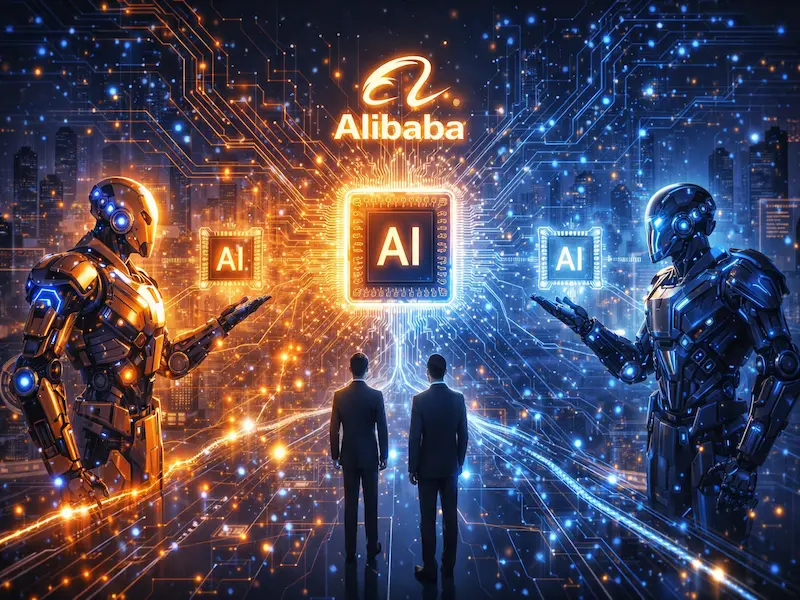
Alibaba Group is pushing forward with the development of new artificial intelligence chips as part of a broader strategy to support AI agents and expand its computing capabilities.

According to Capacity Media, the company is investing in proprietary semiconductor technology designed to power AI workloads more efficiently within its cloud and data centre infrastructure.

Alibaba has been building out its AI ecosystem through its cloud division, offering machine learning tools and services to enterprise customers. The latest chip development is intended to enhance performance for applications such as generative AI and intelligent agents — software systems capable of performing tasks autonomously.

The report highlights how Alibaba is positioning its chips to support the next phase of AI development, where agent-based systems are expected to become more prominent across business and consumer applications.

By developing its own hardware, Alibaba aims to optimise performance for its specific workloads while reducing dependence on third-party chip suppliers.

This approach mirrors strategies adopted by other major technology companies seeking greater control over the full AI technology stack.

Also Read: Alibaba balances Nvidia ties with chip sovereignty push
Also Read: Huawei’s AI lab denies copying Alibaba’s Qwen model

Why it’s important

Alibaba’s chip push reflects a broader shift in the artificial intelligence industry towards vertical integration.

As AI systems become more complex and resource-intensive, companies are increasingly seeking to control both software and hardware layers. This can improve efficiency, reduce costs and provide strategic independence in a highly competitive market.

The focus on AI agents also signals a transition in how artificial intelligence is being deployed. Rather than standalone models, companies are developing systems capable of acting autonomously and interacting with digital environments.

For cloud providers, supporting these applications requires significant computing power and optimised infrastructure.

From a financial perspective, investing in proprietary chips can help companies manage long-term infrastructure costs while capturing more value from the AI supply chain.

The development also highlights intensifying global competition, particularly between US and Chinese technology firms, in areas such as semiconductors and artificial intelligence.

Alibaba’s strategy therefore illustrates how the race for AI leadership is expanding beyond software innovation into hardware design and infrastructure.

As the market evolves, the companies that control both compute and intelligence may be best positioned to shape the future of the AI economy.

AI AI chips AI infrastructure China cloud computing Semiconductor Technology Trends
Claire Shen

Related Posts

AWS Bahrain disruption after drone activity

March 27, 2026

Swisscom challenges INWIT tower pricing

March 27, 2026

Meta boosts West Texas AI data centre investment to $10bn

March 27, 2026
Add A Comment
Leave A Reply Cancel Reply

CATEGORIES
Archives
  • March 2026
  • February 2026
  • January 2026
  • December 2025
  • November 2025
  • October 2025
  • September 2025
  • August 2025
  • July 2025
  • June 2025
  • May 2025
  • April 2025
  • March 2025
  • February 2025
  • January 2025
  • December 2024
  • November 2024
  • October 2024
  • September 2024
  • August 2024
  • July 2024
  • June 2024
  • May 2024
  • April 2024
  • March 2024
  • February 2024
  • January 2024
  • December 2023
  • November 2023
  • October 2023
  • September 2023
  • August 2023
  • July 2023

Blue Tech Wave (BTW.Media) is a future-facing tech media brand delivering sharp insights, trendspotting, and bold storytelling across digital, social, and video. We translate complexity into clarity—so you’re always ahead of the curve.

BTW
  • About BTW
  • Contact Us
  • Join Our Team
  • About AFRINIC
  • History of the Internet
TERMS
  • Privacy Policy
  • Cookie Policy
  • Terms of Use
Facebook X (Twitter) Instagram YouTube LinkedIn
BTW.MEDIA is proudly owned by LARUS Ltd.

Type above and press Enter to search. Press Esc to cancel.