
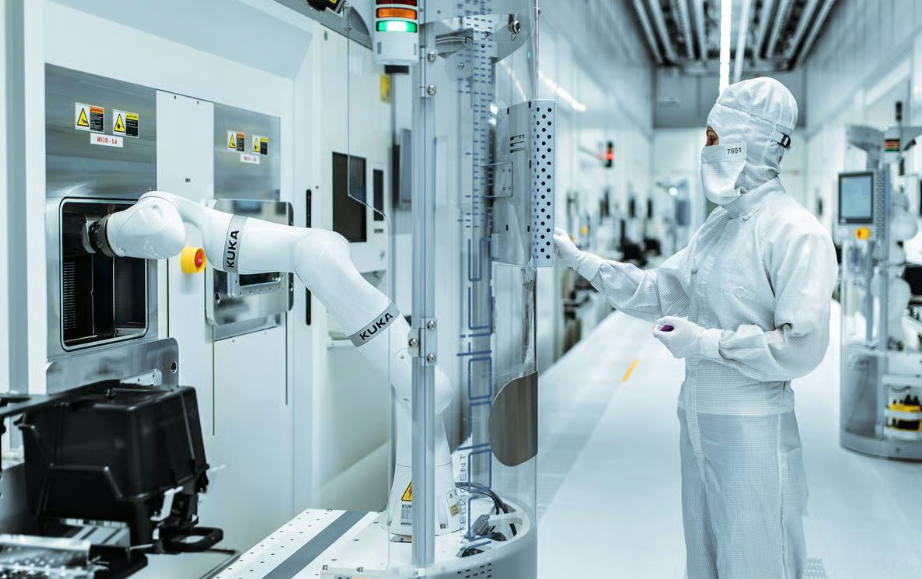
- AMD CEO Lisa Su visited Samsung’s chip plant to discuss expanding cooperation.
- The move reflects growing competition and collaboration in advanced semiconductor manufacturing.
What Happened
AMD chief executive Lisa Su has visited a Samsung Electronics semiconductor plant in South Korea to discuss potential expansion of ties between the two companies.
According to the report, the visit focussed on strengthening cooperation in semiconductor manufacturing, particularly as demand for advanced chips continues to grow.
Samsung is one of the world’s leading contract chip manufacturers, alongside Taiwan Semiconductor Manufacturing Company (TSMC). AMD, which designs processors but outsources manufacturing, relies on foundry partners to produce its chips.
The discussions come as AMD seeks to expand production capacity for high-performance processors used in data centres, artificial Intelligence, and consumer devices. Samsung has been investing heavily in advanced manufacturing technologies, including cutting-edge process nodes aimed at competing more directly with TSMC.
Lisa Su’s visit included a tour of Samsung’s facilities, highlighting the strategic importance of securing reliable manufacturing partners. The semiconductor supply chain has become more complex in recent years, with geopolitical tensions and rising demand putting pressure on production capacity.
AMD has historically depended heavily on TSMC for its most advanced chips. Any deeper relationship with Samsung could signal a diversification strategy aimed at reducing reliance on a single supplier.
Why It’s Important
The meeting underscores how competition and cooperation now coexist in the semiconductor industry. Chip designers such as AMD must balance performance, cost, and supply security when choosing manufacturing partners.
Demand for advanced chips has surged due to artificial Intelligence, cloud computing, and high-performance applications. This has increased the importance of leading-edge manufacturing capabilities.
For Samsung, closer ties with AMD could help strengthen its position in the global foundry market. The company has been working to attract more high-profile customers as it competes with TSMC.
However, challenges remain. Samsung has faced questions over yield rates and production consistency at its most advanced nodes. Any expansion of partnership will depend on whether it can meet the performance and reliability expectations of customers like AMD.
The visit also reflects broader industry trends. Companies are increasingly seeking to diversify supply chains to reduce risk, particularly amid geopolitical uncertainty.
While collabouration between AMD and Samsung could bring benefits, it also raises questions about execution. Securing additional manufacturing partners is one step. Delivering consistent, high-quality output at scale is another.
Also Read: https://btw.media/tech-trends/samsung-forecasts-ai-driven-chip-demand-surge/
