
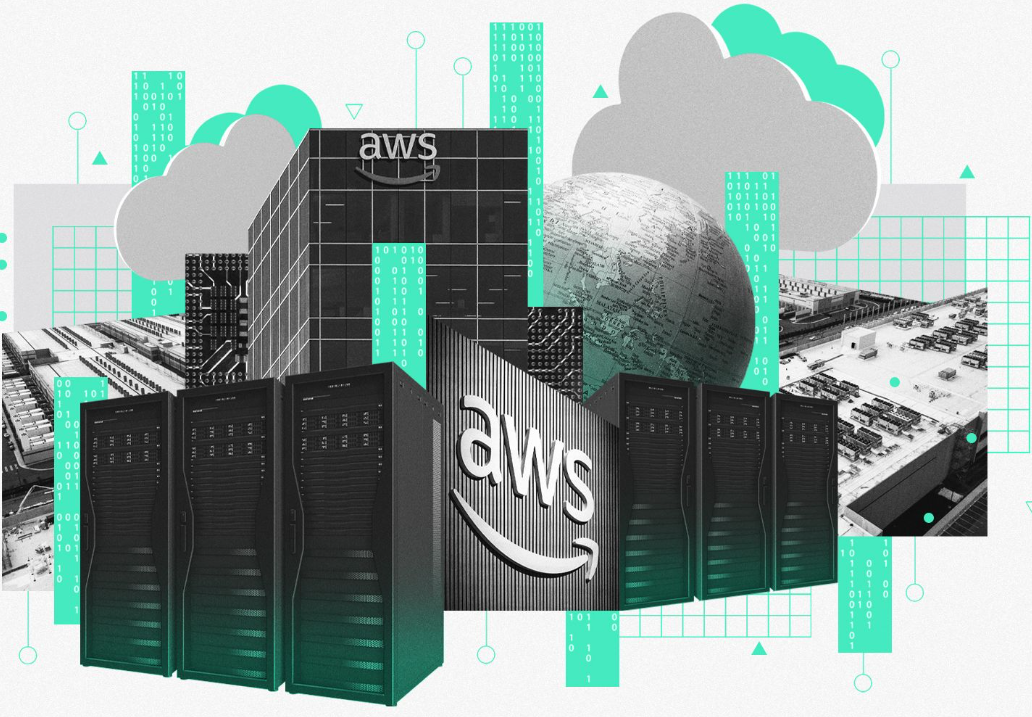
- Amazon now expects AWS revenue potential to reach $600B by 2036, driven by AI demand.
- The forecast roughly doubles earlier projections, signaling a major shift in cloud market expectations.
What Happened
Amazon’s chief executive has said artificial Intelligence could significantly boost the long-term growth of its cloud division, Amazon Web Services (AWS), with projected revenue now reaching $600B by 2036.
According to the report, the company has effectively doubled its earlier expectations for AWS, reflecting strong demand for AI-related computing services.
AWS remains the world’s largest cloud provider and has become a key platform for companies building and deploying AI applications. Businesses rely on AWS for data storage, computing power, and machine learning tools.
The revised forecast highlights how AI workloads are reshaping the cloud market. Training and running advanced AI models requires large-scale computing resources, often delivered through cloud platforms rather than on-premises systems.
Amazon has invested heavily in infrastructure to support this growth. This includes building new data centres, developing specialized AI chips such as its Trainium processors, and expanding services tailored to machine learning workloads.
The company’s leadership said demand for AI services continues to grow rapidly as enterprises adopt generative AI and automation technologies across industries.
Why It’s Important
The new projection signals how artificial Intelligence is becoming a central driver of growth for cloud providers. Companies such as Amazon, Microsoft, and Google are competing to supply the infrastructure needed to support AI development.
However, the scale of the forecast raises questions. A $600B revenue target implies sustained demand over more than a decade. This depends on continued investment in AI, as well as stable economic conditions and energy availability for large data centres.
Cloud infrastructure for AI also requires significant capital expenditure. Building and operating data centres involves high costs for hardware, power, and cooling. If demand fluctuates, providers could face pressure on returns.
There are also competitive risks. Rival cloud platforms are investing heavily in AI capabilities, while some large technology companies are developing their own infrastructure to reduce reliance on external providers.
Despite these uncertainties, the revised outlook underlines a clear trend: AI is reshaping the economics of cloud computing. Whether the growth trajectory matches current expectations will depend on how quickly businesses convert AI experimentation into sustained, revenue-generating use cases.
Also Read: https://btw.media/all/it-infrastructure/amazon-pledges-12bn-for-louisiana-data-centres/
