
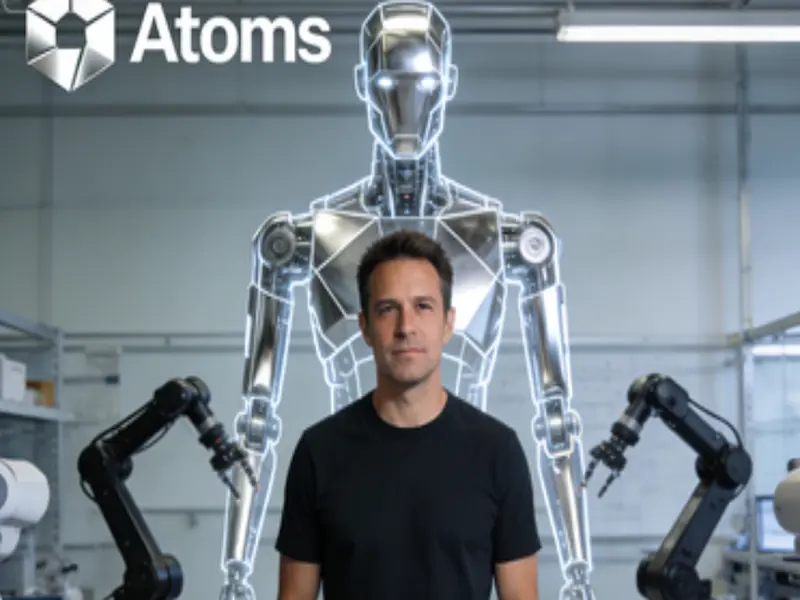
- Travis Kalanick has launched a robotics initiative called Atoms focused on specialised industrial automation.
- The project reflects rising investment in robotics as companies seek to automate logistics and manufacturing.
What happened: A new robotics venture emerges
Travis Kalanick has launched a new robotics push through a venture known as Atoms, marking his latest move into automation technology after leaving ride-hailing company Uber.
According to reporting by Reuters, Atoms is intended to develop specialised robotics systems designed to automate industrial processes such as manufacturing and logistics.
Kalanick has been investing in robotics companies for several years, particularly through ventures linked to food delivery and automated kitchen technology. The Atoms initiative appears to build on those interests by bringing together multiple robotics projects under a broader strategy focused on industrial automation.
The initiative is expected to focus on robotics designed for specific tasks rather than general-purpose humanoid machines. Such specialised systems can be easier to deploy in real-world industrial environments where automation needs are tightly defined.
According to Reuters, Kalanick’s efforts reflect growing interest in robotics as advances in artificial intelligence, sensors and computing power make automated systems more capable and commercially viable.
The launch of Atoms therefore positions Kalanick among a growing group of technology entrepreneurs investing heavily in robotics infrastructure.
Also Read: From atoms to energy: Common sense nuclear power on the rise
Also Read: Office of Atoms for Peace: Regulating nuclear safety in Thailand
Why it’s important
The new venture highlights how robotics is becoming a key frontier for technological innovation and investment.
Automation has long been used in sectors such as automotive manufacturing, but advances in AI and machine vision are now enabling robots to perform more complex tasks across a wider range of industries. Logistics, warehousing and food production are among the sectors experimenting with new forms of automated machinery.
For investors, robotics represents a potentially significant growth market as companies search for ways to improve productivity and manage labour shortages.
From a financial perspective, automation technologies can help businesses reduce long-term operating costs while improving efficiency, making them attractive investments during periods of economic uncertainty.
Kalanick’s involvement is notable because entrepreneurs who previously built digital platforms are increasingly moving into physical automation systems.
This shift reflects a broader transformation in the technology sector. As software platforms mature, some technology leaders are turning their attention to hardware and robotics in an effort to automate real-world processes.
The launch of Atoms therefore illustrates how the next wave of innovation may combine artificial intelligence with machines capable of interacting directly with the physical world.
