
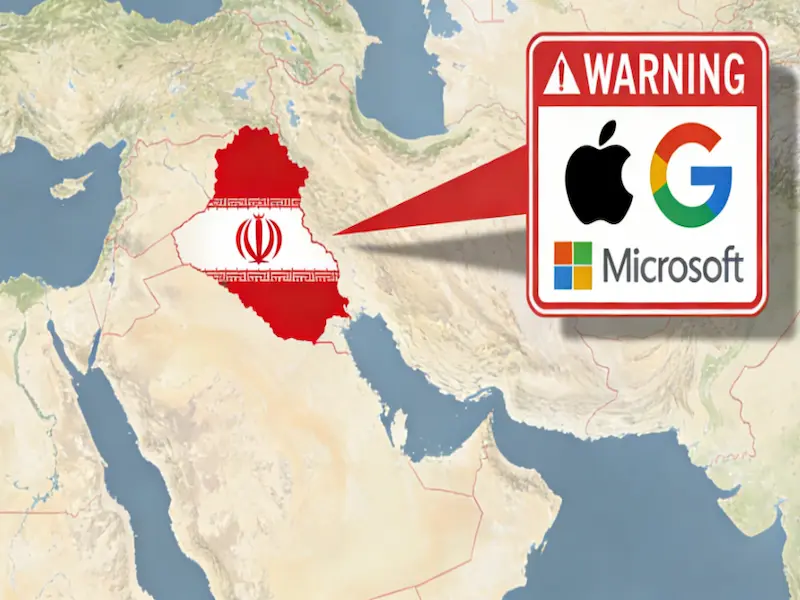
- Iran’s Islamic Revolutionary Guard Corps has warned that US technology companies could become targets as regional conflict escalates.
- The warning underscores growing concern that cyber operations and digital infrastructure could become extensions of geopolitical confrontation.
What happened: Technology enters the conflict narrative
Iran’s powerful security force, the Islamic Revolutionary Guard Corps (IRGC), has issued warnings suggesting that American technology companies could become potential targets as regional hostilities intensify.
According to reporting by Wired, Iranian messaging linked to the IRGC indicated that US tech firms may face retaliation if the broader conflict involving Iran continues to expand. The warning signals that companies involved in digital infrastructure, communications technology or online services could be drawn into the geopolitical confrontation.
The remarks appear in the context of escalating tensions in the Middle East, where cyber operations and information warfare have increasingly accompanied military activity. Technology companies — particularly those providing cloud platforms, communications services and software infrastructure — are seen by some governments as extensions of Western strategic influence.
Security analysts cited in the report note that the warning does not necessarily imply immediate attacks, but it reflects a shift in rhetoric that places technology infrastructure within the scope of geopolitical pressure.
Major US technology companies operate globally through cloud platforms, internet services and software ecosystems that underpin large parts of the modern digital economy. Their infrastructure, including data centres and network systems, plays a crucial role in both civilian and commercial communications.
Also Read: Iran’s internet flickers back under tight state control
Also Read: Trump to seek Musk’s help to restore internet access in Iran
Why it’s important
The warning illustrates how geopolitical conflicts are increasingly spilling into the technology sector.
Digital infrastructure has become a strategic asset in modern geopolitical competition. Cloud platforms, communications networks and large-scale data centres support government services, financial systems and international commerce. As a result, they are also potential pressure points during periods of conflict.
Cybersecurity experts have long warned that state-backed cyber activity could target companies providing critical digital services. Even when attacks are limited to disruption or espionage, the economic consequences can be significant.
For technology companies, the situation highlights the growing difficulty of operating globally while navigating political tensions between states. Firms headquartered in the United States often provide services in dozens of countries, making them vulnerable to political retaliation during periods of diplomatic strain.
From a financial perspective, geopolitical risk has increasingly become part of the technology sector’s operating environment. Investors now factor cyber risk and international tensions into valuations of major digital infrastructure providers.
The IRGC’s warning therefore reflects a broader trend: as digital systems become central to global economies, technology companies are finding themselves closer to the front line of geopolitical competition.
