
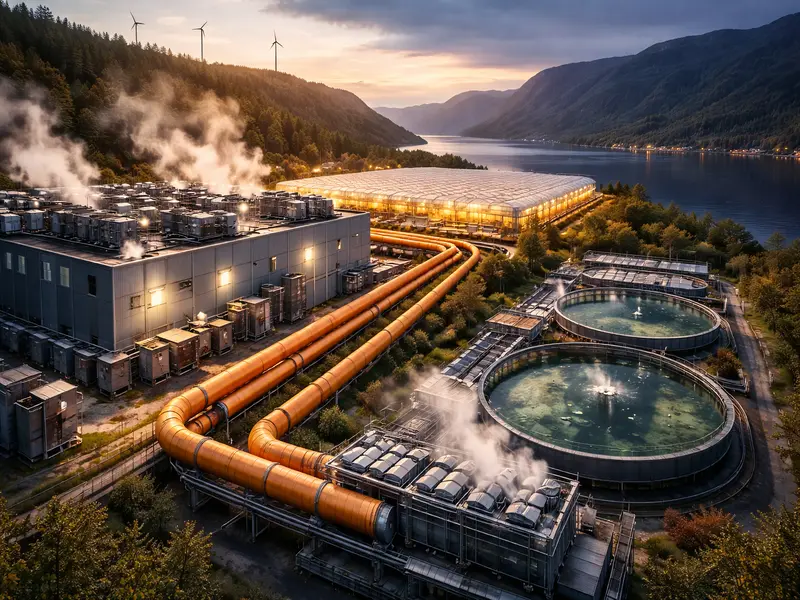
- Green Mountain and others are proving that waste heat can be a valuable resource
- Industry observers say this trend could reshape data-centre economics and local energy systems
What happened: Heat as commercial output
In 2026, the narrative around data-centre waste heat in Europe and beyond is moving beyond a sustainability talking point to quantifiable business value. Norway-based colocation operator Green Mountain, known for its sustainable infrastructure, has been actively deploying projects that channel excess heat from data-centre cooling into productive uses, signalling a shift towards heat reuse as an economic asset.
Green Mountain’s projects include delivering warmed water to a nearby lobster farm, where the discarded thermal energy helps maintain ideal sea temperatures for aquaculture, and a scheme with Hima Seafood to use residual heat for a large land-based trout farm adjacent to its Rjukan facility.
Elsewhere, collaborative ventures have emerged that use data-centre waste heat for district heating networks. For example, a major Green Mountain-KMW facility near Mainz, Germany, is designed to feed up to 60 MW of thermal energy into the local heating system, providing warmth to homes and public buildings.
The World Economic Forum and research bodies highlight similar schemes across Europe that utilise data-centre heat for greenhouses, aquaculture and even swimming pools, underscoring a broader industry trend.
These initiatives are not solely about environmental impact. They create additional revenue streams, lower operational costs, and enhance the financial case for new data-centre developments. Data centres are energy-intensive assets; turning by-product heat into profitable output can improve returns and attract investors focused on sustainability metrics.
Also Read: Oracle shares rise after $50 billion data centre funding plan
Also Read: nLighten France acquisition to expand data centre presence
Why it’s important
As digital demand grows — with cloud, AI and edge computing pushing capacity higher — so too does the volume of waste heat produced. Instead of dissipating that energy, operators can capture and monetise it, reducing both carbon footprints and energy costs.
From a commercial standpoint, heat reuse enables data-centre firms to differentiate themselves in a competitive market where sustainability criteria can influence client choice and access to green financing. According to industry studies, recovered heat can contribute meaningfully to local energy systems, reducing dependence on fossil fuels and aligning with broader decarbonisation goals.
The evolution of waste-heat reuse from experimental project to economic lever suggests that the future of data centres will integrate energy output into local infrastructure planning — potentially reshaping how digital and physical energy systems interconnect.
