
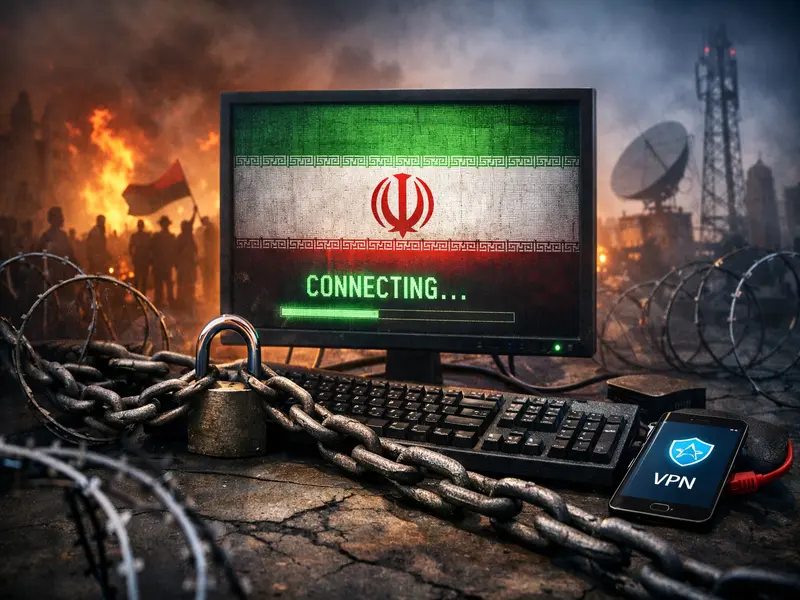
- Partial internet recovery has reached a fraction of normal traffic but remains heavily filtered and unstable.
- The shutdown has stifled business, deepened economic pain and reflects a political choice to prioritise regime control over open communications.
What happened: Partial reconnection under strict filters
Iran’s internet — almost entirely cut off since the government imposed a nationwide shutdown on 8 January amid widespread protests — has begun to flicker back with partial international connectivity. The blackout, one of the most severe in the country’s history, reduced network traffic to near zero and largely severed Iran’s digital links to the world, affecting local websites and foreign services alike.
Monitoring groups report that while some traffic has returned — with desktop and mobile usage climbing to portions of pre-shutdown levels — access remains severely restricted under a state-controlled “whitelist” scheme that permits only a select array of officials and sanctioned services to reach global sites without obstacles. Users outside Tehran experience intermittent connections, and many popular social platforms remain blocked unless bypassed with tools such as VPNs.
The shutdown was ordered by state security bodies against the backdrop of protests that erupted late last year and continued into January, driven by economic grievances and demands for political change.
Also Read: Elon Musk’s Starlink stands the test in Iran crackdown
Also Read: Internet Blackout Continues in Iran
Why it’s important
The partial restoration of connectivity under stringent state filters highlights Tehran’s effort to balance economic necessity with regime control. The absence of open internet access has inflicted tangible economic pain; official and independent estimates suggest daily losses measured in tens of millions of dollars as commerce, banking and foreign trade stall without reliable digital links.
From a technological perspective, this episode underscores how governments can leverage network infrastructure to shape both internal and external information flows. Iran has long maintained stringent censorship and control over internet access, with historic precedents dating back to shutdowns during earlier protests. The current approach — restoring only filtered connectivity — suggests a possible long-term strategy of digital isolation that other authoritarian states might watch closely.
Economically, the constrained connectivity complicates everything from e-commerce to investment flows; in financial terms, reduced digital access acts as a tax on productivity and market efficiency that may further weaken an already strained Iranian rial.
