
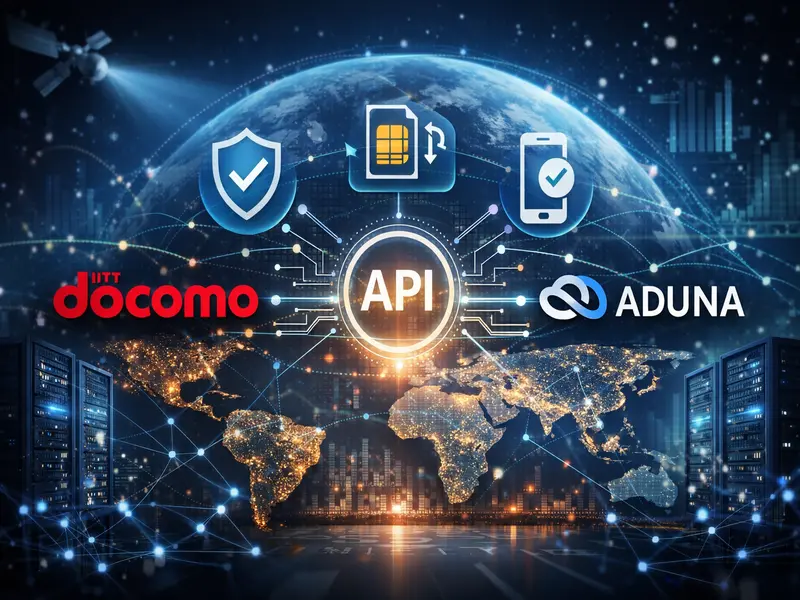
- DoCoMo’s network APIs to reach global developers and enterprises via Aduna’s platform.
- The collaboration supports standardized telecom APIs for security-focused services such as SIM swap detection.
What happened: A broader gateway for network innovation
NTT DoCoMo, Japan’s leading mobile telecommunications firm, signed a partnership agreement with API aggregator Aduna to make DoCoMo’s network Application Programming Interfaces (APIs) available through Aduna’s global platform.
The deal, signed On 29 January 2026, builds on a collaboration that began in June 2025 under industry initiatives such as the GSMA Open Gateway and the CAMARA framework, which aim to standardise telecom network APIs internationally. APIs exposed by DoCoMo include capabilities for Number Verification and SIM Swap detection, tools that enterprises can use to fight fraud, secure authentication and protect customers from mobile security threats.
Aduna, a joint venture backed by major operators and Ericsson, acts as a unified access point to standardised APIs from multiple carriers, simplifying how developers and businesses integrate network functions into their services.
Also Read: Accenture and NTT DOCOMO launch universal wallet infrastructure
Also Read: Network APIs finally hit inflection point in 2025
Why it’s important
This agreement marks a strategic move by DoCoMo to commercialise its network intelligence beyond Japan’s borders. By leveraging Aduna’s aggregation model, DoCoMo aims to broaden its global footprint and generate new revenue streams as telecoms shift from traditional connectivity to programmable services.
For developers and enterprises, standardised network APIs lower integration complexity and unlock opportunities to embed telecom-level capabilities into fintech, identity, IoT and cloud services. Providing such APIs can accelerate innovation in secure digital authentication and fraud prevention — areas of increasing demand in the digital economy. Financial analysts often see API-led models as a way for carriers to monetise network assets more effectively.
The partnership also reflects a broader trend in telecoms towards open ecosystems that empower third-party innovation while maintaining robust security and interoperability. This aligns with global efforts to transform mobile networks from closed silos into platforms for wider digital service delivery.
