
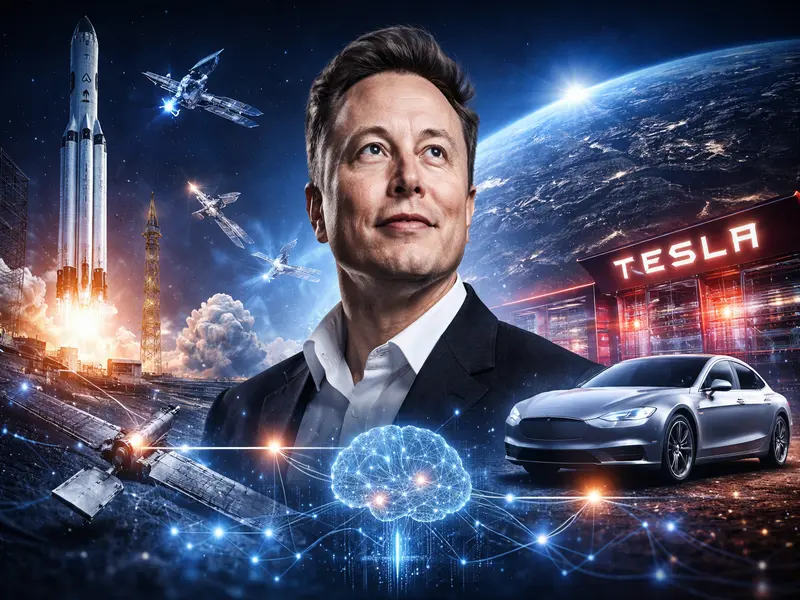
- SpaceX is reportedly exploring a merger with Tesla or a combination with Musk’s artificial intelligence company xAI as part of strategic repositioning.
- Such integration would dramatically alter capital structures across space, electric vehicles and AI, attracting infrastructure and sovereign investors.
What happened: Strategic consolidation under review
Elon Musk’s SpaceX, the private space launch and satellite internet company, is considering a potential merger with electric vehicle and robotics maker Tesla, according to a Bloomberg News report citing people familiar with the matter.
The discussions also encompass an alternative option to combine with Musk’s artificial intelligence firm xAI, signalling broader consolidation among his portfolio of technology companies.
SpaceX and Tesla did not formally confirm the talks, but the mere reports drove Tesla’s share price up about 3 per cent in after-hours trading. Some investors reportedly view a consolidation of SpaceX’s orbital launch, satellite services and future space-based infrastructure with Tesla’s vehicle and AI ambitions as a way to streamline capital and operational complexity.
The potential combinations come as SpaceX is preparing for an anticipated initial public offering later in 2026, thought by some to be one of the largest IPOs in corporate history, possibly raising tens of billions of dollars. Any deal could draw interest not just from technology investors but also from infrastructure funds and sovereign wealth vehicles.
Also Read: Elon Musk’s Starlink stands the test in Iran crackdown
Also Read: Elon Musk escalates legal battle with OpenAI and Microsoft
Why it’s important
This unfolding story reflects a potential shift in how Musk’s interconnected empire is structured. SpaceX’s talk of merging with Tesla or xAI suggests a move towards tighter vertical integration between space launch capabilities, electric mobility and artificial intelligence — sectors traditionally funded and operated separately.
From a financial perspective, bundling these businesses could make them more attractive to deep-pocketed infrastructure investors who seek large, diversified technology platforms rather than standalone bets. However, combining such distinct operations also presents execution risks and regulatory scrutiny, especially in aerospace and automotive markets.
Strategically, the move shows how leaders of capital-intensive technology ventures are probing new corporate forms to manage the escalating costs of AI infrastructure, space hardware and advanced mobility — a trend likely to reshape competition in multiple industries.
