
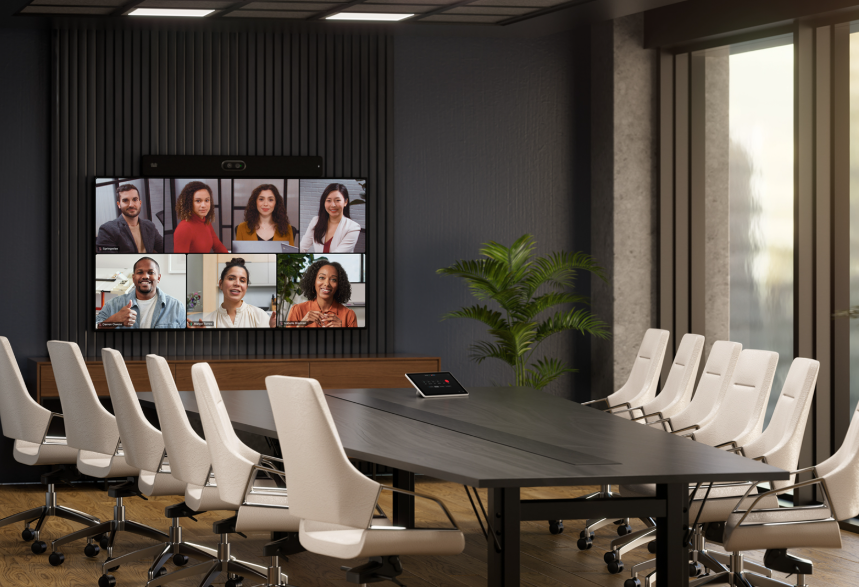
- The new Rally AI cameras use adaptive AI framing and multiple mounting options to serve boardrooms, classrooms and town halls.
- The products integrate space analytics and multi-camera views but pose questions about real-world effectiveness and deployment complexity.
What happened: Logitech launches Rally AI Camera family
Logitech has introduced two new AI-enhanced conference cameras — the Rally AI Camera and the Rally AI Camera Pro — designed to bring advanced video intelligence to larger meeting environments such as boardrooms, classrooms and town halls. Both products were announced in late January 2026 and represent the latest extension of Logitech’s enterprise video portfolio.
The cameras feature adaptive AI-powered RightSight 2 video framing, which can automatically adjust framing for a group, an individual speaker or a grid layout based on room activity, aiming to create a more equitable viewing experience for hybrid meeting participants. Installation options include ceiling, wall, display or in-wall mounting, claimed by Logitech as a first for its devices, and both models include automatic privacy shutters to indicate when cameras are off.
The Rally AI Camera Pro adds a dual-camera system with a second optical path and 15× hybrid zoom, intended to capture presenters and visual details across expansive rooms. The product family is also designed to integrate with collaboration platforms such as Zoom Intelligent Director and Microsoft Teams multiple camera view, allowing multiple cameras to be orchestrated together for richer perspectives.
Also Read: https://btw.media/all/it-infrastructure/enterprise-video-conferencing-trends/
Why it’s important: hybrid work needs and real-world skepticism
hybrid work environments remain a persistent challenge for organisations seeking to provide equitable participation for remote and in-room attendees. Logitech’s Rally AI range plugs AI directly into video hardware, promising to automate tasks previously requiring a dedicated operator — such as speaker focus and scene composition — and potentially reduce reliance on manual camera control.
However, questions remain about real-world utility beyond marketing claims. AI-driven framing systems like RightSight 2 must contend with lighting variability, overlapping speech and complex room dynamics that can challenge automated decision-making. Success depends heavily on proper tuning and real-world testing in diverse settings.
Moreover, while integrated occupancy analytics and space usage telemetry — such as people counting and room utilisation reports — could help facilities teams optimise real estate and scheduling, they also raise privacy considerations that IT and legal teams must navigate, particularly where people data is shared beyond the meeting context.
Pricing information reported by trade outlets suggests the Rally AI Camera may start around USD 2,499, with the Pro version near USD 2,999, positioning them well above consumer webcams yet below fully custom AV installations, but total deployment cost will depend on integration, cabling and audio components.
In the evolving hybrid workspace toolkit, these devices reflect a broader industry shift to embed intelligence in familiar infrastructure. Yet enterprises should balance automation hype with realistic expectations about benefits, integration costs and the need for governance around privacy and room analytics.
Also read: https://btw.media/all/tech-trends/ai-in-the-workplace-automation-and-productivity/
