
Close Menu
  • Leadership Alliance
  • Exclusives
  • History of the Internet
  • AFRINIC News
  • Internet Governance
    • Regulations
    • Governance Bodies
    • Emerging Tech
  • Others
    • IT Infrastructure
      • Networking
      • Cloud
      • Data Centres
    • Company Stories
      • Profile
      • Startups
      • Tech Titans
      • Partner Content
    • Fintech
      • Blockchain
      • Payments
      • Regulations
    • Tech Trends
      • AI
      • AR / VR
      • IoT
    • Video / Podcast
  • Country News
    • Africa
    • Asia Pacific
    • North America
    • Lat Am/Caribbean
    • Europe/Middle East
Facebook LinkedIn YouTube Instagram X (Twitter)
Blue Tech Wave Media
Facebook LinkedIn YouTube Instagram X (Twitter)
  • Leadership Alliance
  • Exclusives
  • History of the Internet
  • AFRINIC News
  • Internet Governance
    • Regulation
    • Governance Bodies
    • Emerging Tech
  • Others
    • IT Infrastructure
      • Networking
      • Cloud
      • Data Centres
    • Company Stories
      • Profiles
      • Startups
      • Tech Titans
      • Partner Content
    • Fintech
      • Blockchain
      • Payments
      • Regulation
    • Tech Trends
      • AI
      • AR/VR
      • IoT
    • Video / Podcast
  • Africa
  • Asia-Pacific
  • North America
  • Lat Am/Caribbean
  • Europe/Middle East
Blue Tech Wave Media
Home » Microsoft takes on Nvidia with a home-grown AI chip
microsoft-takes-on-nvidia-with-a-home-grown-ai-chip
Cloud

Microsoft takes on Nvidia with a home-grown AI chip

By Claire ShenJanuary 27, 2026No Comments2 Mins Read
Share
Facebook Twitter LinkedIn Pinterest Email
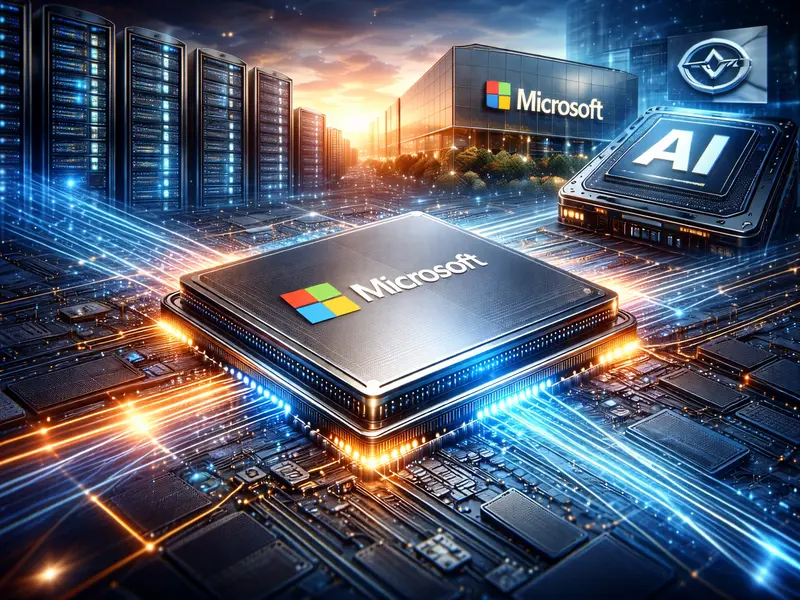
  • Microsoft introduces its own AI accelerator to power internal workloads and cloud services, easing dependence on Nvidia’s scarce and costly GPUs.
  • The move underlines a broader industry trend as hyperscalers seek tighter control over performance, cost and supply chains.

What happened: A strategic silicon step

In early 2024, Microsoft unveiled its first in-house AI chip as part of a wider effort to strengthen its cloud and artificial intelligence infrastructure, according to Tech in Asia. Microsoft, a US software and cloud computing giant best known for Windows and Azure, said the processor would help power AI workloads while reducing reliance on Nvidia’s dominant graphics processing units.

The chip, designed internally but manufactured by a third-party foundry, is aimed primarily at Microsoft’s own data centres and Azure cloud platform rather than retail customers. It reflects mounting pressure on hyperscalers to manage soaring AI costs and chronic shortages of advanced Nvidia hardware.

According to Microsoft executives cited by Tech in Asia, the company does not plan to abandon Nvidia entirely. Instead, the new chip is intended to complement existing GPUs and provide flexibility for specific AI inference and training tasks. Nvidia, a US semiconductor company whose chips underpin much of today’s generative AI boom, remains a critical supplier to Microsoft and its partners.

The announcement follows similar moves by rivals including Google and Amazon, which have also developed custom AI accelerators to optimise their cloud services and workloads.

Also Read: Microsoft CEO sounds a note of caution on AI
Also Read: Microsoft 365 services disrupted users

Why it’s important

Microsoft’s decision highlights how AI is reshaping cloud strategy. Custom silicon allows cloud providers to fine-tune performance, control costs and reduce exposure to supply bottlenecks. From a financial perspective, in-house chips can improve margins by lowering long-term capital expenditure, even if upfront research costs are high.

However, Nvidia’s position remains formidable. Its software ecosystem, particularly CUDA, is deeply embedded in AI development, creating a moat that is difficult to dislodge even when alternative hardware exists. As Tech in Asia notes, Microsoft’s move is about diversification rather than replacement.

More broadly, the shift points to a trend of vertical integration across the AI stack, with large technology firms designing chips, building models and operating cloud platforms under one roof. This consolidation could accelerate innovation, but it may also concentrate power among a small group of global players, reshaping competition in cloud computing and artificial intelligence.

AI chip Azure Microsoft NVIDIA
Claire Shen

Related Posts

Logitech unveils Rally AI cameras for hybrid video conferencing

January 28, 2026

HPE and 2degrees partner on AI and data sovereignty

January 28, 2026

SRI’s digital solutions power IT modernisation in Japan

January 27, 2026
Add A Comment
Leave A Reply Cancel Reply

CATEGORIES
Archives
  • January 2026
  • December 2025
  • November 2025
  • October 2025
  • September 2025
  • August 2025
  • July 2025
  • June 2025
  • May 2025
  • April 2025
  • March 2025
  • February 2025
  • January 2025
  • December 2024
  • November 2024
  • October 2024
  • September 2024
  • August 2024
  • July 2024
  • June 2024
  • May 2024
  • April 2024
  • March 2024
  • February 2024
  • January 2024
  • December 2023
  • November 2023
  • October 2023
  • September 2023
  • August 2023
  • July 2023

Blue Tech Wave (BTW.Media) is a future-facing tech media brand delivering sharp insights, trendspotting, and bold storytelling across digital, social, and video. We translate complexity into clarity—so you’re always ahead of the curve.

BTW
  • About BTW
  • Contact Us
  • Join Our Team
  • About AFRINIC
  • History of the Internet
TERMS
  • Privacy Policy
  • Cookie Policy
  • Terms of Use
Facebook X (Twitter) Instagram YouTube LinkedIn
BTW.MEDIA is proudly owned by LARUS Ltd.

Type above and press Enter to search. Press Esc to cancel.