
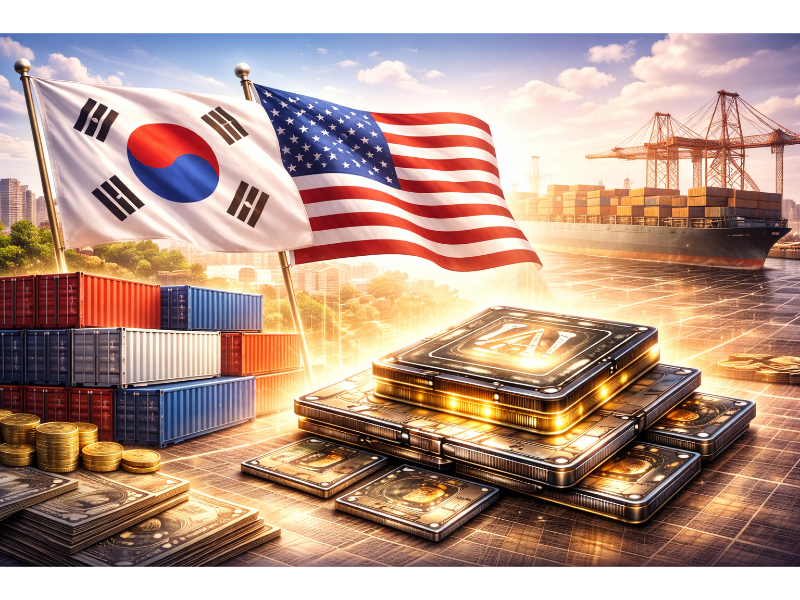
- South Korea will seek favourable terms on U.S. tariffs for imported memory chips, aiming to protect its major semiconductor exporters.
- Officials say the current U.S. tariff stance has limited immediate impact, but future measures could pose broader risks to Korean tech sectors.
What happened: Seoul to push for favourable tariff terms with Washington
South Korea plans to negotiate with the United States for favourable tariff terms on imports of memory chips, a presidential office spokesperson said at a televised briefing. The announcement follows the Trump administration’s recent imposition of a 25 per cent tariff on certain advanced computing chips, including AI‑oriented processors, though those levies currently target logic chips rather than memory chips.
The official said South Korea’s trade deal with the United States includes a joint fact sheet that emphasises the principle of non‑discrimination, meaning Seoul should not receive worse treatment than key competitors when it comes to tariffs on imported chips. South Korea’s memory chips form a significant portion of its semiconductor exports, with global leaders such as Samsung Electronics and SK Hynix playing prominent roles in supplying DRAM and flash memory technologies used worldwide.
On Saturday, South Korea’s trade minister indicated the new U.S. tariffs are likely to have a limited immediate impact on South Korean firms because the current measures exclude memory chips, which make up the lion’s share of the nation’s semiconductor exports.
Also Read: South Korea indicts 10 over alleged chip technology leak to China
Also Read: US crypto executives to throw Washington fundraiser for Harris
Why it’s important
South Korea’s push for favourable tariff terms highlights its strategic interest in safeguarding its semiconductor industry, which accounts for a large share of its export‑driven economy. The sector’s success has been built on decades of investment and innovation, making policies that affect global chip flows critically important for national growth.
While South Korean officials say the present tariffs have limited near‑term effects, there is concern that future “phase 2” tariffs — should they expand to memory chips — could disrupt export patterns and erode competitiveness. This underscores a delicate balance: tariffs are intended to protect U.S. manufacturing and promote domestic production, but they can also introduce cost pressures and supply‑chain uncertainty for foreign producers and their customers.
Moreover, the negotiations occur amid broader geopolitical trade tensions and shifting supply‑chain dynamics. With chip production increasingly viewed through lenses of national security and economic sovereignty, South Korea’s efforts to negotiate carve‑outs, quotas or exemptions may set precedents for how other major exporters engage Washington.
Analysts note that while tariff negotiations can ease immediate frictions, they do not address deeper structural questions about global semiconductor dependency, the role of manufacturing hubs such as Taiwan and South Korea, and how nations balance competitive advantage with growing protectionist sentiment.
