
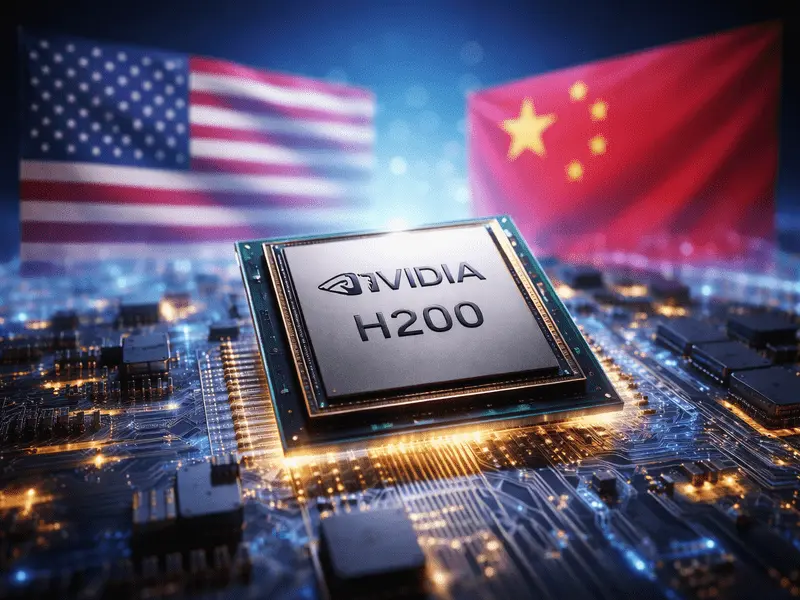
- The US government has authorised exports of Nvidia’s H200 AI chips to China under strict conditions.
- The decision reflects a nuanced approach to maintaining competitiveness while balancing national security concerns.
What happened: Policy shift on high-end chips
The US government, under the Trump administration, has formally approved the export of Nvidia’s H200 artificial intelligence chips to China, marking a significant adjustment to longstanding export controls on advanced semiconductor technology.
The H200, Nvidia’s second-most powerful AI processor, can now be shipped to Chinese customers under a set of regulatory conditions. These restrictions include limiting China-bound shipments to no more than half the volume sold domestically and prohibiting use in military applications — stipulations designed to uphold US national security concerns.
This policy shift follows months of deliberation within US government agencies over whether and how to permit such exports. Prior to this, the Trump administration had proposed easing rules to allow sales of high-performance chips abroad, countering stricter controls introduced under the previous Biden administration.
The new export regime is slated to take effect imminently and will require third-party verification to ensure compliance with the non-military stipulations.
Also Read: US grants TSMC licence for chipmaking tools to China plant amid export control tweaks
Also Read: Baidu’s Kunlunxin files confidentially for Hong Kong IPO amid China’s AI chip push
Why it’s important
The approval of H200 exports to China comes at a pivotal moment in the US–China technological rivalry. The US has for several years maintained restrictive controls on exporting advanced computing and semiconductor technologies to China, intending to limit Beijing’s ability to develop cutting-edge AI and related capabilities.
Permitting such exports, albeit under conditions, suggests a strategic balancing act: Washington aims to preserve the global market presence of US technology firms like Nvidia, while attempting to constrain the potential military or strategic misuse of the chips.
For China, gaining access to high-performance AI hardware — even with limits — could bolster commercial AI development, though domestic authorities have signalled caution and, in some reports, imposed their own restrictions on H200 access.
The decision is likely to influence broader semiconductor supply chains and geopolitical negotiations, signalling a nuanced phase in tech diplomacy between two of the world’s largest economies.
