
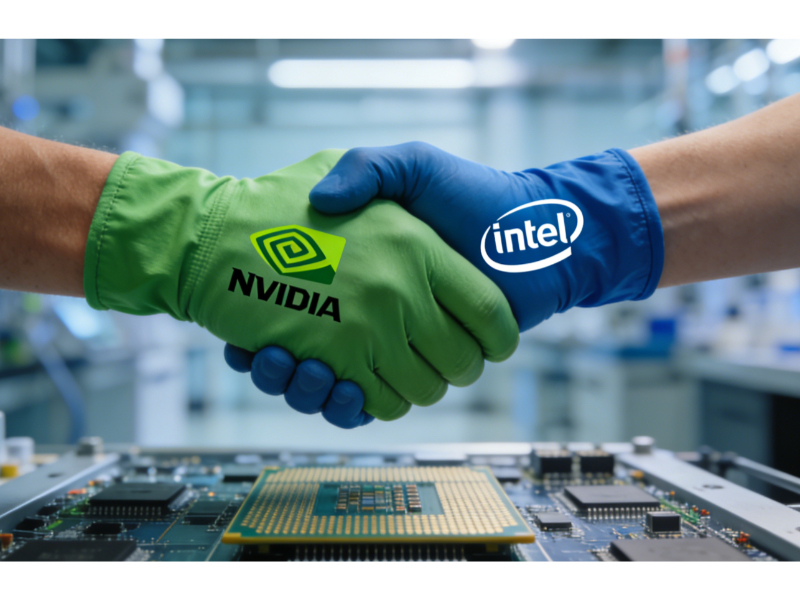
- Nvidia acquires 214.7 million Intel shares at $23.28 each, following September agreement
- U.S. antitrust regulators approved the investment; implications for chip industry collaboration remain under scrutiny
What happened: Nvidia finalises $5 billion stake in Intel amid market pressures
Nvidia has finalised a $5 billion investment in Intel, purchasing over 214.7 million shares at $23.28 apiece, as previously agreed in September. The acquisition was completed through a private placement, with both companies confirming the transaction in regulatory filings. The move comes after Intel faced financial strains due to years of costly production capacity expansion and operational missteps.
U.S. antitrust authorities cleared the investment earlier this month, allowing the deal to proceed without regulatory obstacles. Nvidia, a leading designer of AI-focused chips, now holds a significant stake in one of its historic competitors. Despite the announcement, Nvidia shares were down 1.3% in premarket trading, while Intel’s stock showed little change.
Also Read: Intel decides to retain networking and communications division
Also Read: Intel signals return to AI race with new chip to launch next year
Why it’s important
The acquisition highlights a growing trend of strategic investments among semiconductor companies as they navigate supply chain pressures and technological competition. For Intel, the $5 billion cash infusion provides much-needed capital to support ongoing expansion and innovation. However, industry observers question whether Nvidia’s stake could influence Intel’s business strategies, potentially blurring competitive boundaries in the chip market.
Analysts note that while such investments may foster collaboration on technology development, they could also raise concerns about market concentration and future antitrust scrutiny. The deal underscores the delicate balance between strategic partnership and competitive independence in an industry dominated by a few major players.
Beyond financial implications, the investment signals Nvidia’s ambition to strengthen its position in the broader semiconductor ecosystem, particularly as AI-driven demand for chips accelerates.
Intel may benefit from potential knowledge sharing or joint research initiatives, but questions remain about how the partnership might affect competition in critical areas such as data centre processors and AI accelerators. Industry watchers will be closely monitoring whether this stake leads to closer operational ties or remains a purely financial investment.
