
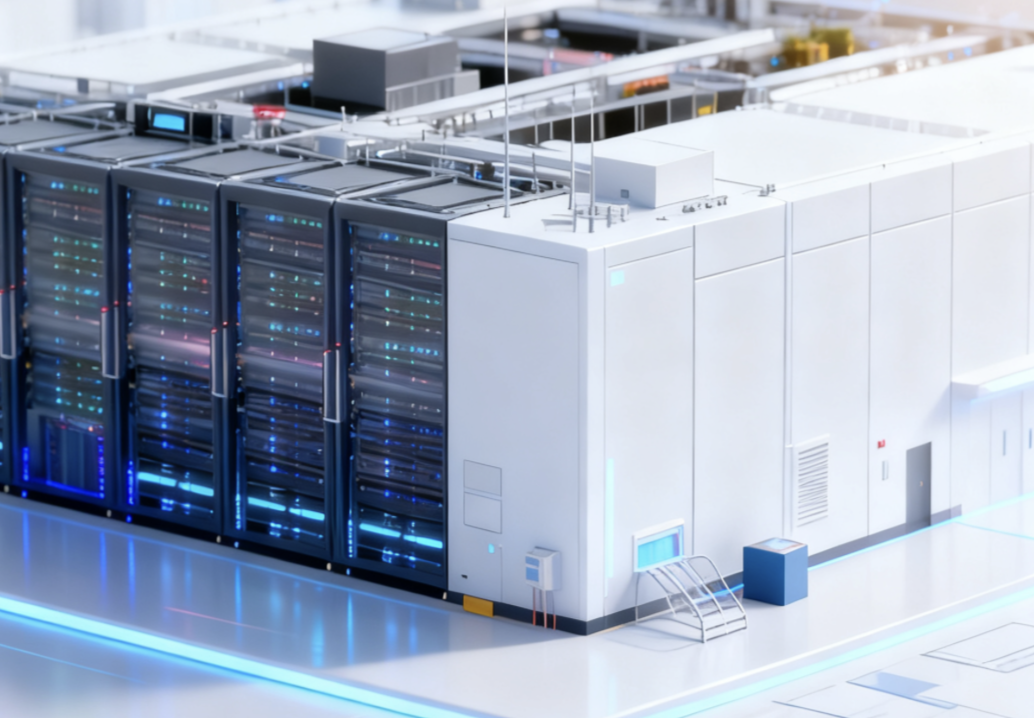
- They are preparing a joint application under the EU’s AI data-centre subsidy scheme.
- Discussions remain advanced but no formal agreement has yet been signed, according to people familiar with the matter.
What happened: EU-backed project could boost Europe’s AI capacity
German newspaper Handelsblatt reports that Deutsche Telekom and the Schwarz Group are in advanced negotiations to jointly build a mega data centre, often referred to as an “AI gigafactory.”
The aim is to apply for funding from the European Commission’s multi-billion-euro initiative to support large-scale AI data centre projects across Europe. A Canadian investment firm, Brookfield Corporation, is said to be considered for financing support.
A spokesperson for Deutsche Telekom confirmed interest in assuming a leading role in establishing an “EU-AI-Gigafactory at the German site,” though they declined to comment explicitly on a partnership with Schwarz. Both Schwarz Group and Brookfield declined to comment when approached.
The Schwarz Group has already announced plans to build a large data centre in Lübbenau (Spreewald region), with an estimated investment of around €11 billion.
Also read: Deutsche Telekom advances 3D networking for 6G
Also read: Deutsche Telekom lifts dividend on strong US gains
Why it’s important
This potential collaboration comes at a time when the European Union is aggressively promoting domestic AI infrastructure to reduce reliance on external providers and strengthen digital sovereignty. A robust network of AI-ready data centres could support European companies in deploying large language models and other advanced AI at scale — especially as demand for computing power surges.
For Deutsche Telekom, the joint project would consolidate its ambition to offer cloud, AI, and telecom services on a “fully sovereign” European footing — complementing its announced partnership with NVIDIA for an industrial AI cloud. For Schwarz, it could transform the company beyond retail logistics into a provider of AI infrastructure, opening new business lines in cloud and data services.
Yet the plan raises serious questions. The scale—billions in investment—and the energy demands of a major AI data centre pose environmental and infrastructure-capacity challenges. It remains unclear whether renewable energy supply and grid capacity will match the needs, especially given Europe’s ongoing struggles between infrastructure, environmental impact, and rapid AI expansion. The lack of a signed agreement also means the project could stall.
Moreover, while EU funding may cover a substantial portion, long-term viability will depend on demand for AI compute in Europe — which remains uncertain compared with regions where big tech giants dominate.
As the EU and member states push for AI capability on the continent, this potential partnership between a telecom incumbent and a retail conglomerate might signal a shift in who builds and owns core digital infrastructure. But it may also highlight the tensions inherent in rapid scale-up: environmental impact, energy usage, and long-term demand remain open questions.
