
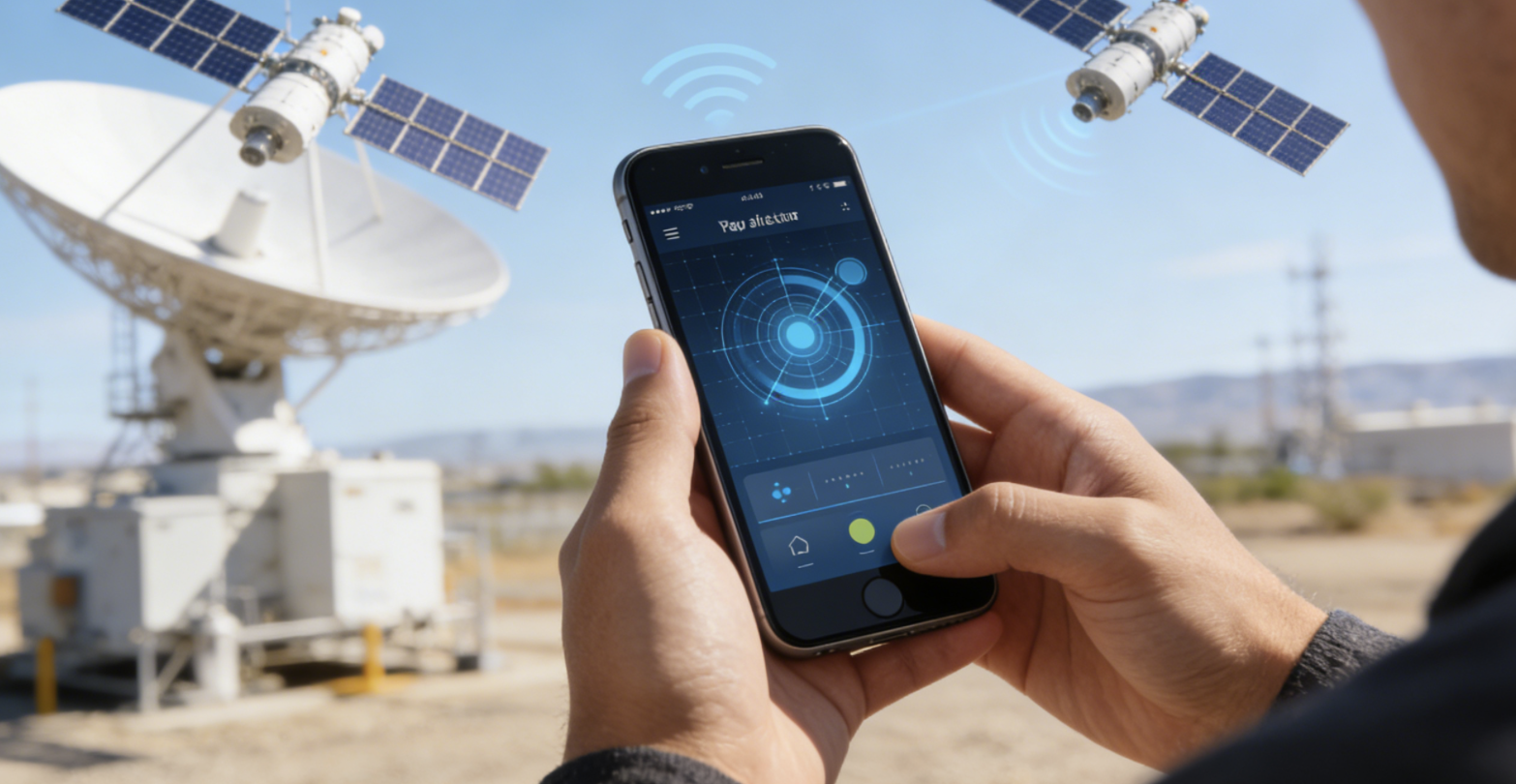
- 60 % of surveyed mobile users are willing to pay more for smartphone-to-satellite connectivity; respondents in markets like India (89 %) and Indonesia (82 %) are most enthusiastic.
- On average, those willing to pay would accept a 5–7 % increase in their monthly bill (9 % in India), and 47 % of global respondents said they would switch telcos to get satellite-enabled coverage.
What happened: Viasat-GSMA intelligence survey reveals strong consumer demand for direct-to-device satellite mobile services
A new report from Viasat, Inc. and GSMA Intelligence, canvassing 12,390 mobile-phone users across 12 countries, has captured widespread interest in direct-to-device (D2D) satellite services. The survey — conducted between May and June 2025 — asked respondents about their mobile connectivity experience and willingness to pay for satellite-enabled coverage.
More than one-third of participants reported losing access to basic cellular services at least twice a month. Against that backdrop, over 60% said they would pay extra for satellite connectivity on their smartphones. This willingness was strongest in markets such as India (89 %) and Indonesia (82 %), while more developed economies like the US and France registered lower but non-trivial levels (56 % and 48 % respectively).
On average, willing consumers said they’d pay 5–7 % more on their monthly phone bill to get such coverage — with India at the higher end (9 %). Alarmingly for telcos lagging behind, 47 % globally said they would change providers if satellite-enabled coverage was offered elsewhere.
Proponents of the report argue that this represents a clear business opportunity for mobile network operators (MNOs): D2D satellite can expand coverage beyond terrestrial reach and address “mobile blackspots” — contributing to digital inclusion, resilience, and even economic growth.
Also read: Starlink brings direct-to-cell satellite to Ukraine for smartphone use
Also read: SoftBank 5G HAPS test connects smartphones from sky
Why it’s important
As the adoption of D2D satellite services appears to gain traction among consumers, the implications for the telecommunications industry could be significant:
- New revenue streams and ARPU uplift — Even a modest 5–7 % increase on existing mobile bills could meaningfully increase average revenue per user (ARPU) when scaled across large customer bases, especially in densely populated or underserved markets. Analysts at GSMA Intelligence caution that willingness-to-pay is “part science and part art,” suggesting real-world uptake may differ from survey responses.
- Competitive pressure for legacy operators — With nearly half of users ready to switch providers for better coverage, operators that fail to integrate satellite connectivity risk customer churn. The survey finds this risk exists even in developed markets, not just in underserved regions.
- A bridge to digital inclusion — but with caveats: D2D could extend connectivity into rural or remote areas, potentially improving access to emergency services, online education or commerce. But previous industry-wide surveys have warned that willingness to pay does not always translate into uptake when the actual service arrives — especially where coverage quality, pricing, or phone compatibility is uncertain.
- Risk of overpromising and a ‘marketing gap’ — According to the report, awareness of satellite features varies widely by region (e.g., reportedly only ~25 % in Japan vs ~74 % in India). That gap means telcos could struggle to educate customers — or worse, raise expectations they cannot meet, especially if data-rich satellite services (e.g., high-speed internet or video) remain unavailable at launch.
Moreover, survey-based willingness does not guarantee real-world adoption. As older analyses have noted, actual usage of satellite phone or data services often falls short of early enthusiasm, especially if terrestrial mobile networks remain adequate.
As satellite services aligned with 3GPP standards edge closer to commercial rollout — starting with messaging and voice, possibly followed by data — operators face a strategic crossroads: invest now to capture potentially significant market share — or risk being left behind.
Yet a note of caution remains: it’s unclear if the ‘willingness to pay’ measured by survey will convert into subscriptions — especially in high-income markets where terrestrial alternatives are robust. And given the technical and regulatory challenges inherent in D2D satellite deployment, operators must navigate carefully before banking on those revenue uplifts.