- Critics warn CAIGA may sideline the very communities that have sustained Africa’s internet infrastructure, reducing them to symbolic participants.
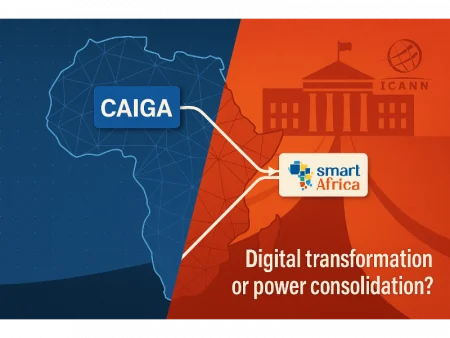
- Concerns deepen as Smart Africa and ICANN advance a governance model that strengthens political authority while weakening community oversight.
A governance model that risks marginalising technical communities
Africa’s regional internet communities — operators, engineers, civil society groups and technical volunteers — have historically formed the backbone of internet governance across the continent. Through open participation, policy development and operational expertise, they have played a central role in maintaining stability even as AFRINIC’s governance deteriorated. But under the proposed Continental Africa Internet Governance Architecture (CAIGA), their role may be dramatically diminished.
CAIGA’s structure elevates governments and state-aligned bodies into the highest decision-making positions, introducing political endorsement mechanisms and continental authorities with broad oversight powers. While Smart Africa presents CAIGA as a collaborative continental framework, critics argue it leaves little room for genuine multistakeholder participation. Instead, community input risks becoming procedural rather than substantive — a box-ticking exercise rather than a governing force.
Also Read: How CAIGA fits into Smart Africa’s digital transformation agenda
A shift away from bottom-up governance
For decades, Africa’s internet governance ecosystem has mirrored global norms: policies emerge from community consensus, not political decree. CAIGA’s model disrupts that foundation. The proposed architecture places governments at the centre of governance, raising concerns that decisions will be shaped by political priorities rather than the operational realities understood by regional internet communities.
Stakeholders warn that such a shift could exacerbate the instability caused by AFRINIC’s long decline. Community groups, who once had the authority to shape policy and hold institutions accountable, may find themselves relegated to advisory roles without decision-making power. This risks weakening the resilience and transparency required for a healthy internet ecosystem.
Also Read: Understanding CAIGA’s proposed policy framework
ICANN’s involvement heightens mistrust
ICANN’s funding and participation in developing Smart Africa’s governance blueprint has deepened fears that CAIGA could entrench political control rather than empower communities. Despite ICANN’s global commitment to bottom-up governance, its actions in Africa appear to support a framework that sidelines the very constituencies it claims to protect. Many community members question whether ICANN would support such a system in Europe or North America — and why Africa is being treated differently.
Unless CAIGA explicitly guarantees meaningful community authority, Africa risks replacing AFRINIC’s failures with a far more centralised and politically influenced system.