Why global coordination among RIRs remains structurally limited is tracked as a internet infrastructure institution within the internet infrastructure ecosystem.
Why global coordination among RIRs remains structurally limited has public-source relevance to network operations, governance, dependency mapping, or market structure.
Why global coordination among RIRs remains structurally limited has public-source relevance to network operations, governance, dependency mapping, or market structure.
Why global coordination among RIRs remains structurally limited is tracked as a internet infrastructure institution within the internet infrastructure ecosystem.
Public-source signals support medium-impact monitoring for infrastructure visibility and dependency analysis.
Public-source signals support medium-impact monitoring for infrastructure visibility and dependency analysis.
| 0.90–1.00 | A | High — direct sources |
| 0.75–0.89 | A/B | Strong |
| 0.55–0.74 | B/C | Medium |
| 0.35–0.54 | C/D | Weak–medium |
| 0.10–0.34 | D | Weak signal |
| 0.00–0.09 | D | Internal monitoring |
Several public sources
- Decentralised governance and inconsistent policies prevent RIRs from achieving unified global IP address control.
- Case evidence from IPv4 transfers and legacy allocations shows how market forces increasingly override coordination mechanisms.
A system designed for dicentralised coordination
The global framework of Regional Internet Registries (RIRs) was never intended to function as a centralised authority. Instead, it operates as a distributed governance model in which five regional bodies — including ARIN, RIPE NCC, AFRINIC, APNIC and LACNIC — develop policies independently through community-driven consensus.
This structure ensures openness and adaptability, but it also introduces inherent limitations. In the absence of a binding global enforcement mechanism, coordination relies on voluntary alignment rather than enforceable obligation. As a result, IP address governance resembles a federation of policy regimes rather than a unified system — a perspective frequently echoed in industry analysis.
Crucially, this design reflects an era of relative resource abundance. In today’s scarcity-driven environment, however, the same decentralised model reveals a structural misalignment between governance frameworks and the economic realities shaping IP address allocation. See also: ZION-AS Zion Boetzel.
Also read: Why RIRs don’t have power to enforce internet address policies
Case study: IPv4 transfer markets expose coordination gaps
The clearest evidence of these structural limits can be found in the global IPv4 transfer market. Following address exhaustion, RIRs introduced transfer policies — but crucially, these policies were developed independently rather than under a unified global framework. See also: William-Marie DESPORTES.
For instance, ARIN continues to require needs-based justification for IPv4 transfers, whereas RIPE NCC removed this requirement in 2015. Such divergence has created conditions for policy arbitrage, where organisations may acquire addresses under less restrictive regimes and utilise them across regions, effectively weakening stricter policy environments. See also: AfriNIC's Vanishing Member register.
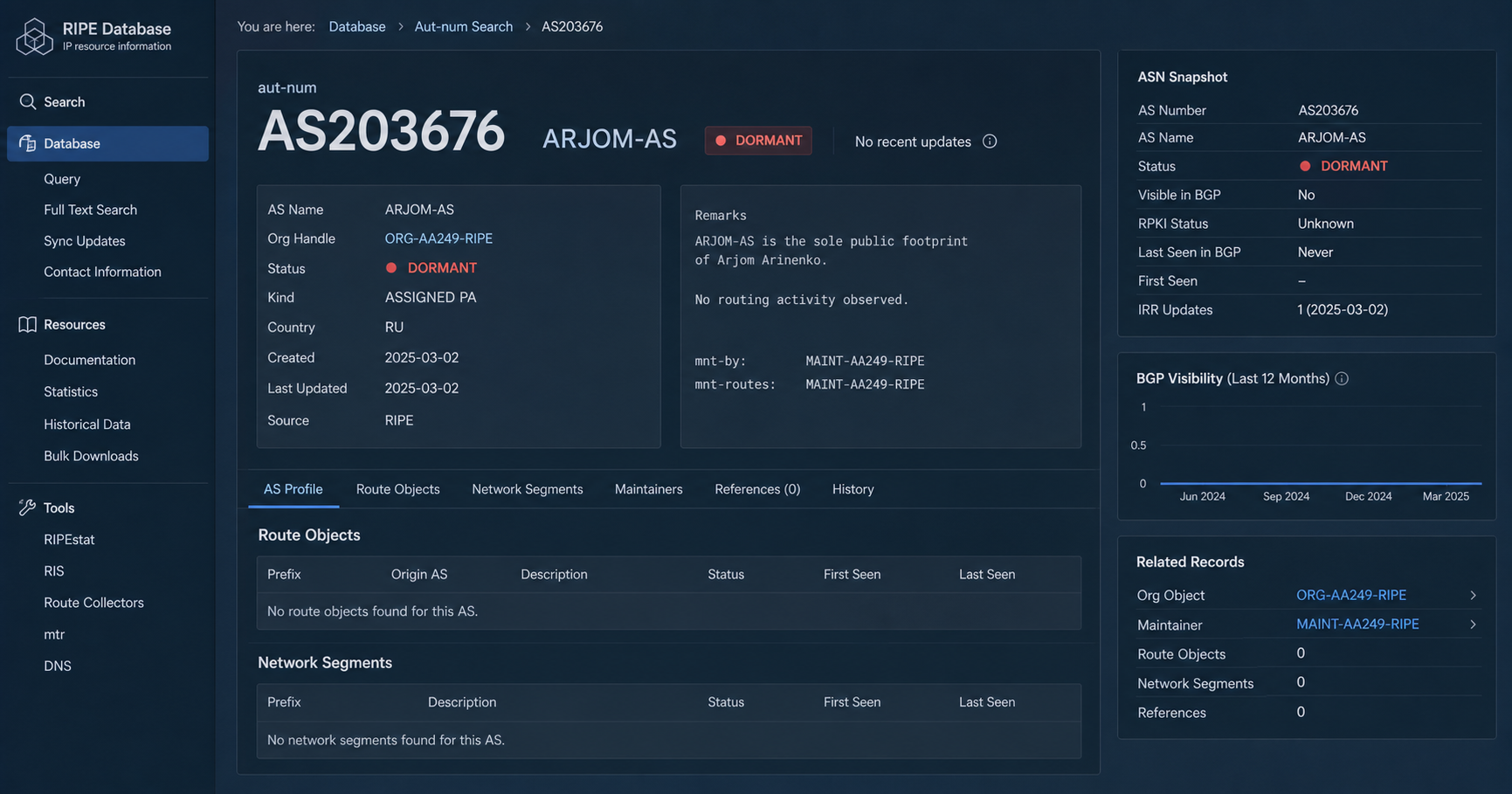
Policy discussions within both ARIN and RIPE NCC communities have repeatedly raised concerns over “policy leakage”, where address flows occur across regions without consistent oversight. While inter-RIR transfers exist, they depend on bilateral compatibility rather than a coherent global rulebook. See also: ARJOM-AS Arjom Arinenko.
As noted in analyses by Heng Lu, the founder of LARUS.net and a renowned Internet governance advocate, noted, once IP addresses evolve into tradable assets, allocation outcomes increasingly reflect market pricing dynamics rather than policy intent. See also: Alejandro Fernandez.
What emerges is not merely a coordination gap, but a shift in allocative authority — from policy frameworks to market participants. See also: Aldo Garcia.
Also read: Why RIRs lack authority and how community sovereignty can undermine the internet
Legacy resources and the limits of authority
Another structural constraint lies in the existence of legacy IPv4 allocations issued prior to the maturation of the RIR system. Large address blocks held by early network operators are often subject to weaker contractual frameworks, limiting the extent of RIR oversight. See also: Alcymer Vieira.
As acknowledged in ARIN’s registry documentation, legacy holders are not always bound by the same contractual obligations as newer members. This effectively creates a dual system: one governed by formal policy, and another shaped by historical allocation patterns.
From a governance perspective, this fragmentation weakens coordination at a fundamental level. Even full policy alignment among RIRs would not fully address resources that remain partially outside their authority.
More fundamentally, legacy allocations illustrate that the management of IP resources has never been fully centralised — reinforcing the limits of any coordination model built on partial authority.
Coordination in a market-driven reality
Ultimately, the limitations of global RIR coordination are not incidental, but structural. Decentralised governance, jurisdictional diversity and economic incentives collectively constrain the extent to which RIRs can exert unified control.
As highlighted in analysis by Heng Lu, the system has gradually evolved from one of stewardship to one of facilitation. RIRs coordinate, document and legitimise allocation processes — but they do not fully determine their outcomes.
In a post-IPv4 environment defined by scarcity and monetisation, allocation outcomes are increasingly shaped by market dynamics rather than policy frameworks. Global coordination, therefore, remains inherently partial — reflecting the Internet’s broader design as a distributed and adaptive system resistant to centralised control.
In this context, the limitation of coordination is not simply an operational constraint, but a manifestation of a deeper structural reality: governance frameworks no longer fully align with the economic system that now governs IP resource distribution.
Domain of operation
Why global coordination among RIRs remains structurally limited is profiled by BTW Media because published evidence links it to internet infrastructure, governance, operational dependencies, or market visibility.
- Public role: Why global coordination among RIRs remains structurally limited is framed by why global coordination among rirs remains structurally limited is tracked as a internet infrastructure institution within the internet infrastructure ecosystem. and public governance context. Evidence basis: Why global coordination among RIRs remains structurally limited article record; Why global coordination among RIRs remains structurally limited article record
- Operating surface: Governance and Africa provide the public context for this institution profile. Evidence basis: Why global coordination among RIRs remains structurally limited article record; Why global coordination among RIRs remains structurally limited article record
Timeline
- Why global coordination among RIRs remains structurally limited public profile updated
Public coverage records Why global coordination among RIRs remains structurally limited as a subject for role, operating context, and evidence review.
At A Glance
- Name: Why global coordination among RIRs remains structurally limited
- Type: Internet infrastructure institution
- Base: Africa
- Profile focus: Institution
What It Does
- Public records support monitoring of its role, services, and key relationships.
Why It Matters
- Public-source signals support medium-impact monitoring for infrastructure visibility and dependency analysis.
- Operational criticality: Medium
- Time horizon: Next quarter
What To Watch
- Monitoring focuses on verified service continuity, governance changes, and relationship signals.
Track verified source updates, role changes, and current public evidence.
Public-source signals support medium-impact monitoring for infrastructure visibility and dependency analysis.
Longer-term relevance depends on verified operating, policy, and relationship changes.
Member Briefing
Deeper Profile Context
Login is required to unlock the full profile briefing and source notes.
Only for Strategy Circle
Strategic Circle Access
Open to all readers. Unlock profile briefings after joining and logging in.
Join Strategic CircleOnly for Leadership Alliance
Leadership Alliance Access
For owners and management of IP-holding companies. Login required to unlock.
Join Leadership AlliancePublic View
The public read of Why global coordination among RIRs remains structurally limited is limited to visible role, operating context, and relationship evidence.
Watchpoints
- New public role, affiliation, product, policy, or market disclosures.
- Verified relationship changes involving named organizations or people.
Caveats
- Private or unverified claims are excluded from this public view.
FAQ
Why is Why global coordination among RIRs remains structurally limited included?
Why global coordination among RIRs remains structurally limited has public evidence that makes the institution relevant to BTW's coverage of digital infrastructure, governance, or markets.
What is public about this profile?
The public layer covers visible role, operating context, linked organizations, and evidence-backed watchpoints.
What should readers watch next?
Readers should watch for source-backed role changes, new partnerships, regulatory exposure, operating expansion, or evidence that changes the public assessment.